
Why Is My House So Humid? Common Causes And Practical Solutions
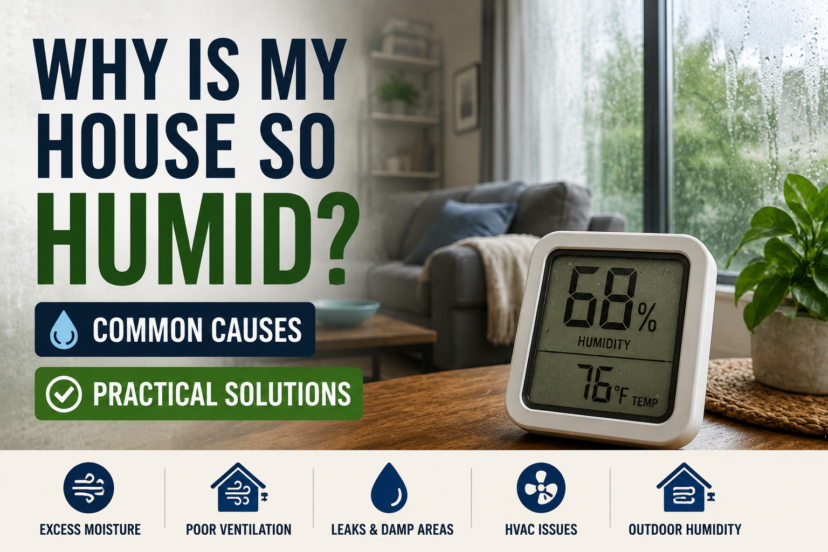
Have you ever walked into your home and immediately noticed the air feels sticky, even with the air conditioner running? If you’ve been asking yourself why is my house humid, you’re not alone. High indoor humidity is a common problem for homeowners across the U.S., especially during warm weather, but it can also happen year-round due to hidden issues inside the home.
Excess humidity doesn’t just make your home feel uncomfortable. Over time, it can encourage mold growth, create musty odors, damage wood flooring and furniture, peel paint, and even make your HVAC system work harder than necessary. The good news is that most humidity problems have identifiable causes and practical solutions.
This guide explains why your home feels humid, how to identify the source, and the best ways to reduce indoor moisture for a healthier, more comfortable living environment.
💡 Quick Answer: Why Is My House So Humid
If you’re wondering why is my house humid, the most common causes include poor ventilation, an oversized or malfunctioning air conditioner, everyday activities like cooking and showering, plumbing leaks, crawl space moisture, and outdoor humidity entering your home. Identifying the moisture source and improving ventilation, air circulation, and humidity control can usually solve the problem.
Key Takeaways
Most likely cause: Poor ventilation, excess indoor moisture, or an air conditioner that isn’t removing enough humidity.
Usually serious? No. Most humidity problems can be improved with better ventilation, moisture control, and proper HVAC maintenance. However, long-term high humidity can lead to mold, water damage, and indoor air quality issues.
First thing to check: Measure your indoor humidity with a digital hygrometer. If it consistently stays above 60%, inspect for poor ventilation, plumbing leaks, and HVAC performance.
Best solution: Improve ventilation, repair any leaks, maintain your HVAC system, seal air leaks, and use a dehumidifier if indoor humidity remains high.
💧 Why This Happens
Humidity refers to the amount of water vapor in the air. Every home naturally contains some moisture from breathing, cooking, bathing, laundry, and even houseplants.
Problems begin when more moisture enters the home than can escape.
Ideally, indoor humidity should stay between 30% and 50%. Once humidity consistently rises above 60%, you may notice:
- Sticky or damp air
- Foggy windows
- Musty smells
- Mold or mildew
- Condensation on surfaces
- Warped wood
- Increased allergy symptoms
Understanding where the excess moisture comes from is the first step toward fixing it.
🏠 Most Common Causes Of A Humid House
1. Poor Ventilation
Bathrooms, kitchens, and laundry rooms produce large amounts of moisture every day.
Without proper exhaust fans or ventilation, that moisture stays trapped inside your home.
2. Air Conditioner Isn’t Removing Humidity
Your air conditioner should cool the air while removing moisture.
If it’s oversized, improperly maintained, or malfunctioning, it may cool your home too quickly without running long enough to dehumidify the air.
3. Outdoor Humidity Entering The Home
During hot, humid weather, outdoor air naturally finds its way inside through:
- Open windows
- Frequently opened doors
- Air leaks
- Poor weatherstripping
The higher the outdoor humidity, the harder your home must work to stay comfortable.
4. Plumbing Leaks
Hidden water leaks behind walls, under sinks, or beneath floors can slowly raise indoor humidity.
Small leaks often go unnoticed for weeks or months.
5. Crawl Space Or Basement Moisture
Moisture from damp crawl spaces or unfinished basements often rises into the rest of the home.
This is especially common in older homes.
6. Drying Clothes Indoors
Air-drying laundry indoors releases large amounts of moisture into the air.
Even ventless dryers can contribute if they aren’t working properly.
7. Cooking Without Exhaust Fans
Boiling water, simmering soups, and cooking large meals generate steam that quickly increases indoor humidity.
Range hoods help remove much of this moisture.
8. Long, Hot Showers
Bathrooms are one of the biggest moisture producers in any home.
Without an exhaust fan, steam spreads throughout nearby rooms.
9. Too Many Houseplants
Plants naturally release moisture into the air through transpiration.
While a few plants aren’t usually a problem, large indoor collections can noticeably increase humidity.
10. Poor Attic Ventilation
A poorly ventilated attic can trap heat and moisture, affecting temperatures and humidity throughout the home.
11. Roof Leaks
Small roof leaks may allow moisture into insulation or ceilings long before water stains become visible.
Hidden moisture gradually increases indoor humidity.
12. HVAC System Problems
Dirty filters, blocked coils, low refrigerant, or failing components can reduce your system’s ability to remove moisture effectively.
13. Foundation Moisture
Groundwater around the home’s foundation can slowly migrate indoors, especially if drainage is poor.
14. High Occupancy
Every person releases moisture simply by breathing and perspiring.
Larger households naturally produce more indoor humidity.
15. No Whole-Home Dehumidification
Homes in humid climates sometimes require a dedicated dehumidifier in addition to air conditioning.
Without one, humidity may remain high even when temperatures feel comfortable.
🔎 How To Confirm The Cause
Start by measuring your home’s humidity using an inexpensive digital hygrometer.
Then look for common warning signs:
- Condensation on windows
- Musty odors
- Mold spots
- Peeling paint
- Damp basement walls
- Sticky indoor air
- Water stains
- HVAC running constantly
Also consider when the humidity occurs.
For example:
- Only after showers?
- During rainy weather?
- Only in the basement?
- All day long?
Patterns often point directly to the source.
🛠️ How To Fix It
The right solution depends on what’s causing the excess moisture.
Improve Ventilation
Always run bathroom exhaust fans during showers and for at least 20 minutes afterward.
Use kitchen exhaust fans whenever cooking.
Service Your HVAC System
Annual maintenance helps ensure your air conditioner removes humidity efficiently.
Replace HVAC filters regularly.
Seal Air Leaks
Weatherstrip doors and windows.
Seal gaps around pipes, vents, and utility penetrations where humid outdoor air enters.
Repair Plumbing Leaks
Fix dripping pipes, leaking faucets, or hidden water damage promptly.
Even slow leaks contribute to humidity over time.
Control Basement and Crawl Space Moisture
Consider:
- Vapor barriers
- Crawl space encapsulation
- Improved drainage
- Sump pumps where needed
Use a Dehumidifier
Portable or whole-home dehumidifiers are highly effective for consistently humid homes.
Many homeowners notice immediate improvements in comfort.
Reduce Indoor Moisture
Simple habits can make a difference:
- Shorter showers
- Cover pots while cooking
- Vent clothes dryers outdoors
- Avoid drying laundry indoors
Improve Attic Ventilation
Proper attic airflow helps reduce trapped moisture and improves overall home efficiency.
👷 When To Call A Professional
While many humidity issues can be solved with simple maintenance, some situations require expert help.
Contact a qualified professional if:
- Humidity stays above 60% despite your efforts.
- Mold keeps returning.
- You discover water damage.
- Your air conditioner isn’t removing moisture.
- You suspect hidden plumbing leaks.
- Your crawl space remains damp.
- Condensation appears inside walls or ceilings.
- You notice structural damage from moisture.
Early repairs are often much less expensive than fixing long-term water damage.
🌿 How To Prevent It
Keeping humidity under control is much easier than fixing moisture damage later.
Good preventive habits include:
- Replace HVAC filters regularly.
- Service your air conditioner annually.
- Use exhaust fans daily.
- Repair leaks immediately.
- Monitor indoor humidity.
- Seal windows and doors.
- Keep gutters clean.
- Direct downspouts away from the foundation.
- Maintain proper attic ventilation.
- Use a dehumidifier during humid seasons if needed.
Small maintenance tasks can significantly reduce long-term moisture problems.
❓ FAQs: Why Is My House So Humid
What humidity level should my house be?
Most experts recommend keeping indoor humidity between 30% and 50% for comfort and to reduce the risk of mold growth.
Can high humidity make my house feel hotter?
Yes. High humidity slows the evaporation of sweat, making your home feel warmer even if the thermostat setting hasn’t changed.
Does opening windows reduce humidity?
Not always. During humid weather, opening windows often allows even more moisture inside.
Will a dehumidifier lower my electric bill?
It may help your air conditioner run more efficiently because drier air feels cooler, allowing you to set the thermostat slightly higher while maintaining comfort.
Can humidity damage my home?
Yes. Long-term high humidity can contribute to mold growth, wood swelling, peeling paint, warped flooring, and damage to furniture and insulation.
🏡 Related Home Problems
If your home feels humid, you may also be interested in:
- Why Is My House So Dusty?
- Why Does My House Smell Musty?
- Why Is One Room Hotter Than The Rest?
- Why Does My Air Conditioner Run Constantly?
- Why Are My Windows Fogging Up?
- Why Does My Basement Feel Damp?
- Why Is My HVAC Blowing Warm Air?
- How Can I Improve Indoor Air Quality?
🎯 Final Thoughts On Why Is My House So Humid
If you’ve been wondering why is my house humid, the answer is usually a combination of everyday moisture, ventilation issues, and your home’s heating and cooling system. While some humidity is normal, consistently high indoor moisture shouldn’t be ignored because it can affect your comfort, your home’s condition, and even your health.
Start by identifying where the moisture is coming from, make simple improvements like increasing ventilation and repairing leaks, and monitor your indoor humidity levels. In many cases, a few practical changes can make your home feel cooler, healthier, and far more comfortable throughout the year.
Disclaimer: This article is for informational and educational purposes only and should not be considered professional home repair advice. Every home is different, and humidity problems can have multiple causes. If you suspect significant water intrusion, mold growth, structural damage, or HVAC system failure, consult a qualified home inspector, HVAC technician, or licensed contractor for a thorough evaluation and appropriate repairs.


Comments are closed.