
Why Does My Air Conditioner Smell? 10 Common Causes And How To Fix Them
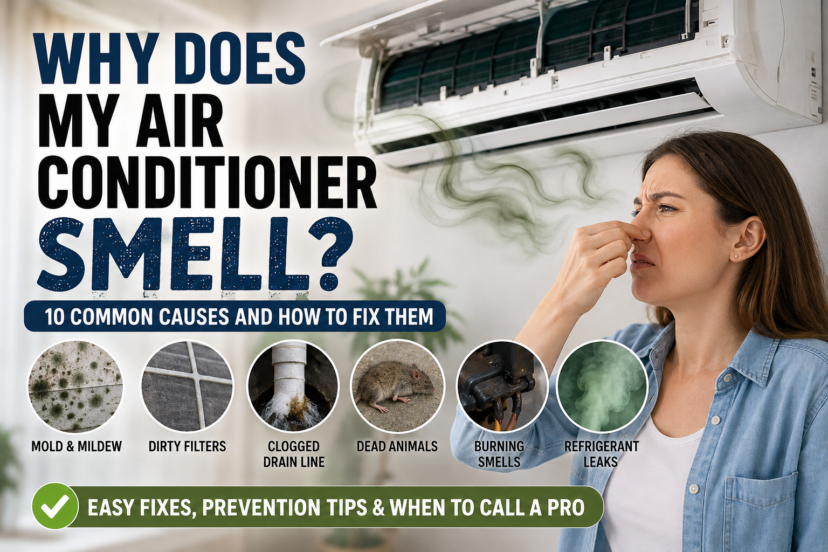
If you’ve ever turned on your air conditioner only to notice a strange smell filling your home, you’re not alone. Many homeowners wonder, why does my air conditioner smell, especially after the system has been sitting unused or during the hottest days of summer. While some odors are harmless and easy to fix, others can signal mold growth, electrical issues, or even problems that require immediate attention.
Fortunately, identifying the type of smell often provides valuable clues about the underlying problem. Whether your AC smells musty, like dirty socks, burning plastic, rotten eggs, or something else entirely, understanding the cause can help you protect your home’s air quality, improve cooling performance, and avoid expensive repairs.
This guide explains the most common reasons your air conditioner may smell, how to identify the source, simple troubleshooting steps, and when it’s time to call an HVAC professional.
🧊 Quick Answer: Why Does My Air Conditioner Smell?
If you’re asking why does my air conditioner smell, the most common causes include mold or mildew inside the system, dirty air filters, clogged condensate drains, bacteria growing on the evaporator coil, dead pests, electrical problems, or sewer gases entering through dry drains. Many odors can be resolved with cleaning and routine maintenance, but burning, chemical, or gas-like smells should always be inspected immediately.
Key Takeaways
Most likely cause: Mold, mildew, or bacteria growing inside the evaporator coil or drain pan.
Usually serious? Usually not if caught early, but electrical or refrigerant-related odors require prompt attention.
First thing to check: Replace or inspect the air filter and look for visible moisture, standing water, or clogged condensate drains.
Best solution: If you’re wondering why does my air conditioner smell, start with cleaning or replacing the filter, clearing the drain line, cleaning the evaporator coil, and scheduling annual HVAC maintenance.
❄️ Why This Happens: How To Identify The Problem
Your air conditioner constantly pulls warm indoor air across cold evaporator coils. During this process, moisture naturally forms as humidity condenses on the coils.
Normally, this moisture drains away safely. However, when dirt, dust, bacteria, mold, or standing water accumulate inside the system, unpleasant odors can develop.
The smell itself often provides useful clues:
- Musty = Mold or mildew
- Dirty socks = Bacteria on evaporator coils
- Burning = Electrical components
- Rotten eggs = Dead animal (rarely natural gas inside the AC itself)
- Chemical = Refrigerant or cleaning products
- Sewage = Dry plumbing trap or sewer gas
Identifying the odor is often the first step toward solving the problem.
🌟 Most Common Causes Of Air Conditioner Smells
1. Mold Or Mildew Inside The System
This is by far the most common reason an AC develops an unpleasant odor.
Warm temperatures combined with moisture create the perfect environment for mold growth inside:
- Evaporator coils
- Drain pans
- Air ducts
- Air handler cabinets
The smell is usually:
- Damp
- Musty
- Like a wet basement
How To Confirm The Cause
- Smell is strongest when AC first starts.
- Odor improves after several minutes.
- Visible mold around vents or drain pan.
2. Dirty Sock Syndrome
Despite the unusual name, Dirty Sock Syndrome is a real HVAC issue.
Certain bacteria grow on evaporator coils and produce a smell similar to:
- Dirty gym socks
- Sweaty clothes
- Damp laundry
This often occurs during mild weather when the AC cycles frequently.
How To Confirm
- Smell resembles sweaty socks.
- Strongest during startup.
- Filter may appear clean while odor persists.
3. Dirty Air Filter
A clogged air filter traps:
- Dust
- Pet hair
- Pollen
- Cooking grease
- Moisture
Eventually, these contaminants begin producing unpleasant odors.
Dirty filters also reduce airflow, allowing moisture to linger inside the system.
How To Confirm
- Filter appears gray or black.
- Reduced airflow.
- Higher utility bills.
4. Clogged Condensate Drain Line
Your AC removes gallons of water from indoor air during humid weather.
If the condensate drain becomes blocked:
- Water backs up
- Mold develops
- Algae grows
- Standing water begins to smell
How To Confirm
- Water near indoor unit.
- Drain pan contains standing water.
- AC shuts off unexpectedly due to safety float switch.
5. Dirty Evaporator Coil
Dust eventually coats the evaporator coil.
When moisture combines with dirt:
- Bacteria multiply
- Mold grows
- Airflow decreases
- Odors worsen
How To Confirm
- Cooling performance drops.
- Musty smell continues after replacing filter.
- Coil appears dusty during inspection.
6. Dead Animal Inside The Ductwork
Occasionally:
- Mouse
- Bird
- Squirrel
- Lizard
can enter ductwork and die.
This creates a strong odor that becomes worse whenever the blower runs.
How To Confirm
- Strong rotten smell.
- Odor localized near one vent.
- Smell becomes progressively stronger.
7. Burning Electrical Components
A burning smell should never be ignored.
Possible causes include:
- Overheated motor
- Worn bearings
- Electrical wiring
- Failing capacitor
- Blower motor overheating
How To Confirm
- Burning plastic odor.
- Electrical smell.
- AC shuts off unexpectedly.
- Breaker trips repeatedly.
Turn off the system immediately and contact an HVAC technician.
8. Refrigerant Leak
Modern refrigerants have only a faint odor, but leaks sometimes produce:
- Sweet smell
- Chemical odor
- Chloroform-like scent
More noticeable symptoms include:
- Poor cooling
- Ice on refrigerant lines
- Hissing sounds
How To Confirm
- Home isn’t cooling well.
- Indoor humidity increases.
- Ice forms on evaporator coil.
Only licensed technicians should repair refrigerant leaks.
9. Sewer Gas Entering Through Dry Drain Traps
Sometimes the AC isn’t causing the smell at all.
If the condensate drain connects to household plumbing, a dry plumbing trap can allow sewer gases into the home.
How To Confirm
- Sewage smell.
- Odor strongest near indoor air handler.
- Smell disappears after adding water to nearby drain.
10. Smoke Or Outdoor Odors Entering The System
Wildfire smoke, nearby grilling, vehicle exhaust, or heavy outdoor pollution can be pulled into the HVAC system.
How To Confirm
- Smell only occurs with outdoor air contamination.
- Odor matches outside conditions.
- Filter appears dirty after smoke events.
🔍 How To Confirm The Cause
Before calling a technician, check these items:
- Replace the air filter.
- Inspect supply vents for visible mold.
- Look for standing water near the indoor unit.
- Check the condensate drain.
- Listen for unusual noises.
- Observe whether cooling performance has changed.
- Notice whether the odor appears only during startup or continuously.
The type of smell usually narrows down the likely cause.
🛠️ How To Fix An Air Conditioner That Smells
Many odor problems can be solved without replacing the entire system.
Common fixes include:
- Replace dirty air filters every 1–3 months.
- Clean the evaporator coil.
- Flush the condensate drain line.
- Remove standing water from the drain pan.
- Schedule professional duct cleaning if mold is present.
- Have an HVAC technician sanitize the air handler.
- Repair refrigerant leaks.
- Replace damaged electrical components.
- Remove dead animals from ductwork.
- Install UV lights to reduce mold and bacteria growth.
Routine maintenance is often the best long-term solution.
👨🔧 When To Call A Professional
Contact an HVAC technician immediately if you notice:
- Burning odors
- Electrical smells
- Refrigerant leaks
- Persistent sewage odors
- Mold covering large areas
- Water leaking from the system
- AC repeatedly shutting off
- Poor cooling despite a clean filter
Ignoring these symptoms may lead to more extensive damage or safety hazards.
✅ How To Prevent Air Conditioner Smells
Preventive maintenance significantly reduces odor problems.
Good habits include:
- Replace filters regularly.
- Schedule annual HVAC inspections.
- Keep condensate drains clear.
- Clean evaporator coils.
- Maintain indoor humidity between 30% and 50%.
- Keep supply vents unobstructed.
- Seal duct leaks.
- Consider installing UV germicidal lights.
- Address water leaks quickly.
- Run the fan periodically during humid seasons to reduce moisture buildup.
These simple steps help maintain better indoor air quality and improve your AC’s efficiency.
❓ Frequently Asked Questions
Why does my air conditioner smell musty?
Musty odors usually indicate mold or mildew growing on the evaporator coil, drain pan, ductwork, or inside the air handler due to excess moisture.
Why does my AC smell like dirty socks?
This is commonly called Dirty Sock Syndrome and is caused by bacteria growing on the evaporator coil.
Is it dangerous if my air conditioner smells?
Most musty smells are not dangerous immediately, but burning, chemical, or electrical odors should be addressed right away.
Why does my AC only smell when it first turns on?
Moisture sitting on the evaporator coil while the system is off often allows mold or bacteria to develop. The odor is strongest during startup.
Can a dirty filter make my AC smell?
Yes. Dirty filters trap dust, moisture, and organic debris that can create unpleasant odors while reducing airflow.
Can I clean my air conditioner myself?
Homeowners can safely replace filters and clean accessible vents, but evaporator coils, refrigerant systems, and electrical components should generally be serviced by professionals.
How often should an air conditioner be serviced?
Most HVAC experts recommend professional maintenance at least once per year, ideally before the cooling season begins.
🏠 Related Home Problems
If you’re experiencing AC odors, you may also be interested in:
- Why Is My House So Humid?
- Why Does My House Feel Stuffy?
- How To Improve Indoor Air Quality
- Why Is My House So Hot?
- Why Does My Bedroom Smell?
- Why Does My House Smell Musty?
- Why Is My AC Blowing Warm Air?
💡 Final Thoughts On Why Does My Air Conditioner Smell
A smelly air conditioner is more than just an annoyance—it can be an early warning sign that your HVAC system needs attention. Fortunately, many odor problems stem from common maintenance issues such as dirty filters, clogged drains, or mold buildup that can be resolved before they become expensive repairs.
Pay attention to the type of smell, inspect the system for obvious issues, and perform regular maintenance throughout the year. If the odor involves burning, chemicals, or persistent sewer-like smells, don’t delay calling a qualified HVAC professional. Prompt action helps keep your home comfortable, your indoor air healthier, and your cooling system operating efficiently for years to come.
Disclaimer: This article is intended for educational and informational purposes only and should not replace professional HVAC diagnosis or repair. If you suspect an electrical fault, refrigerant leak, gas-related issue, or other potentially hazardous condition, turn off your air conditioning system and contact a licensed HVAC technician immediately.




Comments are closed.