
Why Does My House Smell Musty? 12 Common Causes And How To Fix Them
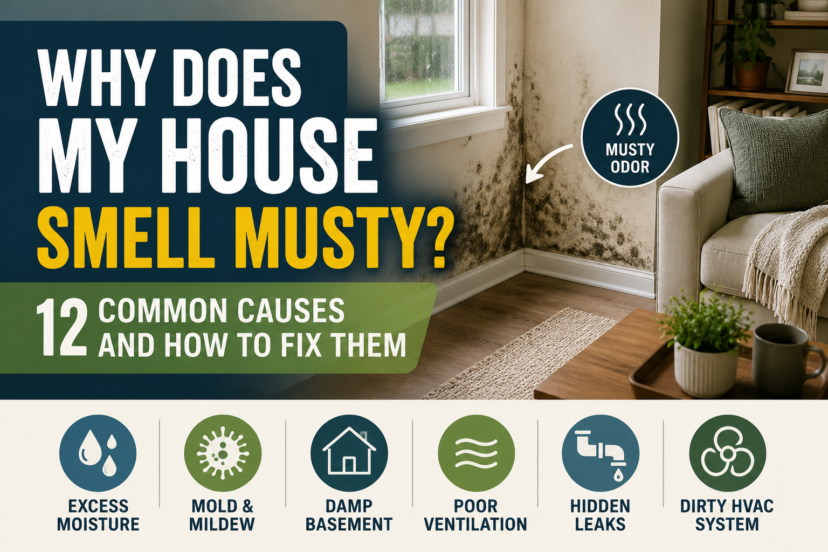
You walk into your home and notice a musty smell that wasn’t there before—or perhaps it’s been lingering for weeks. If you’ve been asking yourself, Why does my house smell musty? you’re not alone. The odor may be strongest after it rains, in the basement, or when you first open a closet. While a musty smell is common in many homes, it’s often a sign that excess moisture, poor ventilation, or hidden mold is present somewhere in the house.
The good news is that a musty smell doesn’t always mean you have a major problem. In many cases, the source can be identified and addressed with simple maintenance or small home improvements. The key is finding the underlying cause rather than masking the odor with air fresheners.
In this guide, you’ll learn why your house smells musty, the most common causes, how to identify the source, practical solutions that homeowners can try, and when it’s time to call a professional.
💡 Quick Answer: Why Does My House Smell Musty
If you’re wondering why does my house smell musty, the most common causes include excess humidity, hidden moisture, mold or mildew, poor ventilation, water leaks, damp basements, crawl spaces, dirty HVAC systems, and wet building materials. Finding and eliminating the moisture source is usually the most effective long-term solution, while improving airflow and humidity control can help prevent the smell from returning.
Key Takeaways
Most likely cause: Excess moisture from high humidity, hidden water leaks, poor ventilation, or mold and mildew growth is the most common reason a house develops a musty smell.
Usually serious? No. Many musty odors can be resolved by improving ventilation, reducing humidity, and fixing moisture problems. However, persistent odors may indicate hidden mold or water damage that should be professionally evaluated.
First thing to check: Inspect damp areas such as the basement, crawl space, bathrooms, under sinks, and around your HVAC system. Measure indoor humidity with a hygrometer and look for signs of leaks or mold.
Best solution: Find and eliminate the moisture source, repair leaks, improve ventilation, keep indoor humidity between 30% and 50%, and use a dehumidifier if needed. If the odor persists, have the home inspected for hidden mold or water damage.
🔍 Why This Happens
A musty smell develops when moisture remains trapped inside a home for extended periods. Damp conditions allow mold, mildew, and bacteria to grow on surfaces such as drywall, wood, insulation, carpets, and fabrics. These microorganisms release compounds into the air that create the familiar earthy or stale odor many homeowners recognize.
Even if mold isn’t visible, moisture hidden behind walls, under flooring, inside HVAC systems, or in crawl spaces can still produce unpleasant smells. Because moisture is often the root cause, simply covering the odor with candles or sprays rarely solves the problem.
🏠 Most Common Causes
1. High Indoor Humidity
Indoor humidity above 60% creates ideal conditions for mold and mildew growth. Bathrooms, kitchens, laundry rooms, and basements are especially vulnerable.
Signs:
- Sticky indoor air
- Condensation on windows
- Damp odors throughout the house
2. Hidden Water Leaks
Small plumbing leaks may go unnoticed for months while slowly soaking drywall, flooring, or insulation.
Common leak locations include:
- Under sinks
- Behind washing machines
- Around toilets
- Water heaters
- Refrigerators with ice makers
3. Mold Growth
Visible mold isn’t always present. Mold often grows behind walls, beneath flooring, inside ceilings, or inside HVAC ductwork.
It commonly produces a strong earthy smell before becoming visible.
4. Mildew On Fabrics Or Carpets
Carpets, rugs, curtains, and upholstered furniture absorb moisture over time.
This often happens after:
- Flooding
- Water spills
- High humidity
- Poor ventilation
5. Damp Basement
Basements naturally stay cooler than the rest of the home, making them more likely to collect moisture.
Poor drainage, foundation cracks, or groundwater seepage can all contribute to persistent musty odors.
6. Wet Crawl Space
Many homeowners rarely inspect their crawl space.
Standing water, poor drainage, damaged vapor barriers, or plumbing leaks can create odors that eventually spread throughout the home.
7. Poor Ventilation
Without proper airflow, moisture becomes trapped indoors.
Homes with tightly sealed windows and doors may retain humidity longer than older homes unless mechanical ventilation is adequate.
8. Dirty HVAC System
Your heating and cooling system continuously circulates indoor air.
Dirty air filters, evaporator coils, drain pans, or ductwork can harbor mold and mildew if moisture accumulates.
9. Roof Leaks
Even a small roof leak can dampen attic insulation or ceiling materials long before stains become visible.
The first clue may simply be a musty smell after heavy rain.
10. Wet Building Materials
Drywall, wood framing, insulation, and subfloors that have been exposed to water may continue producing odors until they dry completely or are replaced.
11. Stored Items Holding Moisture
Cardboard boxes, clothing, books, and holiday decorations stored in humid spaces often absorb moisture.
Closets, attics, garages, and basements are common problem areas.
12. Poor Exterior Drainage
If rainwater collects around your home’s foundation, moisture may eventually enter the basement or crawl space.
Improving drainage often reduces indoor humidity and musty odors.
✅ How To Confirm The Cause
Finding the source requires a little detective work.
Check areas where moisture commonly accumulates:
- Basement
- Crawl space
- Attic
- Bathrooms
- Laundry room
- Under sinks
- Around windows
- HVAC system
- Closets
Also look for:
- Water stains
- Peeling paint
- Warped flooring
- Condensation
- Mold spots
- Damp insulation
A simple digital hygrometer can help measure indoor humidity. Ideally, indoor humidity should remain between 30% and 50% in most homes.
🛠️ How To Fix It
Once you’ve identified the source, focus on removing moisture rather than masking the odor.
Helpful steps include:
- Repair plumbing leaks promptly.
- Improve ventilation with exhaust fans.
- Run a dehumidifier in damp spaces.
- Replace dirty HVAC filters.
- Clean visible mold following appropriate safety guidance.
- Dry wet materials thoroughly.
- Improve grading around your home’s foundation.
- Seal foundation cracks if needed.
- Increase airflow by opening interior doors when appropriate.
- Remove water-damaged materials that cannot be dried.
If odors persist despite these steps, hidden moisture may still be present.
👷 When To Call A Professional
Some situations require expert evaluation.
Consider contacting a qualified professional if:
- The smell continues for several weeks.
- Mold covers a large area.
- Water damage is extensive.
- You suspect hidden plumbing leaks.
- The odor comes from inside walls.
- The basement repeatedly floods.
- Your HVAC system smells musty whenever it runs.
- Family members experience worsening allergy symptoms indoors.
Early intervention may prevent more extensive repairs later.
🛡️ How To Prevent It
Preventing moisture is far easier than dealing with mold.
Good habits include:
- Keep indoor humidity between 30% and 50%.
- Repair leaks quickly.
- Clean gutters regularly.
- Direct downspouts away from the foundation.
- Use bathroom exhaust fans during showers.
- Vent clothes dryers outdoors.
- Replace HVAC filters regularly.
- Inspect the attic and crawl space annually.
- Store items in waterproof containers instead of cardboard boxes.
- Keep air circulating throughout the home.
Small maintenance routines can significantly reduce future moisture problems.
❓ Frequently Asked Questions
Is a musty smell always mold?
Not necessarily. While mold is a common cause, high humidity, damp materials, poor ventilation, and mildew can also create musty odors.
Can a dehumidifier remove the smell?
A dehumidifier helps reduce excess moisture, which may improve odors over time. However, it won’t solve the problem if an active leak or mold growth remains.
Is a musty smell dangerous?
A musty smell itself isn’t harmful, but it may indicate moisture or mold that should be investigated, especially if anyone in the home has allergies or respiratory conditions.
Why does my house smell musty after rain?
Rain often increases humidity and may reveal roof leaks, basement moisture, crawl space problems, or poor exterior drainage.
Can dirty air filters cause a musty smell?
Yes. Dirty HVAC filters and moisture inside the system can circulate unpleasant odors throughout the home.
🔗 Related Home Problems
You may also find these guides helpful:
- Why Is My House So Dusty?
- Why Does My House Feel Stuffy?
- Why Does My Bedroom Smell?
- Why Is My Basement Damp?
- Why Are My Windows Sweating?
- How To Improve Indoor Air Quality?
- Why Does My House Smell After Rain?
📌 Final Thoughts on Why Does My House Smell Musty
If you’ve been asking yourself why does my house smell musty, remember that the odor is usually a symptom—not the actual problem. Excess moisture, poor ventilation, hidden leaks, or mold are often responsible, and addressing the source is the best way to eliminate the smell for good.
Start by inspecting the areas where moisture commonly collects, measure your home’s humidity, and repair any leaks as soon as possible. Regular maintenance, proper ventilation, and humidity control can go a long way toward keeping your home fresh, healthy, and comfortable throughout the year.
Disclaimer: This article is for informational purposes only and should not be considered professional home inspection, repair, or safety advice. If you suspect significant water damage, mold, structural issues, or electrical hazards, consult a qualified professional.




Comments are closed.