Why Is My House So Dusty? 15 Reasons Dust Keeps Coming Back
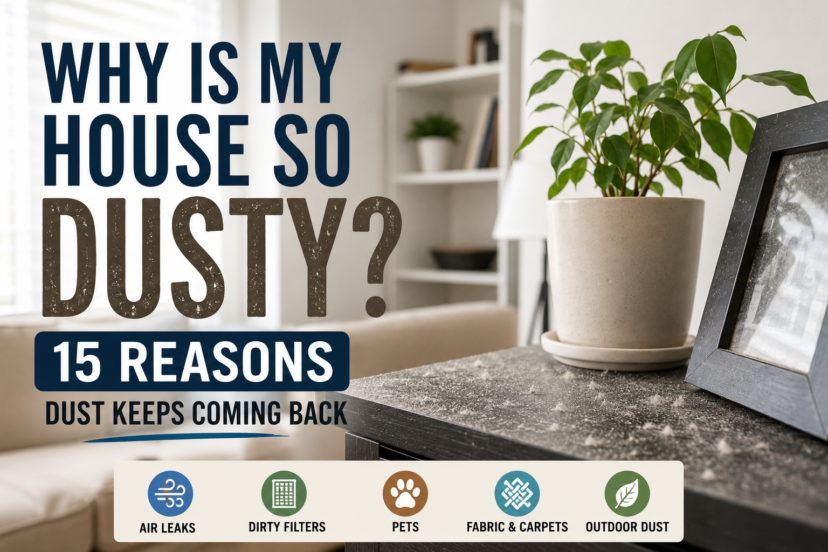
If you’ve ever finished dusting your furniture only to notice a thin layer of dust returning a day or two later, you’re not alone. Many homeowners ask, why is my house so dusty, especially when they clean regularly but never seem to stay ahead of it.
The truth is that dust doesn’t come from just one source. It can enter your home through tiny air leaks, be created by everyday activities, or circulate because of your HVAC system. Even factors like pets, carpets, humidity, and outdoor conditions can make dust build up much faster than expected.
The good news is that once you identify what’s causing the problem, many solutions are surprisingly simple and inexpensive. This guide explains the most common reasons your home stays dusty and provides practical steps to reduce dust so your home stays cleaner for longer.
💡 Quick Answer: Why Is My House So Dusty
If you’re wondering why is my house so dusty, the most common reasons include dirty HVAC filters, leaky air ducts, poor sealing around doors and windows, carpeting, pet dander, clutter, and low indoor humidity. Dust constantly enters and circulates through your home, but improving filtration, reducing dust sources, and cleaning strategically can dramatically reduce how quickly it returns.
Key Takeaways
Most likely cause: Dirty HVAC filters, leaky air ducts, poor door and window seals, carpeting, pets, or low indoor humidity are the most common reasons dust keeps returning.
Usually serious? No. Most dusty homes can be improved with better filtration, regular cleaning, sealing air leaks, and reducing indoor dust sources. However, excessive dust may sometimes point to HVAC or ductwork issues.
First thing to check: Inspect your HVAC filter. If it’s dirty or clogged, replace it and check whether dust builds up more slowly. Also look for heavy dust near air vents and windows.
Best solution: Replace HVAC filters regularly, vacuum with a HEPA-filter vacuum, dust with microfiber cloths, seal air leaks, keep humidity between 30% and 50%, and consider using a HEPA air purifier.
🔍 Why This Happens
Dust is made up of countless tiny particles. While many people think dust is simply dirt, it’s actually a mixture of:
- Dead skin cells
- Fabric fibers
- Pet hair and dander
- Pollen
- Soil particles
- Mold spores
- Insect debris
- Outdoor pollutants
Every time someone walks across the floor, sits on a couch, opens a window, or turns on the heating or air conditioning, these particles become airborne again.
Instead of disappearing, dust simply settles on another surface—until it’s disturbed once more.
🏠 Most Common Causes Of A Dusty House
1. Dirty HVAC Air Filters
Your HVAC filter is designed to capture airborne particles before they circulate throughout your home.
If it’s clogged, dust simply passes through the system and spreads into every room.
Replace disposable filters every 1–3 months, depending on usage and pets.
2. Leaky Air Ducts
Small leaks in ductwork can pull dusty air from attics, crawl spaces, or wall cavities into your living space.
Older homes commonly develop duct leaks that homeowners never notice.
3. Poor Door And Window Seals
Tiny gaps around doors and windows allow outdoor dust, pollen, and dirt to blow inside.
Weatherstripping naturally wears out over time.
4. Carpets Hold Large Amounts Of Dust
Carpet fibers trap huge amounts of dirt, pollen, hair, and dust.
Walking across the carpet releases many of these particles back into the air.
5. Pets Shed More Than Hair
Pet dander, dried saliva, fur, and outdoor dirt carried on paws all contribute to household dust.
Homes with multiple pets usually require more frequent cleaning.
6. Low Indoor Humidity
Very dry air allows dust particles to remain suspended longer before settling.
Static electricity can also attract dust to electronics and furniture.
7. Dirty Air Vents
Supply and return vents gradually collect dust.
Whenever the HVAC system runs, loose debris can be blown back into rooms.
8. Ceiling Fans Spread Dust
Dust collects on fan blades over time.
Each time the fan runs, some of that dust becomes airborne again.
9. Too Much Clutter
Books, decorations, collectibles, baskets, and stored items all collect dust.
The more surfaces you have, the more dust accumulates.
10. Upholstered Furniture
Fabric furniture traps dust deep inside cushions and upholstery.
Sitting down releases many trapped particles back into the air.
11. Open Windows
Fresh air is great—but it often carries:
- Pollen
- Road dust
- Construction dust
- Smoke particles
Wind can quickly increase indoor dust levels.
12. Dirty Vacuum Cleaner Filters
Vacuums with clogged filters or worn bags may release fine dust instead of capturing it.
Using a vacuum with a HEPA filter greatly improves dust removal.
13. Renovation Or Construction Nearby
Home remodeling projects—or even nearby neighborhood construction—can dramatically increase airborne dust.
Fine drywall dust is especially difficult to control.
14. Laundry Creates Fabric Fibers
Clothing, blankets, and towels release tiny fibers every time they’re washed, dried, folded, or worn.
Lint is simply another form of household dust.
15. Infrequent Cleaning Of Hidden Areas
Dust loves places that are often forgotten:
- Under beds
- Behind furniture
- Ceiling corners
- Closet shelves
- Baseboards
- Behind televisions
Eventually, these hidden dust deposits circulate throughout the home.
✅ How To Confirm The Cause
Finding the main source of dust usually requires a little observation.
Signs that help identify the cause include:
- HVAC filter turns gray quickly
- Dust appears shortly after cleaning
- Heavy dust near air vents
- Dust mainly near windows
- Visible lint around furniture
- Increased dust after windy days
- Pet hair collecting in corners
- Dust buildup only upstairs or downstairs
Keep track of where dust appears first.
The location often points directly to the source.
🛠️ How To Fix It
Most dusty homes improve significantly after several small changes rather than one major repair.
Replace HVAC filters regularly
High-quality pleated filters trap much more dust than inexpensive fiberglass filters.
Vacuum with a HEPA vacuum
HEPA filters capture much smaller particles than standard vacuum filters.
Vacuum carpets, rugs, furniture, and mattresses regularly.
Dust correctly
Instead of dry dusting:
- Use microfiber cloths
- Slightly dampen cloths
- Dust from top to bottom
Microfiber captures dust instead of spreading it around.
Seal air leaks
Inspect:
- Windows
- Exterior doors
- Attic access panels
- Utility pipe openings
Small gaps often allow surprising amounts of dust inside.
Wash bedding weekly
Sheets, blankets, and pillowcases collect skin cells that become household dust.
Weekly washing reduces this source considerably.
Groom pets regularly
Frequent brushing removes loose fur before it spreads through the house.
Wiping paws after walks also reduces dirt entering the home.
Clean air vents
Vacuum vent covers several times each year.
Remove visible dust without pushing debris into the ducts.
Reduce clutter
Simpler rooms are much easier to clean thoroughly.
Fewer decorative objects also mean fewer places for dust to settle.
Consider an air purifier
HEPA air purifiers continuously remove airborne particles and may noticeably reduce dust between cleanings.
Control humidity
Keeping indoor humidity around 30–50% can help reduce airborne dust while discouraging mold growth.
👷 When To Call A Professional
Some dust problems indicate larger issues that require expert evaluation.
Consider professional help if:
- Dust returns within hours of cleaning.
- HVAC filters clog unusually fast.
- You suspect leaking ductwork.
- Airflow is poor throughout the home.
- You notice visible mold along with dust.
- Construction dust never seems to disappear.
- Your home has excessive attic or crawl-space dust entering living areas.
A professional HVAC inspection or home energy audit can often identify hidden air leaks or ventilation problems that are difficult to spot yourself.
🌿 How To Prevent It
Preventing dust is usually easier than constantly removing it.
Helpful habits include:
- Replace HVAC filters on schedule.
- Vacuum weekly using a HEPA vacuum.
- Dust with microfiber cloths.
- Wash bedding every week.
- Keep pets well groomed.
- Seal gaps around doors and windows.
- Clean ceiling fans monthly.
- Reduce unnecessary clutter.
- Use quality doormats at entrances.
- Remove shoes indoors when possible.
These simple routines can significantly reduce the amount of dust that builds up over time.
❓ FAQs: Why Is My House So Dusty
Why does my house get dusty so quickly after cleaning?
Dust is constantly generated indoors from skin cells, fabrics, pets, and everyday activities while also entering from outside. If the underlying source isn’t addressed, it quickly settles again after cleaning.
Can my HVAC system make my house dusty?
Yes. Dirty filters, leaking ductwork, or poorly maintained HVAC systems can circulate dust throughout your home instead of removing it.
Do air purifiers really reduce dust?
Yes. HEPA air purifiers can remove many airborne dust particles before they settle on furniture and floors. They work best alongside regular cleaning rather than as a replacement for it.
Is carpet worse than hard flooring for dust?
Carpets trap more dust than hard flooring. While this can keep some dust out of the air temporarily, walking on carpet can release trapped particles back into the room.
How often should I replace my HVAC filter?
Most homes benefit from replacing filters every one to three months. Homes with pets, allergies, or heavy HVAC use may require more frequent replacement.
🏡 Related Home Problems
If you’re dealing with a dusty home, you may also find these topics helpful:
- Why does my house smell musty?
- Why is one room colder than the others?
- Why is my HVAC running constantly?
- Why are my windows always dirty inside?
- Why is my home so dry during winter?
- Why does my air conditioner blow weak airflow?
- How can I improve indoor air quality?
- Why is there condensation on my windows?
🎯 Final Thoughts
A dusty home can feel frustrating, especially when it seems like your cleaning efforts never last. Fortunately, the answer to why is my house so dusty is usually a combination of manageable factors rather than one major problem.
By improving your HVAC filtration, sealing air leaks, maintaining a regular cleaning routine, and reducing indoor dust sources, you can significantly decrease how quickly dust returns. Start with the simplest fixes first, monitor the results, and make additional improvements as needed. Over time, these small changes can lead to a cleaner, healthier, and more comfortable home.
Disclaimer: This article is intended for general informational and educational purposes only. While these tips reflect common home maintenance best practices, every home is different. If you suspect significant HVAC issues, mold growth, structural air leaks, or other serious problems affecting indoor air quality, consult a qualified home improvement or HVAC professional for an inspection and appropriate repairs.