Why Does My House Smell Like Mildew? Common Causes And Fixes
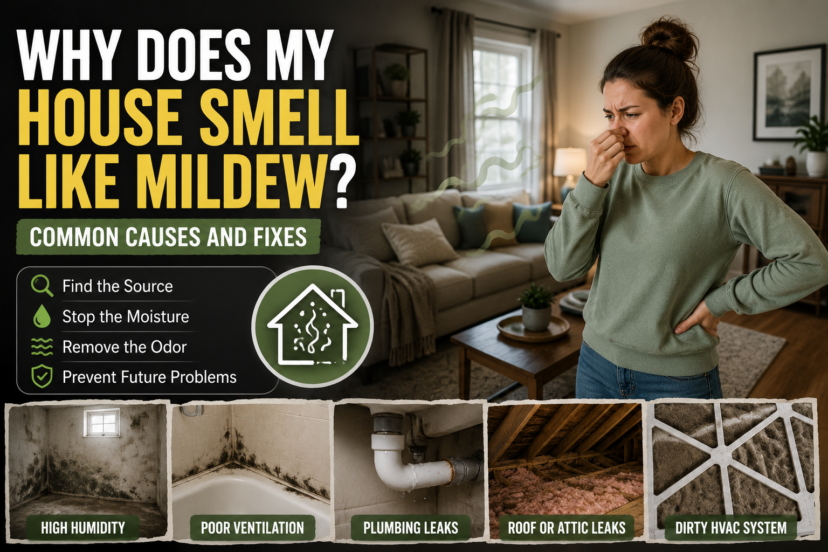
If you’ve been asking why does my house smell like mildew, you’re not alone. A lingering musty odor is one of the most common household complaints, and it often signals that excess moisture is present somewhere in your home. While the smell itself can be unpleasant, it may also indicate hidden issues that, if ignored, could lead to mold growth, damaged building materials, or reduced indoor air quality.
The good news is that a mildew smell doesn’t always mean there’s a major problem. In many cases, the source is something relatively simple, such as a damp basement, poor ventilation, a plumbing leak, or excess humidity. The key is finding the source before the problem gets worse.
This guide explains why your house smells like mildew, how to identify the cause, and the most effective ways to eliminate the odor and prevent it from returning.
🔎 Quick Answer: Why Does My House Smell Like Mildew?
A house usually smells like mildew because excess moisture allows mildew or mold to grow on building materials, fabrics, or hidden surfaces. Common causes include high humidity, plumbing leaks, roof leaks, damp basements, crawl spaces, poor ventilation, or wet carpets. Finding and eliminating the moisture source is the most important step toward removing the smell.
Key Takeaways
Most likely cause: Excess moisture from high humidity or a hidden water leak.
Usually serious? Not always, but persistent mildew odors should be investigated because they may indicate mold growth or water damage.
First thing to check: Inspect basements, bathrooms, crawl spaces, and HVAC filters for dampness or visible mold.
Best solution: Find and eliminate the moisture source, dry affected areas completely, improve ventilation, and clean mildew safely.
🌬️ Why This Happens: How To Identify The Problem
Mildew is a type of fungus that grows in damp, poorly ventilated environments. It thrives on moisture and organic materials such as wood, drywall, carpet, insulation, and fabric.
Even if you can’t see mildew, you may notice its distinctive musty odor. That’s because mildew releases microbial volatile organic compounds (MVOCs), which create the familiar damp smell.
Common warning signs include:
- Musty or earthy odor
- Stronger smell after rain
- Condensation on windows
- Damp walls or ceilings
- Peeling paint
- Visible mold spots
- High indoor humidity
- Allergy symptoms that improve when you leave the house
If the smell is strongest in one particular room, that’s often the best place to begin your inspection.
🔍 The 10 Most Common Causes Of A Mildew Smell
1. High Indoor Humidity
High humidity creates ideal conditions for mildew growth.
Indoor humidity should generally remain between 30% and 50%. Higher levels allow moisture to collect on walls, windows, and other surfaces.
Common sources include:
- Long hot showers
- Cooking
- Drying clothes indoors
- Humid climates
2. Hidden Plumbing Leaks
A slow plumbing leak may go unnoticed for weeks or months while moisture accumulates behind walls or under flooring.
Watch for:
- Water stains
- Soft drywall
- Warped flooring
- Rising water bills
3. Damp Basement
Basements are one of the most common sources of mildew odors.
Moisture can enter through:
- Foundation cracks
- Poor drainage
- Condensation
- Flooding
Because air naturally circulates throughout the house, basement odors often spread upstairs.
4. Crawl Space Moisture
A damp crawl space can produce persistent mildew smells that enter the home through small air leaks.
Common problems include:
- Standing water
- Poor drainage
- Missing vapor barriers
- High humidity
5. Roof Leaks
Even a small roof leak can dampen insulation or drywall, creating ideal conditions for mildew.
Check for:
- Ceiling stains
- Damp attic insulation
- Mold on roof decking
- Water around skylights or chimneys
6. Poor Bathroom Ventilation
Bathrooms generate large amounts of moisture every day.
Without adequate exhaust ventilation, mildew can grow on:
- Ceilings
- Walls
- Grout
- Shower curtains
The smell often becomes strongest shortly after showering.
7. Wet Carpets Or Padding
Carpets that remain damp after spills, leaks, or flooding often develop mildew beneath the surface.
Even if the carpet looks dry, the padding underneath may still be wet.
8. Dirty HVAC System
Your HVAC system can spread musty odors throughout the house.
Possible causes include:
- Dirty air filters
- Mold on evaporator coils
- Condensation in drain pans
- Damp ductwork
If the smell starts when the HVAC system runs, it deserves closer inspection.
9. Mold Behind Walls
Hidden mold can grow after water damage without being visible.
Possible clues include:
- Persistent musty odor
- Bubbling paint
- Soft drywall
- Previous leaks
Professional inspection may be necessary if hidden mold is suspected.
10. Stored Damp Items
Boxes, clothing, furniture, or cardboard stored in damp garages, basements, or closets often develop mildew.
Once affected, these items can continue producing odors until properly cleaned or discarded.
✅ How To Confirm The Cause
Finding the source is more important than masking the odor.
Inspect areas where moisture commonly collects:
- Basement
- Crawl space
- Bathrooms
- Laundry room
- Attic
- Around windows
- Under sinks
- Behind appliances
Also check for:
- Water stains
- Condensation
- Soft drywall
- Wet insulation
- Mold spots
- Damp carpet
A hygrometer can measure indoor humidity, while a moisture meter can help detect hidden dampness inside walls or floors.
If you can’t locate the source, a professional home inspection or mold assessment may be worthwhile.
🛠️ How To Fix A Mildew Smell
Removing mildew odors requires solving the moisture problem first.
Eliminate The Moisture Source
Repair:
- Plumbing leaks
- Roof leaks
- Foundation leaks
- HVAC condensate problems
Without fixing the moisture, the smell will likely return.
Reduce Indoor Humidity
Maintain indoor humidity between 30% and 50%.
Use:
- Dehumidifiers
- Bathroom exhaust fans
- Kitchen range hoods
- Air conditioning
Improve Ventilation
Increase fresh air circulation by:
- Opening windows when weather allows
- Running exhaust fans
- Using ceiling fans
- Improving attic and crawl space ventilation
Clean Mildew Safely
Small mildew patches can often be cleaned using products labeled for mildew removal.
Always wear appropriate protective equipment and ensure good ventilation while cleaning.
Never paint over mildew without removing it first.
Replace Water-Damaged Materials
Some materials cannot be fully restored once heavily affected.
These may include:
- Wet drywall
- Saturated insulation
- Water-damaged carpet padding
- Severely moldy ceiling tiles
Replacing damaged materials often permanently eliminates lingering odors.
Service Your HVAC System
If odors come from the vents:
- Replace the air filter
- Clean evaporator coils
- Clear condensate drains
- Inspect ductwork
Routine HVAC maintenance improves both comfort and indoor air quality.
👷 When To Call A Professional
Professional help is recommended if:
- The odor persists despite cleaning.
- Mold covers a large area.
- Water damage is extensive.
- You suspect hidden mold behind walls.
- Structural materials remain wet.
- HVAC odors continue after replacing filters.
- You cannot locate the moisture source.
Professionals can use moisture meters, thermal imaging, and specialized equipment to identify hidden water problems.
🛡️ How To Prevent Mildew Smells
Good moisture control is the best prevention.
Helpful habits include:
- Fix leaks promptly.
- Keep indoor humidity below 50%.
- Run bathroom exhaust fans during and after showers.
- Vent clothes dryers outdoors.
- Inspect your roof annually.
- Keep gutters clean.
- Replace HVAC filters regularly.
- Use a dehumidifier in damp basements.
- Avoid storing damp items indoors.
Routine inspections can catch small moisture problems before mildew develops.
❓ Frequently Asked Questions
Is a mildew smell always caused by mold?
Not necessarily. Mildew odors often result from excess moisture, but hidden mold growth is also a possibility. It’s important to investigate persistent odors.
Can high humidity make my house smell musty?
Yes. High humidity encourages mildew growth and can produce a musty smell even without obvious water leaks.
Why does my house smell like mildew after it rains?
Rain can increase moisture around foundations, basements, crawl spaces, or roof leaks, making existing mildew odors more noticeable.
Will an air freshener remove mildew smells?
No. Air fresheners only mask the odor temporarily. The underlying moisture source must be identified and corrected.
Can my HVAC system cause a mildew smell?
Yes. Dirty evaporator coils, clogged condensate drains, mold inside ductwork, or dirty air filters can all contribute to musty odors.
🏠 Related Home Problems
If your house smells like mildew, you may also find these guides helpful:
- Why does my house smell musty?
- Why does my house smell after rain?
- Why is my house so humid?
- Why is my attic humid?
- Why is my crawl space wet?
- Condensation on windows: What causes it?
- Why does my house feel stuffy?
- Why is my basement damp?
🎯 Final Thoughts On Why Does My House Smell Like Mildew
If you’re wondering why my house smells like mildew, the answer almost always comes back to moisture. Whether it’s high humidity, a hidden leak, poor ventilation, or a damp basement, mildew odors are a sign that excess moisture needs attention.
By locating the source, repairing water problems, improving ventilation, and keeping humidity under control, you can eliminate the odor and help protect your home from more serious issues like mold growth and structural damage. Regular inspections and prompt maintenance are the best ways to keep your home smelling fresh year-round.
Disclaimer: This article is for informational purposes only and should not replace professional advice. If you discover extensive mold, significant water damage, or persistent moisture problems, consult a qualified mold remediation specialist, home inspector, or licensed contractor.