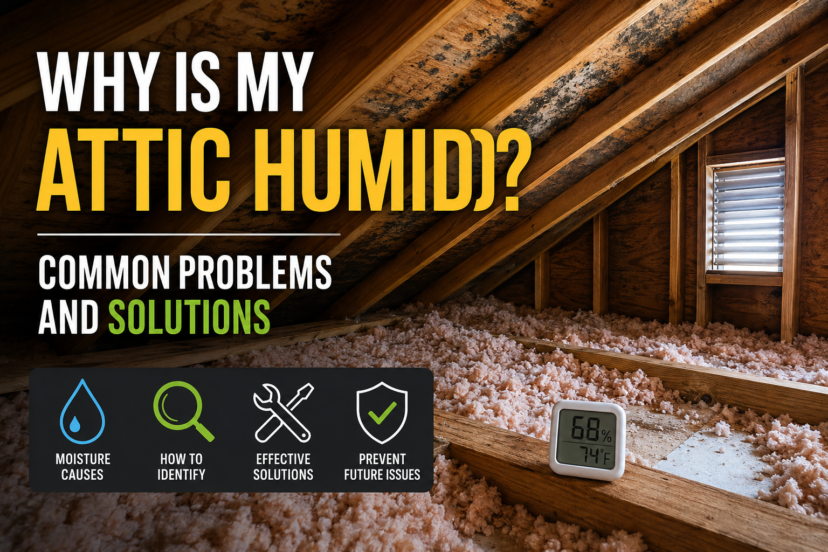
Why Is My Attic Humid? Common Problems And Solutions
If you’ve been asking why is my attic humid, you’re not alone. Many homeowners discover excessive moisture in their attic during seasonal inspections, after noticing a musty smell, or when finding damp insulation or mold growth. While attics naturally experience temperature changes throughout the year, they should never remain consistently humid.
A humid attic isn’t just uncomfortable—it can lead to mold growth, wood rot, damaged insulation, higher energy bills, and even structural problems if left untreated. Fortunately, most attic humidity problems can be traced to a handful of common issues, many of which are relatively easy to identify and fix.
In this guide, you’ll learn what causes attic humidity, how to recognize the warning signs, the most common sources of excess moisture, and the best solutions to keep your attic dry and your home protected.
🔎 Quick Answer: Why Is My Attic Humid?
A humid attic is usually caused by poor ventilation, moisture escaping from the living space below, roof leaks, or high outdoor humidity entering the attic. Warm, moist air rises naturally and can become trapped if airflow is restricted. Identifying the moisture source early helps prevent mold, damaged insulation, and expensive repairs.
Key Takeaways
Most likely cause: Poor attic ventilation trapping warm, moist air.
Usually serious? It can become serious if moisture remains trapped for long periods.
First thing to check: Look for blocked soffit or ridge vents and signs of roof leaks or bathroom exhaust fans venting into the attic.
Best solution: Improve attic ventilation, eliminate moisture sources, seal air leaks, and repair any roof damage.
🏠 Why This Happens: How To Identify The Problem
Attics sit between your conditioned living space and the outdoor environment. Warm air naturally rises through your house, carrying moisture from everyday activities like:
- Showering
- Cooking
- Laundry
- Breathing
- Running humidifiers
If this moist air leaks into the attic and cannot escape, humidity levels rise quickly.
Common warning signs include:
- Musty odors
- Condensation on roof nails
- Damp insulation
- Mold on roof decking
- Rusty metal fasteners
- Wet wood framing
- Water stains
- Frost inside the attic during winter
If you notice several of these signs together, excessive humidity is likely the problem.
🔍 The 10 Most Common Causes Of A Humid Attic
1. Poor Attic Ventilation
This is by far the most common cause.
Attics need continuous airflow. Fresh air should enter through soffit vents and exit through ridge or roof vents. Without balanced ventilation, humid air becomes trapped.
Signs include:
- Hot, stuffy attic
- Condensation
- Mold near roof sheathing
2. Bathroom Exhaust Fans Vent Into The Attic
Many older homes have bathroom fans that terminate inside the attic instead of outdoors.
Every hot shower pumps large amounts of moisture directly into the attic.
Look for:
- Flexible duct ending inside attic
- Wet insulation nearby
- Mold around duct outlet
3. Air Leaks From The Living Space
Warm indoor air constantly escapes through:
- Ceiling light fixtures
- Electrical boxes
- Plumbing penetrations
- Attic hatch
- Recessed lighting
This air carries moisture that raises attic humidity.
4. Roof Leaks
Even a tiny roof leak can increase attic humidity over time.
Possible sources include:
- Missing shingles
- Damaged flashing
- Roof vents
- Chimney flashing
- Skylights
Unlike condensation, leaks often create localized wet areas.
5. Blocked Soffit Vents
Insulation often blocks soffit vents, preventing fresh air from entering.
Without intake ventilation, ridge vents cannot function properly.
Check for:
- Insulation packed tightly against soffits
- Bird nests
- Debris
- Damaged vent openings
6. High Outdoor Humidity
Homes in humid climates naturally experience higher attic moisture.
Summer air entering the attic may already contain significant humidity.
This becomes worse when ventilation is poor.
7. Wet Or Damp Insulation
Insulation can trap moisture from:
- Roof leaks
- Condensation
- Plumbing leaks
Once insulation becomes wet, humidity remains elevated much longer.
Wet insulation also loses much of its insulating ability.
8. HVAC Duct Leaks
If HVAC ducts run through the attic, leaking ducts may release conditioned air that causes condensation under certain conditions.
Poorly insulated ducts can also sweat during humid weather.
Look for:
- Water droplets on ducts
- Damp insulation
- Rust around metal ducts
9. Plumbing Or Appliance Leaks
Water supply lines, HVAC condensate lines, or attic-installed water heaters may slowly leak.
Even small leaks can create surprisingly humid conditions over time.
10. Inadequate Attic Air Sealing
Many homes have dozens of small ceiling gaps that allow moisture into the attic.
These include:
- Wiring holes
- Plumbing penetrations
- Chimney chases
- Attic access panels
Sealing these leaks often makes a noticeable difference.
✅ How To Confirm The Cause
Before making repairs, determine where the moisture originates.
Inspect the attic for:
- Roof leaks after heavy rain
- Condensation on nails
- Mold patches
- Wet insulation
- Rusty fasteners
- Water stains
Next, check:
- Bathroom fan ducting
- Dryer vent routing
- HVAC ducts
- Soffit vents
- Ridge vents
A hygrometer can measure attic humidity.
Generally, attic humidity should not remain consistently high for long periods.
If the source isn’t obvious, a roofing contractor or home inspector can perform a detailed moisture inspection.
🛠️ How To Fix A Humid Attic
The correct solution depends on the underlying cause.
Improve Ventilation
Ensure attic ventilation is balanced with both intake and exhaust vents.
Possible improvements include:
- Clearing soffit vents
- Installing ridge vents
- Adding roof vents
- Installing baffles
Seal Air Leaks
Seal openings between your living space and attic using:
- Spray foam
- Caulk
- Weatherstripping
- Foam gaskets
Pay special attention to attic access doors.
Vent Bathroom Fans Outdoors
Bathroom fans should discharge outside—not into the attic.
Proper ducting significantly reduces attic moisture.
Repair Roof Leaks
Replace damaged:
- Shingles
- Flashing
- Roof boots
- Vent covers
Stopping leaks early prevents expensive structural damage.
Replace Wet Insulation
Once insulation becomes saturated, replacement is often the best option.
New insulation improves:
- Energy efficiency
- Moisture resistance
- Indoor comfort
Repair HVAC Or Plumbing Leaks
Fix leaking ducts, pipes, or condensate lines promptly.
Insulate cold ducts to reduce condensation.
Reduce Indoor Humidity
If your entire home is humid:
- Run bathroom exhaust fans
- Use kitchen range hoods
- Operate a dehumidifier if needed
- Maintain indoor humidity around 30–50%
👷 When To Call A Professional
Some situations require expert help.
Consider calling a professional if you notice:
- Extensive mold growth
- Persistent condensation
- Rotting roof framing
- Structural damage
- Large roof leaks
- Wet insulation throughout the attic
- Humidity returning despite repairs
A roofing contractor, insulation specialist, or home inspector can identify hidden moisture problems using specialized equipment.
🛡️ How To Prevent A Humid Attic
Preventing moisture is much easier than repairing damage later.
Helpful habits include:
- Inspect your attic twice a year.
- Keep soffit and ridge vents clear.
- Repair roof damage immediately.
- Seal ceiling air leaks.
- Vent bathroom fans outdoors.
- Replace damaged insulation promptly.
- Monitor indoor humidity.
- Check attic after major storms.
- Trim tree branches that may damage the roof.
Routine inspections often catch small problems before they become expensive repairs.
❓ Frequently Asked Questions
Is it normal for an attic to feel humid?
Some seasonal humidity is normal, especially during hot summer weather. However, persistent dampness, condensation, or mold is not normal and should be investigated.
Can attic humidity cause mold?
Yes. Mold grows when moisture remains on wood or insulation for extended periods. High attic humidity creates ideal conditions for mold growth.
Will adding more attic vents solve humidity?
Not always. Proper ventilation requires balanced intake and exhaust airflow. Simply adding more roof vents may not fix the underlying problem.
Should I use a dehumidifier in my attic?
Usually, no. A dehumidifier may temporarily reduce moisture, but it won’t solve ventilation issues, roof leaks, or air leaks that are causing the humidity.
Can high attic humidity increase energy bills?
Yes. Humidity and wet insulation become less effective, making your heating and cooling system work harder and increasing energy costs.
🏡 Related Home Problems
If you’re dealing with attic humidity, you may also find these topics helpful:
- Why is my attic so hot?
- Why is there condensation on my windows?
- Why is my house so humid?
- Why does my house smell musty?
- Why is my crawl space wet?
- Why is one room colder than the others?
- Why Is My Bedroom Hotter Than The Rest Of The House?
- Why does my house smell after rain?
🎯 Final Thoughts
If you’ve been wondering why is my attic humid, the good news is that the problem is usually traceable to a manageable cause. Poor ventilation, air leaks, roof damage, and excess indoor moisture account for most humid attic problems.
The key is to identify the moisture source early before it leads to mold, damaged insulation, or structural repairs. Regular attic inspections, balanced ventilation, and prompt maintenance can help keep your attic dry, your home energy-efficient, and your roof in good condition for years to come.
Disclaimer: This article is intended for general educational purposes only and should not replace professional inspection or repair advice. If you discover significant mold, structural damage, or ongoing water intrusion, consult a qualified roofing contractor or home inspection professional.