Why Does My Crawl Space Smell Musty? 10 Common Causes And How To Fix It
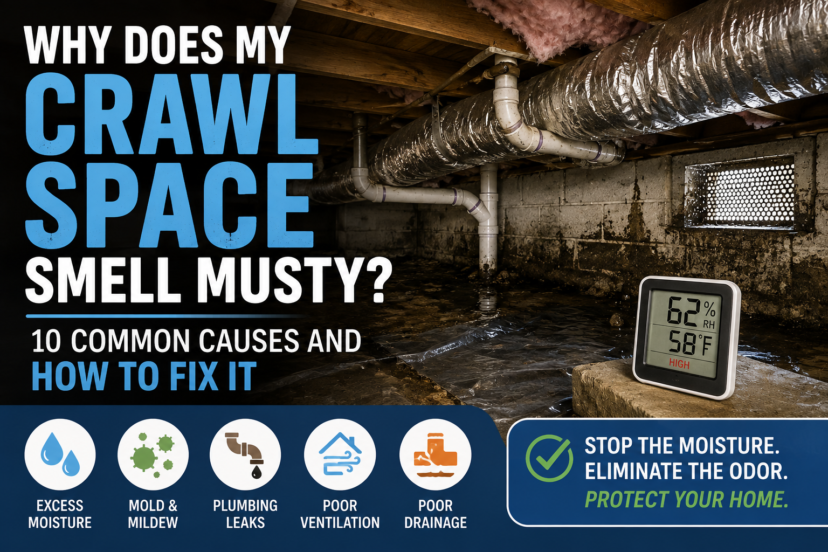
A musty smell in your crawl space is almost always caused by excess moisture trapped in a dark, poorly ventilated environment. A musty odor coming from beneath your home isn’t something you want to ignore. If you’re asking, “Why does my crawl space smell musty?”, excess moisture is usually the first thing to investigate. Damp soil, high humidity, plumbing leaks, poor drainage, condensation, or wet building materials can all create the conditions that produce earthy, stale odors.
The smell may stay underneath the house, but crawl-space air can also move into living areas through gaps around plumbing, wiring, ductwork, and floors. That means a moisture problem below your home can sometimes become noticeable upstairs.
The good news is that a musty crawl space doesn’t automatically mean you have major structural damage or a huge mold problem. Sometimes the source is relatively straightforward to correct.
Below, we’ll walk through the most common causes, how to identify where the moisture is coming from, practical ways to correct it, and when it’s time to bring in a professional.
🔍 Why This Happens – How To Identify The Problem
A musty smell is usually a symptom rather than the underlying problem.
The real question is: Where is the moisture coming from?
Crawl spaces are especially vulnerable because they’re located close to the ground and may contain exposed soil, plumbing, HVAC ducts, wood framing, insulation, and foundation walls.
Begin by looking at when the odor becomes strongest.
Does it smell worse after heavy rain? That could point toward drainage or groundwater.
Does it become stronger during hot, humid summer weather? Humidity and condensation may be responsible.
Does one particular area smell much worse than the rest? Look for plumbing leaks, wet insulation, or localized water intrusion.
If you can safely access the crawl space, use a bright flashlight and inspect for:
- Standing water
- Damp or muddy soil
- Wet foundation walls
- Water stains
- Plumbing leaks
- Condensation on ducts or pipes
- Sagging or wet insulation
- Discolored wood
- Visible fungal growth
- Pest activity
- Damaged vapor barriers
A hygrometer can also help you track crawl-space relative humidity over time.
Avoid disturbing suspicious growth or heavily contaminated materials unnecessarily. Large moisture or mold problems are better evaluated professionally.
🏠 10 Most Common Causes Of A Musty Crawl Space
1. Moisture Is Evaporating From The Ground
In crawl spaces with exposed soil, moisture can continuously evaporate from the earth into the air.
The soil doesn’t need to look soaked for this to happen.
Over time, ground moisture can raise crawl-space humidity enough to create damp conditions on wood, insulation, and other surfaces.
✅ How To Confirm The Cause
Check whether the crawl space has exposed dirt or an incomplete ground vapor barrier.
If the soil remains damp and humidity stays elevated even without obvious leaks, ground moisture may be a major contributor.
2. The Crawl Space Has High Humidity
Warm, humid outdoor air can create problems when it enters a cooler crawl space.
As that air cools, its relative humidity rises. Under the right conditions, moisture may condense on cool surfaces.
Persistent high humidity can create favorable conditions for fungal growth and musty odors.
✅ How To Confirm The Cause
Use a digital hygrometer to monitor humidity over several days.
If humidity remains high for long periods—particularly during warm weather—moisture control deserves attention.
3. Rainwater Is Draining Toward The Foundation
Poor exterior drainage is a common source of crawl-space moisture.
If the ground slopes toward the house or gutters and downspouts discharge too close to the foundation, rainwater can collect around foundation walls and eventually enter underneath the home.
✅ How To Confirm The Cause
Inspect the exterior during or shortly after heavy rain.
Look for:
- Water pooling near the foundation
- Overflowing gutters
- Short or disconnected downspouts
- Soil sloping toward the house
- Damp foundation walls inside the crawl space
If the musty smell gets worse after rain, drainage should be high on your troubleshooting list.
4. A Plumbing Pipe Is Leaking
Even a small plumbing leak can introduce a surprising amount of moisture over time.
Crawl spaces often contain water supply pipes, drain lines, and plumbing connections that may be difficult to see from inside the house.
A slow drip can soak insulation, wood, or soil without producing an obvious puddle.
✅ How To Confirm The Cause
Inspect accessible plumbing with a flashlight.
Look for droplets, corrosion, staining, damp insulation, wet wood, or unusually moist soil beneath pipes.
Plumbing leaks should be repaired rather than simply dried around.
5. Condensation Is Forming On HVAC Ducts Or Pipes
Cold air-conditioning ducts can become condensation magnets during humid weather.
When warm, moisture-rich air contacts a cold duct surface, water can condense on it—similar to moisture forming on a cold glass.
Damaged or missing duct insulation can make this worse.
✅ How To Confirm The Cause
During warm weather while the AC is operating, inspect accessible ducts and cold-water pipes.
Visible water droplets or wet insulation around them can indicate condensation.
6. The Ground Vapor Barrier Is Missing Or Damaged
A ground vapor barrier helps limit how much moisture evaporates from soil into a crawl space.
If the barrier is missing, torn, poorly installed, or covers only part of the ground, moisture can continue entering the space.
✅ How To Confirm The Cause
Look across the crawl-space floor.
If large areas of soil are exposed or the existing plastic is badly damaged or displaced, ground-moisture control may be inadequate.
7. Groundwater Is Entering The Crawl Space
Some crawl spaces experience water intrusion because of a high water table, poor site drainage, or groundwater movement.
This can create standing water or repeatedly saturated soil even when gutters and downspouts appear to be working properly.
✅ How To Confirm The Cause
Look for puddles, mud, mineral staining, water lines on foundation walls, or areas that repeatedly become wet after prolonged rain.
Recurring standing water usually requires more than a portable dehumidifier.
8. Wet Insulation Is Holding Moisture
Fiberglass and other insulation materials can become wet because of leaks, condensation, or water intrusion.
Once insulation is damp, it may remain wet for a long time and can trap dirt, odors, and moisture against surrounding materials.
Sagging insulation is often an obvious warning sign.
✅ How To Confirm The Cause
Look for insulation that’s:
- Sagging
- Discolored
- Compressed
- Damp
- Falling from floor joists
- Stained near plumbing or ductwork
Don’t assume wet insulation will simply dry and return to its original condition.
9. Mold Or Fungal Growth Has Developed
Persistent moisture can allow mold and other fungi to grow on wood, paper-faced materials, dust, and other organic surfaces.
A musty or earthy odor is often associated with microbial activity, although odor alone cannot confirm exactly what type of growth is present.
Color isn’t a reliable way to identify mold species either.
✅ How To Confirm The Cause
Look for unusual spotting, fuzzy growth, staining, or discoloration on framing and other surfaces.
If the affected area is extensive, the moisture source is unknown, or you’re unsure how to handle contaminated materials safely, consider professional evaluation.
10. A Pest Or Animal Problem Is Creating Odors
Not every unpleasant crawl-space odor comes from moisture.
Rodents and other animals may enter crawl spaces and leave behind nesting materials, urine, droppings, or carcasses.
These odors can sometimes be described as musty, stale, or earthy—especially when mixed with damp conditions.
✅ How To Confirm The Cause
Look for droppings, nests, gnaw marks, damaged insulation, tracks, or obvious entry points.
Avoid handling animal waste without appropriate precautions because some pest contamination can create health risks.
🛠️ How To Fix A Musty Crawl Space
The most important rule is simple:
Fix the moisture source before trying to eliminate the smell.
Air fresheners, odor absorbers, and sprays may temporarily mask an odor, but they won’t solve wet soil, plumbing leaks, groundwater, or high humidity.
Start outside the house.
Clean clogged gutters where safe to do so, make sure downspouts discharge water appropriately away from the foundation, and check whether landscaping directs water toward the home.
Inside the crawl space, repair plumbing leaks and investigate standing water.
If exposed ground is contributing moisture, an appropriately installed ground vapor barrier can reduce evaporation. More comprehensive crawl-space encapsulation may be appropriate for some homes and climates.
Damaged or wet insulation may need to be removed and replaced after the moisture problem is corrected.
If high humidity remains a problem in an enclosed or encapsulated crawl space, a properly sized dehumidification or conditioned-air strategy may be needed.
Avoid installing a dehumidifier without addressing bulk water or ground moisture first. Otherwise, the unit may run continuously while fighting an ongoing water source.
👷 When To Call A Professional
Some crawl-space problems are relatively easy to identify, while others require specialized equipment or experience.
Consider professional help if you find:
- Large areas of suspected mold
- Standing water that repeatedly returns
- Structural wood that appears soft or deteriorated
- Major plumbing leaks
- Significant pest contamination
- Severely damaged insulation
- Persistent humidity despite basic moisture control
- Foundation cracks with water intrusion
- Drainage problems you can’t correct easily
- Strong odors entering living areas
Depending on the cause, you may need an HVAC contractor, plumber, drainage specialist, pest-control professional, mold-remediation contractor, foundation specialist, or building-performance professional.
If structural framing appears damaged, a qualified structural professional may also be appropriate.
🛡️ How To Prevent Crawl-Space Musty Odors
Prevention begins with keeping water away from the space.
Inspect gutters and downspouts periodically and make sure roof runoff isn’t being dumped beside the foundation.
Maintain exterior grading so water moves away from the home where practical.
Check accessible plumbing periodically for slow leaks, especially after freezing weather or plumbing work.
If your crawl space has a ground vapor barrier, inspect it occasionally for tears, displacement, or exposed soil.
Keep an eye on insulation and HVAC ducts as well. Wet or sagging insulation and condensation-covered ducts are early signs that moisture conditions need attention.
A digital humidity sensor can be especially useful because it allows you to monitor conditions without constantly entering the crawl space.
Most importantly, don’t ignore a new musty smell.
Finding a small leak or drainage problem early is usually much easier than dealing with widespread moisture damage later.
❓ Frequently Asked Questions
Is A Musty Crawl Space Normal?
A slight earthy smell may occur in some crawl spaces, but a persistent strong musty odor often indicates excess moisture or contaminated materials and is worth investigating.
Can Crawl-Space Odors Get Into My House?
Yes. Air can move from a crawl space into living areas through gaps around plumbing, wiring, ductwork, flooring, and other openings. Air-pressure differences within the house can encourage this movement.
Will A Dehumidifier Get Rid Of A Crawl-Space Smell?
It may help when excessive humidity is part of the problem, but it won’t repair plumbing leaks, stop groundwater, correct drainage, or remove damaged materials. The moisture source needs to be addressed first.
Why Does My Crawl Space Smell Worse After Rain?
A stronger odor after rain often points toward poor exterior drainage, groundwater intrusion, foundation leakage, or damp soil beneath the house.
Can A Musty Crawl Space Damage My Home?
Persistent moisture can contribute to mold growth, insulation deterioration, wood decay, corrosion, and pest problems. The risk depends on how much moisture is present and how long the condition continues.
🏡 Final Thoughts On Why Does My Crawl Space Smell Musty
If you’re asking, “Why does my crawl space smell musty?”, moisture is the most important place to start your investigation.
Look for damp soil, standing water, plumbing leaks, condensation, drainage problems, damaged insulation, and an inadequate ground vapor barrier.
Then pay attention to when the odor appears.
A smell that becomes stronger after rain suggests a different problem from one that appears mainly during hot, humid summer weather.
Most importantly, don’t focus only on removing the odor.
Find the moisture source, stop it, dry the crawl space, and then address materials that have become contaminated or damaged.
That approach does more than make the crawl space smell better. It can also help protect your insulation, wood framing, HVAC components, and the overall condition of your home.
Disclaimer: This article provides general home improvement information and isn’t a substitute for professional mold, structural, plumbing, HVAC, drainage, pest-control, or indoor-air-quality advice. Crawl spaces can contain electrical hazards, contaminated materials, pests, standing water, and restricted-access hazards. Do not enter a crawl space if conditions appear unsafe. Consult an appropriately qualified professional when necessary.
🔗 Related Home Problems
A musty crawl space can sometimes occur alongside other moisture or comfort problems, including:
- House smelling musty or damp
- High indoor humidity
- Uneven temperatures between rooms
- Increased indoor odors after rain
- Higher heating or cooling costs
When several of these symptoms appear together, consider evaluating the entire moisture system around the home rather than treating each symptom separately.