Why Is My Crawl Space Wet? Causes, Risks, And Next Steps
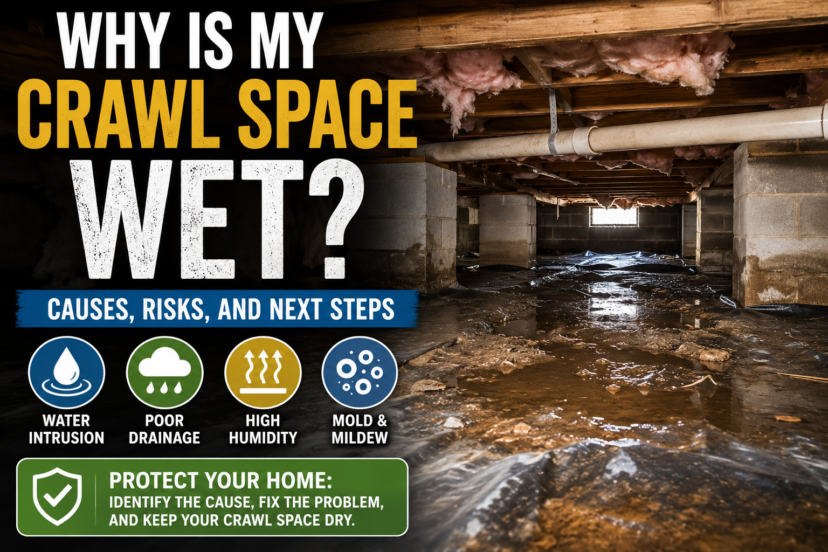
If you’ve been wondering, why is my crawl space wet, you’re dealing with a problem that many homeowners overlook until it starts causing bigger issues. A wet crawl space may seem harmless since it’s out of sight, but excess moisture beneath your home can lead to mold growth, wood rot, unpleasant odors, higher indoor humidity, and even structural damage over time.
Fortunately, a wet crawl space doesn’t always mean there’s a major foundation problem. In many cases, the moisture comes from poor drainage, groundwater, plumbing leaks, or condensation, all of which can often be corrected before serious damage occurs.
This guide explains why crawl spaces become wet, how to identify the source of the moisture, practical ways to fix the problem, and how to prevent it from happening again.
💧 Quick Answer: Why Is My Crawl Space Wet?
A crawl space usually becomes wet because water enters from outside, groundwater rises beneath the home, plumbing leaks occur, or humid air condenses on cool surfaces. Poor drainage, clogged gutters, foundation cracks, missing vapor barriers, and heavy rainfall are the most common causes. Identifying the source of the moisture is the first step toward protecting your home’s structure.
Key Takeaways
Most likely cause: Poor drainage allowing groundwater or rainwater to enter the crawl space.
Usually serious? It can become serious if moisture remains for long periods, leading to mold, wood rot, and structural damage.
First thing to check: Look for standing water, plumbing leaks, clogged gutters, poor grading, and signs of moisture around the foundation.
Best solution: Improve exterior drainage, repair leaks, install or repair a vapor barrier, and control humidity with proper ventilation or encapsulation if appropriate.
🔍 Why This Happens: How To Identify The Problem
A crawl space sits directly beneath your home and is surrounded by soil, making it naturally vulnerable to moisture. During rainy weather or periods of high humidity, water can enter through the ground, foundation walls, plumbing leaks, or humid outdoor air.
Moisture often builds gradually, so homeowners may first notice indirect signs rather than standing water.
Common warning signs include:
- Musty odors inside the house
- High indoor humidity
- Mold growth
- Sagging or warped floors
- Wood rot
- Condensation on pipes
- Visible puddles beneath the home
- Increased pest activity
Finding the source of the moisture is far more important than simply drying the crawl space.
🏡 The Most Common Causes Of Why Your Crawl Space Is Wet
1. Poor Drainage Around The Foundation
The most common cause is poor drainage outside the home.
When rainwater pools around the foundation, it can seep into the crawl space.
Common drainage issues include:
- Soil sloping toward the home
- Standing water
- Low spots near the foundation
- Poor landscaping
Signs:
- Water appears after rain.
- Wet soil surrounds the house.
- Crawl space moisture worsens during storms.
2. Clogged Gutters
Overflowing gutters dump large amounts of water next to the foundation.
Over time, this increases soil moisture and allows water to enter beneath the house.
Clean gutters regularly to prevent this common problem.
3. Downspouts Ending Too Close To The House
Even clean gutters can’t protect your foundation if downspouts discharge water beside the home.
Ideally, downspouts should direct water at least 5 to 10 feet away from the foundation.
4. Groundwater Seepage
After prolonged rainfall or snowmelt, groundwater levels can rise enough to enter the crawl space through the soil.
This often creates:
- Standing water
- Saturated soil
- Persistent dampness
5. Plumbing Leaks
Water supply lines, drainpipes, or water heaters located above or within the crawl space can leak.
Even small leaks may keep the area constantly damp.
Check for:
- Dripping pipes
- Damp insulation
- Mineral buildup
- Higher-than-normal water bills
6. Missing Or Damaged Vapor Barrier
A vapor barrier helps prevent moisture from evaporating out of the soil.
Without one—or if it’s torn—ground moisture continually enters the crawl space air.
7. Foundation Cracks
Small cracks allow water to enter during heavy rain.
Look for:
- Cracks in foundation walls
- Water stains
- Damp concrete
- Mineral deposits
8. Condensation
Warm humid air contacting cool pipes, ductwork, or framing creates condensation.
This is especially common during summer in humid climates.
Signs include:
- Water droplets on pipes
- Damp insulation
- Wet framing near HVAC ducts
9. Poor Crawl Space Ventilation
Traditional vented crawl spaces may actually become wetter during humid weather if warm outdoor air enters and condenses.
Poor airflow can also trap moisture inside.
10. Flooding Or Heavy Rain
Severe storms can overwhelm drainage systems and temporarily flood crawl spaces.
If standing water remains, prompt drying is important to reduce the risk of mold and wood damage.
✅ How To Confirm The Cause
Before making repairs, identify where the moisture is coming from.
Helpful inspections include:
- Check after heavy rainfall.
- Inspect gutters and downspouts.
- Look for standing water.
- Feel exposed wood for dampness.
- Inspect plumbing for leaks.
- Look for foundation cracks.
- Check whether the vapor barrier is damaged or missing.
- Watch for condensation on pipes.
- Measure crawl space humidity if accessible.
These observations usually reveal the primary source of the problem.
🛠️ How To Fix A Wet Crawl Space
The best repair depends on what’s causing the moisture.
Improve Exterior Drainage
Prevent water from collecting around the home by:
- Cleaning gutters
- Extending downspouts
- Regrading soil away from the foundation
- Filling low areas
Proper drainage solves many crawl space moisture problems.
Repair Plumbing Leaks
Inspect and repair leaking:
- Water lines
- Drainpipes
- Water heaters
- Outdoor hose connections
Even slow leaks should be repaired promptly.
Install Or Repair A Vapor Barrier
A properly installed vapor barrier covers exposed soil and significantly reduces moisture entering from the ground.
Repair any tears or gaps in existing barriers.
Improve Moisture Control
Depending on your home’s design and climate, moisture control may include:
- Improving airflow where appropriate
- Using a crawl-space-rated dehumidifier
- Sealing air leaks from the home above
For some homes, encapsulation may be recommended by a qualified contractor.
Remove Standing Water
Standing water should be removed promptly to reduce the risk of mold, wood rot, and insect problems.
Address the source of the water before simply drying the area.
Repair Foundation Problems
If foundation cracks or structural movement allow water to enter, professional repairs may be necessary.
👷 When To Call A Professional
Professional evaluation is recommended if you notice:
- Standing water lasting more than a day or two
- Large foundation cracks
- Mold covering extensive areas
- Sagging floors
- Structural wood rot
- Persistent moisture despite repairs
- Water entering after every rainstorm
- Signs of foundation movement
A waterproofing contractor, foundation specialist, plumber, or home inspector can determine the underlying cause.
🌬️ How To Prevent Crawl Space Moisture
Preventive maintenance helps keep crawl spaces dry year-round.
Helpful habits include:
- Clean gutters twice a year.
- Extend downspouts away from the foundation.
- Keep soil sloping away from the house.
- Inspect plumbing regularly.
- Maintain the vapor barrier.
- Repair foundation cracks promptly.
- Check the crawl space after heavy rain.
- Control humidity if needed.
Routine inspections can catch moisture problems before they become expensive repairs.
❓ Frequently Asked Questions
Is a wet crawl space dangerous?
It can be. Long-term moisture may lead to mold growth, wood rot, pest infestations, poor indoor air quality, and structural damage.
Will a dehumidifier fix a wet crawl space?
A dehumidifier helps control humidity but won’t solve water entering from leaks, groundwater, or poor drainage.
Can heavy rain cause a wet crawl space?
Yes. Poor drainage, high groundwater, or foundation leaks often allow water to enter after heavy rainfall.
Is some moisture normal?
Slight seasonal dampness may occur, but standing water, persistent dampness, or mold should be investigated.
What is a vapor barrier?
A vapor barrier is a heavy plastic sheet installed over exposed soil to reduce moisture evaporation into the crawl space.
Can a wet crawl space affect the rest of my house?
Yes. Moisture or standing water beneath your home can increase indoor humidity, contribute to musty odors, and potentially affect flooring and structural framing over time.
🔗 Related Home Problems
If your crawl space is wet, you may also find these articles helpful:
- Why is my basement damp?
- Why is my garage humid?
- Why is my house so humid?
- Mold on walls: why it appears and how to prevent it
- Why does my house smell musty?
- Why are my windows sweating?
- Condensation on windows: what causes it?
- Why does my bathroom stay humid?
🏡 Final Thoughts On Why Is My Crawl Space Wet
If you’ve been asking why is my crawl space wet, the answer is usually related to water entering from outside, groundwater seepage, plumbing leaks, condensation, or poor drainage around your home. Although the crawl space may be out of sight, ignoring moisture beneath your home can eventually lead to mold, wood rot, pests, and structural damage.
The good news is that many crawl space moisture problems can be corrected by improving drainage, repairing leaks, maintaining a vapor barrier, and controlling humidity. Taking action early helps protect your home’s structure, improve indoor air quality, and avoid more costly repairs in the future.
Disclaimer: This article is for general informational purposes only and should not be considered professional waterproofing, structural engineering, plumbing, or foundation advice. If your crawl space has recurring flooding, extensive mold growth, structural damage, or significant foundation movement, consult a qualified waterproofing contractor, foundation specialist, or home inspector for a complete evaluation.