Mold On Walls: Why It Appears And How To Prevent It
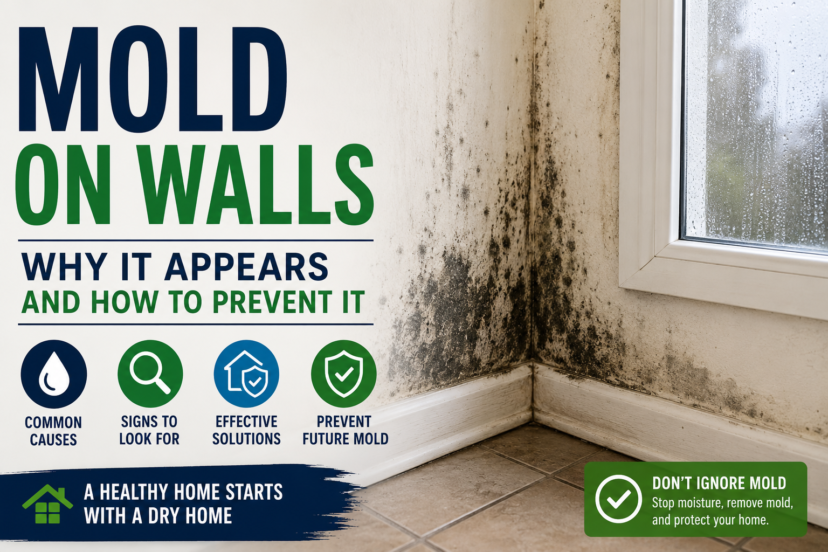
Finding mold on walls can be alarming for any homeowner. Whether it’s a few black spots in the bathroom or patches spreading across a basement wall, mold is more than just an eyesore. It often indicates excess moisture somewhere in your home, and if ignored, it can lead to property damage, unpleasant odors, and costly repairs.
The good news is that mold doesn’t appear randomly. In most cases, it’s caused by a moisture problem that can be identified and corrected. High humidity, condensation, plumbing leaks, poor ventilation, and water intrusion are among the most common culprits.
This guide explains why mold grows on walls, how to identify its source, practical ways to remove and prevent it, and when professional mold remediation may be necessary.
💧 Quick Answer: Mold On Walls
Mold on walls usually develops when excess moisture remains on surfaces for long periods. High indoor humidity, poor ventilation, condensation, plumbing leaks, roof leaks, or water damage create ideal conditions for mold growth. Fixing the moisture source is just as important as removing the visible mold to prevent it from returning.
Key Takeaways
Most likely cause: Excess moisture caused by high humidity, condensation, or hidden water leaks.
Usually serious? Small patches often aren’t serious, but widespread mold or recurring growth may indicate a larger moisture problem.
First thing to check: Look for leaks, condensation, poor ventilation, and signs of dampness near the affected wall.
Best solution: Eliminate the moisture source, dry the area thoroughly, remove mold safely, and improve ventilation.
🔍 Why Mold On Walls Happens: How To Identify The Problem
Mold spores are naturally present in both indoor and outdoor air. They only become a problem when they land on damp surfaces and have enough moisture to grow.
Walls become vulnerable when moisture remains trapped for more than a day or two. Drywall, wallpaper, paint, and wood framing all provide organic material that mold can feed on.
Common warning signs include:
- Black, green, gray, or white spots
- Musty odors
- Peeling or bubbling paint
- Water stains
- Damp or soft drywall
- Condensation on nearby windows
- Mold returning after cleaning
Identifying the source of the moisture is the most important step before attempting permanent cleanup.
🏡 The Most Common Causes Of Mold On Walls
1. High Indoor Humidity
High humidity is the leading cause of mold growth inside homes.
Moisture builds up from:
- Hot showers
- Cooking
- Drying clothes indoors
- Humidifiers
- Poor ventilation
When humidity stays above about 60%, mold can begin growing on cooler wall surfaces.
Signs:
- Foggy windows
- Damp feeling indoors
- Condensation
- Musty smells
2. Poor Ventilation
Bathrooms, kitchens, laundry rooms, and basements often trap humid air.
Without proper ventilation, moisture remains on walls long enough for mold to develop.
Common issues include:
- Broken exhaust fans
- Rarely opening windows
- Blocked air vents
3. Condensation On Cold Walls
Warm indoor air holds moisture.
When that air contacts a cold wall—especially exterior walls during winter—the moisture condenses into water droplets.
Repeated condensation provides the moisture mold needs.
4. Plumbing Leaks
Even small leaks hidden behind drywall can support mold growth for months.
Check around:
- Bathrooms
- Kitchens
- Laundry rooms
- Utility rooms
- Water supply lines
Signs often include discoloration, bubbling paint, or soft drywall.
5. Roof Leaks
Water entering from a damaged roof may travel down inside walls before becoming visible.
Look for:
- Ceiling stains
- Mold near the top of walls
- Damp attic insulation
- Water marks after storms
6. Foundation Or Basement Moisture
Basements naturally experience higher humidity than upper floors.
Moisture entering through foundation walls often leads to mold on finished basement walls.
Common causes include:
- Poor drainage
- Foundation cracks
- Hydrostatic pressure
- High groundwater
7. Water Damage After Flooding
Any wall that remains wet after flooding, burst pipes, or appliance leaks is at risk.
If drywall stays damp for more than 24 to 48 hours, mold growth becomes much more likely.
8. Furniture Blocking Airflow
Large furniture placed tightly against exterior walls reduces airflow.
This allows moisture to remain trapped behind furniture where mold can develop unnoticed.
9. Poor Insulation
Poorly insulated exterior walls remain colder during winter.
These cold surfaces encourage condensation, especially in humid homes.
10. Previous Mold Not Fully Removed
Simply painting over mold rarely solves the problem.
If the underlying moisture remains, mold usually returns.
Proper cleanup always includes fixing the moisture source first.
✅ How To Confirm The Cause
Before cleaning mold, determine why it’s growing.
Helpful checks include:
- Measure indoor humidity using a hygrometer.
- Look for nearby plumbing leaks.
- Inspect ceilings after heavy rain.
- Feel walls for dampness.
- Check behind furniture.
- Look for condensation on nearby windows.
- Examine gutters and roof if mold appears on upper floors.
- Inspect basements after rainfall.
These observations usually reveal whether humidity, leaks, or water intrusion are responsible.
🛠️ How To Fix Mold On Walls
The correct solution depends on the moisture source.
Fix The Moisture Problem
Before removing mold:
- Repair plumbing leaks.
- Fix roof leaks.
- Improve exterior drainage.
- Seal foundation cracks if appropriate.
- Address condensation problems.
Without fixing the moisture, mold almost always returns.
Lower Indoor Humidity
Keep indoor humidity between 30% and 50%.
Helpful methods include:
- Running bathroom exhaust fans
- Using kitchen range hoods
- Running a dehumidifier
- Improving ventilation
- Avoiding indoor clothes drying
Remove Small Areas Of Mold Safely
For small surface areas (generally less than about 10 square feet), you can often:
- Wear gloves, eye protection, and an N95 respirator.
- Ventilate the area.
- Clean non-porous surfaces with an appropriate mold-cleaning product or detergent and water.
- Dry the area completely.
Porous materials like drywall, insulation, or carpeting that are heavily moldy may need to be removed and replaced.
Improve Air Circulation
Better airflow helps walls dry faster.
Consider:
- Ceiling fans
- Portable fans
- Opening interior doors
- Moving furniture away from exterior walls
Replace Severely Damaged Materials
Drywall that is soft, crumbling, or extensively moldy often cannot be completely cleaned and may require replacement.
👷 When To Call A Professional
Professional help is recommended if:
- Mold covers more than about 10 square feet.
- Mold keeps returning after cleaning.
- You suspect mold inside walls.
- There has been major flooding.
- The home has significant water damage.
- Structural materials are affected.
- The moisture source cannot be identified.
A qualified mold remediation professional or home inspector can locate hidden moisture and recommend the appropriate repairs.
🌬️ How To Prevent Mold On Walls
Preventing mold is much easier than removing it.
Good habits include:
- Keep indoor humidity between 30% and 50%.
- Run bathroom and kitchen exhaust fans.
- Repair leaks immediately.
- Clean gutters regularly.
- Improve airflow throughout the home.
- Use a dehumidifier in damp basements.
- Move furniture a few inches away from exterior walls.
- Inspect your home regularly for signs of moisture.
Consistent moisture control is the best long-term defense against mold.
❓ Frequently Asked Questions
Is mold on walls dangerous?
Small patches are usually manageable when cleaned safely, and the moisture source is corrected. Extensive mold growth or recurring mold should be professionally evaluated.
Can I paint over mold?
No. Paint hides mold temporarily but doesn’t stop it from growing if moisture remains.
Why does mold keep coming back?
Recurring mold almost always means the underlying moisture problem hasn’t been resolved.
Can high humidity alone cause mold?
Yes. Indoor humidity that remains above about 60% can support mold growth, especially on cool walls.
Does bleach permanently remove mold?
Bleach may remove staining on some hard, non-porous surfaces, but it doesn’t solve the moisture problem. Cleaning methods depend on the surface, and porous materials often require replacement if heavily affected.
How quickly can mold grow?
Under the right moisture conditions, mold can begin growing within 24 to 48 hours.
🔗 Related Home Problems
If you’ve discovered mold on walls, you may also find these articles helpful:
- Why is my house so humid?
- Why does my bathroom stay humid?
- Why is my basement damp?
- Why are my windows sweating?
- Condensation on windows: what causes it?
- Why does my house smell musty?
- Why does my bathroom smell?
- Why is mold growing on my ceiling?
🏡 Final Thoughts About Mold On Walls
Finding mold on walls is usually a sign that excess moisture is present somewhere in your home. Whether it’s caused by high humidity, condensation, plumbing leaks, or water intrusion, removing the visible mold is only part of the solution. Unless the moisture source is corrected, mold is likely to return.
By controlling humidity, improving ventilation, repairing leaks promptly, and inspecting your home regularly, you can protect both your property and your indoor environment. Taking action early helps prevent small moisture problems from turning into expensive repairs later.
Disclaimer: This article is for general informational purposes only and should not be considered professional mold remediation, environmental, or building advice. If mold covers a large area, returns repeatedly, follows flooding, or you suspect hidden structural damage, consult a qualified mold remediation specialist or home inspector for a thorough evaluation.