Why Is My HVAC Blowing Cold Air? 10 Common Causes And How To Fix It
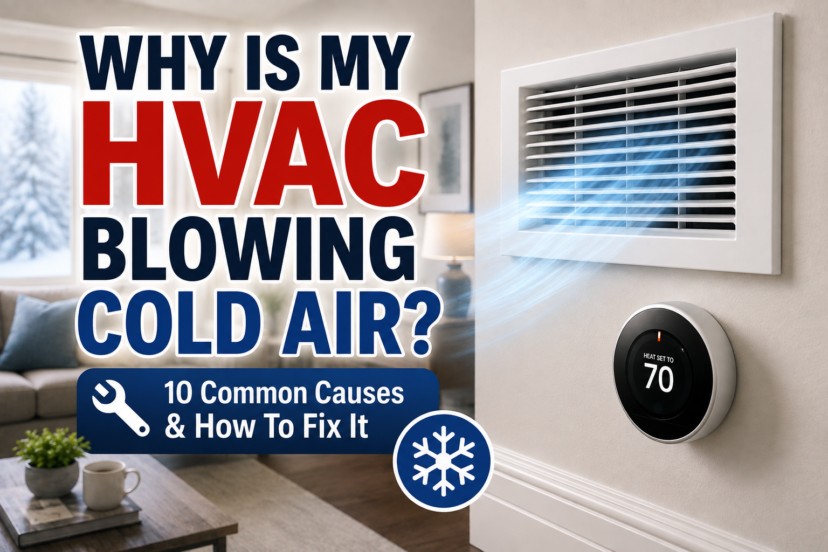
When you turn on the heat, you expect warm air—not a chilly breeze coming through the vents. If you’re asking, “Why is my HVAC blowing cold air?”, the problem may be something simple, such as an incorrect thermostat setting or a dirty air filter. However, cold air can also point to problems with your furnace, heat pump, ductwork, or fuel supply.
Before assuming you need an expensive HVAC repair, it helps to understand exactly what your system is doing. Some heating systems briefly blow cool air during normal operation, while others may produce cooler-feeling air because of the way they heat your home.
In this guide, we’ll walk through the most common reasons an HVAC system blows cold air when the heat is supposed to be running, how to narrow down the cause, which problems you may be able to correct yourself, and when it’s safer to call a qualified HVAC professional.
💡 Quick Answer: Why Is My HVAC Blowing Cold Air?
If your HVAC is blowing cold air while the heat is on, first check your thermostat. Make sure it’s set to HEAT, and the fan is set to AUTO rather than ON. Other common causes include a dirty air filter, furnace overheating, ignition problems, a heat pump defrost cycle, duct leaks, or loss of fuel or power to the heating equipment.
Key Takeaways
Most likely cause: An incorrect thermostat fan setting, normal startup operation, a dirty filter, or a heat pump operating normally in cold weather.
Usually serious? Not always. Some causes are normal or easy to correct, but ignition, electrical, fuel-supply, and equipment failures require professional attention.
First thing to check: Verify that the thermostat is set to HEAT, raise the temperature above the current room temperature, and set the fan to AUTO.
Best solution: If you’re wondering why is my HVAC blowing cold air, start with the thermostat and air filter. If the system continues blowing cold air or cannot heat your home, have a qualified HVAC technician diagnose the equipment.
🔍 Why This Happens – How To Identify The Problem
The first step is determining whether the air is actually cold or simply feels cooler than expected.
Traditional gas furnaces generally produce noticeably warm air. Heat pumps are different. They typically deliver heat at a lower temperature than a furnace, so the air coming from the vents can feel lukewarm against your skin even while the house is heating properly.
Timing matters too.
If cool air comes from the vents for only a short period when the system starts or stops, you may simply be feeling air remaining inside the ductwork. However, if cold air continues for several minutes and the indoor temperature keeps dropping, something probably needs attention.
Before troubleshooting, check:
- Whether the thermostat is set to HEAT
- Whether the fan is set to AUTO or ON
- Whether the room temperature is increasing
- Whether the HVAC filter is dirty
- Whether you have a furnace or heat pump
- Whether the problem happens constantly or occasionally
- Whether the outdoor HVAC unit is operating
- Whether there are unusual sounds, smells, or warning codes
These observations can make it much easier to narrow down the cause.
🏠 10 Most Common Causes Of An HVAC Blowing Cold Air
1. Your Thermostat Fan Is Set To ON
One of the simplest explanations is the thermostat fan setting.
When the fan is set to ON, the blower may run continuously—even when the furnace or heat pump isn’t actively producing heat.
During those periods, the system circulates room-temperature air through the ducts. In winter, that airflow can feel surprisingly cold against your skin.
✅ How To Confirm The Cause
Look at your thermostat. If the fan setting says ON, switch it to AUTO.
Wait through a few heating cycles. If the blower now runs primarily while the system is heating and the air feels warmer, you’ve probably found the problem.
2. The HVAC System Hasn’t Warmed Up Yet
A short burst of cool air at startup isn’t necessarily a problem.
Air sitting inside your ductwork can cool between heating cycles. When the blower starts, that cooler air may reach the rooms before freshly heated air arrives.
Some systems also have a brief startup sequence before full heating begins.
✅ How To Confirm The Cause
Wait a few minutes after the heating cycle starts.
If the air quickly becomes warm and the home reaches the thermostat setting normally, the system may be operating as designed.
3. Your Air Filter Is Dirty
A clogged HVAC filter restricts airflow.
In a furnace, severely restricted airflow can cause the heat exchanger area to become too hot. Safety controls may shut off the burners while the blower continues running to cool the equipment.
The result can be cool air coming from your vents even though you requested heat.
Restricted airflow can also reduce efficiency and place unnecessary stress on HVAC components.
✅ How To Confirm The Cause
Locate the HVAC filter and inspect it according to your system manufacturer’s instructions.
If it’s visibly loaded with dust and debris, replace it with the correct size and type. If the problem returns quickly, professional diagnosis may be necessary.
4. Your Heat Pump Is In Defrost Mode
If your home uses a heat pump, occasional cooler air may be completely normal.
During cold, damp weather, frost can form on the outdoor coil. The heat pump periodically enters a defrost cycle to remove that frost.
During defrost, the system temporarily changes operation. Depending on the equipment and auxiliary heat configuration, indoor supply air may feel cooler for a short time.
✅ How To Confirm The Cause
Watch whether the issue occurs occasionally during cold weather and resolves after several minutes.
Some steam or water around the outdoor unit during defrost can also be normal. However, heavy ice that doesn’t clear or repeated prolonged defrost cycles deserve professional attention.
5. The Furnace Has An Ignition Problem
Modern gas furnaces use an electronic ignition system rather than the continuously burning pilot lights common in many older systems.
If the furnace can’t ignite the burners—or can’t keep them operating—the blower may run without producing adequate heat.
Possible causes include ignition component problems, flame-sensing issues, control problems, or other equipment faults.
✅ How To Confirm The Cause
If you’re comfortable doing so, observe the furnace’s normal operating sequence without opening sealed compartments or touching components.
Many furnaces also display diagnostic codes through a small viewing window. Follow the manufacturer’s manual when interpreting codes.
Gas furnace ignition repairs should generally be left to a qualified HVAC professional.
6. The Furnace Is Overheating
It sounds strange, but a furnace that blows cold air may actually be getting too hot.
Furnaces contain safety switches designed to shut the burners down when temperatures exceed safe operating limits. The blower may continue running afterward to remove excess heat.
Restricted airflow is a common contributor. Dirty filters, blocked return vents, blower problems, or other airflow restrictions may all play a role.
✅ How To Confirm The Cause
Notice whether the furnace produces warm air initially but then switches to cooler air before the thermostat reaches its target.
Repeated short heating cycles can also suggest overheating or another system problem.
Don’t repeatedly reset a furnace that is shutting itself down. Have the underlying cause diagnosed.
7. Your Gas Supply Has Been Interrupted
A gas furnace needs an uninterrupted fuel supply to produce heat.
If the gas supply has been shut off, interrupted, or affected by another problem, the furnace may be unable to ignite.
This is not an area where homeowners should experiment with gas lines or safety controls.
✅ How To Confirm The Cause
Check whether other gas appliances in the home are operating normally, if applicable.
If you smell gas, do not troubleshoot the furnace. Leave the area and follow your gas utility’s emergency instructions from a safe location.
8. There Is A Problem With The Ductwork
Your heating equipment may be producing warm air correctly, but that doesn’t guarantee all of it reaches your rooms.
Disconnected, damaged, or leaking ducts can lose heated air before it reaches the supply registers. Ducts running through cold attics, crawl spaces, or garages can be particularly vulnerable to heat loss when they’re poorly sealed or insulated.
✅ How To Confirm The Cause
Compare several vents around your home.
If some supply registers produce warm air while others are noticeably cooler or have much weaker airflow, ductwork may be contributing to the problem.
Accessible ductwork can be visually inspected, but hidden leaks often require professional evaluation.
9. Your Heat Pump Is Struggling In Very Cold Weather
Heat pumps transfer heat from outside air into your home. Modern cold-climate models can operate at surprisingly low outdoor temperatures, but performance depends heavily on the equipment and conditions.
As temperatures fall, some systems rely more heavily on auxiliary or backup heat.
If that backup heat isn’t functioning properly, the system may struggle to maintain the thermostat setting.
✅ How To Confirm The Cause
Compare the problem with outdoor temperature.
If the home heats normally during milder weather but struggles only during very cold conditions, your heat pump’s capacity, auxiliary heat, or system performance may need evaluation.
10. A Furnace Or HVAC Component Has Failed
Sometimes cold air indicates a mechanical, electrical, or control problem that can’t be solved through basic homeowner troubleshooting.
Possible issues can involve:
- Blower controls
- Ignition components
- Flame sensors
- Limit switches
- Control boards
- Heat pump components
- Auxiliary heating equipment
- Electrical connections
Correct diagnosis requires appropriate testing rather than replacing parts based on symptoms alone.
✅ How To Confirm The Cause
If the thermostat and filter appear normal but the system repeatedly fails to produce heat, professional diagnosis is the safest next step.
Avoid opening electrical compartments or bypassing safety controls.
🛠️ How To Fix An HVAC System Blowing Cold Air
Start with simple, low-risk checks.
First, set the thermostat to HEAT and make sure the desired temperature is several degrees above the current room temperature. Set the fan to AUTO.
Next, inspect your HVAC filter. Replace it if it’s dirty, using the size and filter type recommended for your equipment.
Check supply and return vents throughout the house. They should be open and free from furniture, rugs, curtains, boxes, or other obstructions.
If you have a heat pump, give the system time to complete an occasional defrost cycle before assuming something has failed.
Also check your electrical panel for an obviously tripped HVAC-related breaker. If a breaker trips repeatedly, don’t continue resetting it—repeated tripping can indicate an electrical or equipment problem that requires professional diagnosis.
For gas furnaces, don’t attempt DIY repairs involving gas valves, burners, combustion components, or safety switches.
If these basic steps don’t restore normal heating, contact a qualified HVAC technician.
👷 When To Call A Professional
Some heating problems shouldn’t be treated as DIY projects.
Call an HVAC professional if:
- The system continuously blows cold air
- The house cannot reach the thermostat setting
- The furnace repeatedly starts and stops
- A breaker repeatedly trips
- The furnace displays a persistent fault code
- Your heat pump remains heavily iced over
- You suspect damaged or disconnected ducts
- You hear unusual grinding, banging, or electrical noises
- The system repeatedly overheats
- Basic thermostat and filter checks don’t solve the problem
If you smell gas, suspect carbon monoxide, or a carbon monoxide alarm activates, treat the situation as an emergency. Leave the home and follow instructions from local emergency services and your gas utility from a safe location.
Never bypass furnace safety switches or combustion controls to keep a malfunctioning system running.
🛡️ How To Prevent Your HVAC From Blowing Cold Air
Routine maintenance can prevent many heating problems and help identify developing issues before they leave your home cold.
Check your HVAC filter regularly and replace or clean it according to the equipment and filter manufacturer’s recommendations.
Keep supply and return registers clear. Furniture, rugs, storage boxes, and curtains can interfere with airflow without homeowners realizing it.
If you use a heat pump, keep the outdoor unit free from leaves and other loose debris while maintaining manufacturer-recommended clearance around it. Don’t chip or scrape ice from the equipment.
Consider scheduling professional HVAC maintenance before heating season. A technician can inspect critical components, check system operation, evaluate airflow, and identify signs of wear.
It’s also a good idea to learn what normal operation sounds and feels like. Changes in cycle length, airflow, noise, or temperature can provide an early warning that something needs attention.
❓ Frequently Asked Questions
Why Is My HVAC Blowing Cold Air When The Heat Is On?
Common reasons include a thermostat fan set to ON, a dirty air filter, furnace ignition problems, overheating, heat pump defrost operation, or equipment failure. Start by checking the thermostat and filter.
Why Does My Furnace Blow Cold Air Before Warm Air?
Cool air may be sitting inside the ductwork between heating cycles. When the blower starts, this air reaches your vents before freshly heated air. A brief period can be normal.
Why Does My Furnace Blow Hot Air And Then Cold Air?
If the furnace initially heats correctly and then begins blowing cool air, it may be overheating and shutting down the burners while the blower continues operating. Restricted airflow is one possible cause.
Can A Dirty Air Filter Cause Cold Air From The Vents?
Yes. A severely clogged filter can restrict airflow and contribute to furnace overheating. A safety control may shut down the burners while the blower continues running.
Is It Normal For A Heat Pump To Blow Cool Air?
Sometimes. Heat pump supply air often feels less intensely hot than furnace air. You may also notice temporarily cooler air during a defrost cycle. The important question is whether your home continues warming normally.
Should I Turn My HVAC Off If It Is Blowing Cold Air?
If you’ve confirmed the thermostat is correctly set and the system continuously blows cold air without warming your home, shutting the system down while arranging professional diagnosis may be appropriate. If you smell gas, suspect carbon monoxide, or notice an electrical hazard, leave the area and follow emergency guidance.
How Much Does It Cost To Fix An HVAC System Blowing Cold Air?
Costs vary significantly depending on the cause. A thermostat adjustment or filter replacement may cost little or nothing beyond the filter, while ignition, electrical, ductwork, or major equipment repairs can cost substantially more. A proper diagnosis is necessary before estimating repair costs.
🔗 Related Home Problems
Cold air from your HVAC system may occur alongside other heating and airflow problems, including:
- Furnace running but the house staying cold
- Weak airflow from HVAC vents
- One room being colder than the rest of the house
- HVAC system constantly turning on and off
- Uneven temperatures between floors
- Unusually high winter energy bills
- HVAC vents making unusual noises
If you’re experiencing several of these problems at the same time, the underlying issue may involve airflow, ductwork, equipment performance, insulation, or system sizing rather than a single vent or thermostat setting.
🏡 Final Thoughts
If you’re wondering, “Why is my HVAC blowing cold air?”, don’t immediately assume that your furnace or heat pump needs to be replaced.
Start with the simplest possibilities.
Check that your thermostat is set to HEAT, change the fan setting from ON to AUTO if necessary, inspect the air filter, and make sure your vents aren’t blocked. If you own a heat pump, remember that less-hot supply air and occasional defrost cycles can be part of normal operation.
However, persistent cold air deserves attention—especially when your home cannot maintain the thermostat setting.
Ignition failures, repeated overheating, electrical problems, duct damage, and heat pump malfunctions are best diagnosed by a qualified HVAC professional.
By identifying the symptoms early and keeping up with routine maintenance, you can often prevent a small heating problem from turning into an uncomfortable—and potentially more expensive—winter breakdown.
Disclaimer: This article provides general home improvement information and is not a substitute for professional HVAC, electrical, gas, or safety advice. Heating systems vary by equipment and installation. Never bypass safety controls or attempt repairs involving gas lines, combustion components, or hazardous electrical equipment unless you are appropriately qualified. If you smell gas or suspect carbon monoxide, leave the property and follow local emergency and utility guidance from a safe location.