
Why Is My HVAC Blowing Warm Air? Here’s How To Get Cool Air Back Fast
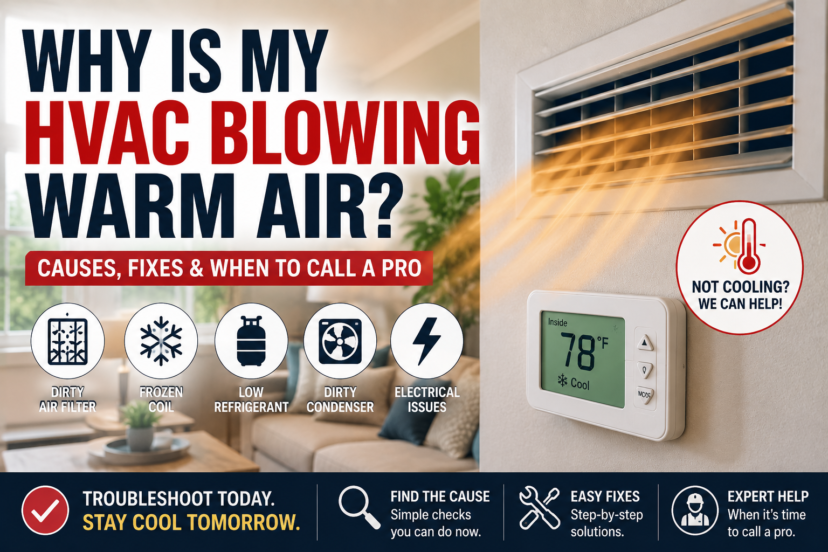
If you’ve been asking, why is my HVAC blowing warm air, you’re not alone. Few home problems are more frustrating than turning on your air conditioner during a hot summer day only to feel warm air coming from the vents. Not only does it make your home uncomfortable, but it can also lead to higher energy bills as your HVAC system works harder without effectively cooling your living space.
Fortunately, warm air doesn’t always mean you need an expensive repair or a new air conditioner. Sometimes the problem is as simple as an incorrect thermostat setting, a dirty air filter, or a tripped circuit breaker. In other cases, the issue may involve low refrigerant, frozen evaporator coils, or a failing compressor.
This guide explains the most common reasons your HVAC is blowing warm air, how to identify the cause, practical solutions you can try yourself, and when it’s time to contact an HVAC professional.
⭐ Quick Answer: Why Is My HVAC Blowing Warm Air?
If you’re wondering why is my HVAC blowing warm air, the most common causes include an incorrect thermostat setting, a dirty air filter, a frozen evaporator coil, low refrigerant, a dirty outdoor condenser, electrical issues, or a failing compressor. Many problems can be resolved through basic maintenance, while others require professional HVAC diagnosis and repair.
Key Takeaways
Most likely cause: Incorrect thermostat settings, restricted airflow, or a dirty outdoor condenser is preventing proper cooling.
Usually serious? Not always. Many warm-air problems are caused by simple maintenance issues, although refrigerant leaks or compressor failures require professional repair.
First thing to check: Verify the thermostat is set to “Cool,” inspect the air filter, check the outdoor condenser, and make sure the circuit breakers haven’t tripped.
Best solution: If you’re asking why is my HVAC blowing warm air, start with basic maintenance, improve airflow, clean the outdoor unit, and schedule professional service if the problem continues.
🌡️ Why This Happens – How To Identify The Problem
An air conditioner removes heat from your home by circulating refrigerant between the indoor evaporator coil and the outdoor condenser. When every component works properly, cool air is delivered through your vents.
If warm air begins blowing, one or more parts of this cooling process have been interrupted.
Start by answering a few simple questions:
- Is the air slightly cool or completely warm?
- Does the outdoor condenser fan run?
- Is the indoor blower operating normally?
- Has the thermostat been changed recently?
- Did the problem begin suddenly or gradually?
These clues often help identify the underlying issue before repairs begin.
🔍 The 11 Most Common Causes
1. Thermostat Set Incorrectly
One of the simplest explanations is an incorrect thermostat setting.
Check that:
- Mode is set to Cool
- Fan is set to Auto
- Desired temperature is below room temperature
How To Confirm
Adjust the thermostat a few degrees lower and wait several minutes.
2. Dirty Air Filter
A clogged filter restricts airflow across the evaporator coil.
Poor airflow reduces cooling capacity and may eventually cause the coil to freeze.
How To Confirm
Remove the filter. If it’s dirty or clogged, replace it.
3. Frozen Evaporator Coil
When airflow becomes restricted or refrigerant levels are low, ice forms on the evaporator coil.
Once frozen, little or no cooling occurs.
How To Confirm
Inspect refrigerant lines near the indoor unit for visible ice.
4. Dirty Outdoor Condenser
The outdoor condenser releases heat collected from inside your home.
Leaves, dirt, grass clippings, and debris reduce its efficiency.
How To Confirm
Inspect the outdoor unit for blocked fins or accumulated debris.
5. Low Refrigerant
Low refrigerant usually indicates a leak somewhere in the cooling system.
Without enough refrigerant, the system cannot absorb heat effectively.
How To Confirm
Common symptoms include:
- Warm airflow
- Ice formation
- Longer cooling cycles
- Hissing sounds
6. Tripped Circuit Breaker
The indoor blower may continue operating while the outdoor condenser loses power.
The result is warm air blowing through the vents.
How To Confirm
Inspect your home’s electrical panel for tripped breakers.
7. Dirty Evaporator Coil
Dust buildup on the indoor coil acts as insulation, reducing heat transfer.
Cooling performance gradually declines.
How To Confirm
The problem develops slowly over several months.
8. Blower Motor Problems
A failing blower motor may not move enough air across the evaporator coil.
This reduces overall cooling performance.
How To Confirm
Listen for unusual humming, squealing, or inconsistent airflow.
9. Refrigerant Line Damage
Damaged refrigerant lines reduce system performance and cooling capacity.
How To Confirm
Visible oil stains near refrigerant connections often indicate leaks.
10. Compressor Failure
The compressor is the heart of your air conditioning system.
Without it, refrigerant cannot circulate properly.
How To Confirm
The outdoor unit may hum without cooling or fail to start altogether.
11. Aging HVAC System
Older HVAC systems naturally lose efficiency over time.
After 15–20 years, major component failures become more common.
How To Confirm
Frequent repairs combined with declining cooling performance often indicate aging equipment.
✅ How To Confirm The Cause
Before calling an HVAC technician, perform these simple inspections:
- Verify thermostat settings.
- Replace the air filter if needed.
- Check supply vents for airflow.
- Inspect the outdoor condenser.
- Look for ice on refrigerant lines.
- Reset tripped breakers if safe.
- Listen for unusual equipment noises.
Many homeowners discover the solution during these basic checks.
🔧 How To Fix It
Many warm-air problems can be corrected through routine maintenance.
Replace The Air Filter
Dirty filters should be replaced every one to three months.
Homes with pets often require more frequent replacement.
Adjust Thermostat Settings
Confirm:
- Cooling mode is selected.
- Fan is on Auto.
- Temperature setting is correct.
Clean Around The Outdoor Condenser
Turn off power before removing:
- Leaves
- Grass
- Dirt
- Shrubs growing too close
Maintain at least two feet of clearance.
Allow Frozen Coils To Thaw
If ice is present:
- Turn off cooling.
- Leave the fan running.
- Replace the filter.
- Wait for complete thawing.
If the coil freezes again, professional service is necessary.
Improve Airflow
Ensure:
- Supply vents remain open.
- Return vents aren’t blocked.
- Furniture doesn’t restrict airflow.
Schedule Annual HVAC Maintenance
Routine inspections help technicians:
- Clean coils
- Check refrigerant levels
- Inspect electrical components
- Test airflow
- Clean condensate drains
Preventive maintenance reduces the risk of unexpected breakdowns.
👷 When To Call A Professional
Contact an HVAC technician if:
- Warm air continues after replacing the filter.
- Refrigerant leaks are suspected.
- Ice repeatedly forms on the evaporator coil.
- The outdoor condenser won’t start.
- Breakers trip repeatedly.
- Compressor noises develop.
- Cooling performance continues to decline.
Licensed technicians have specialized tools to diagnose refrigerant, electrical, and compressor problems safely.
🛡️ How To Prevent It
Prevent future cooling problems by:
- Replacing filters regularly.
- Keeping the outdoor condenser clean.
- Scheduling yearly HVAC maintenance.
- Keeping vents open.
- Sealing air leaks around windows and doors.
- Monitoring indoor humidity.
- Addressing unusual HVAC noises early.
Routine maintenance is the best way to extend HVAC life and maintain reliable cooling.
❓ Frequently Asked Questions
Why is my HVAC blowing warm air but still running?
This often indicates thermostat issues, dirty filters, low refrigerant, or problems with the outdoor condenser.
Can a dirty filter cause warm air?
Yes. Restricted airflow can reduce cooling performance and even cause the evaporator coil to freeze.
Why is my outdoor unit running but the air isn’t cold?
Low refrigerant, dirty coils, compressor problems, or airflow restrictions may be responsible.
Should I keep running the HVAC if it’s blowing warm air?
It’s best to troubleshoot the issue promptly. Continuing to operate a malfunctioning system may increase wear and energy costs.
How often should my HVAC be serviced?
Most HVAC manufacturers recommend professional maintenance once a year, with many homeowners benefiting from spring and fall inspections.
🏡 Related Home Problems
If your HVAC is blowing warm air, you may also find these articles helpful:
- Why is my HVAC running constantly?
- Why does my HVAC smell musty?
- Why does my air conditioner blow weak airflow?
- Why is one room hotter than the rest?
- Why is my house hotter upstairs?
- Why is my house humid?
- How to improve indoor air quality
- Why are my windows sweating?
Many of these problems share common causes involving airflow, refrigerant, insulation, and HVAC maintenance.
🎯 Conclusion: Why Is My HVAC Blowing Warm Air
When your HVAC starts blowing warm air, it’s natural to assume the worst—but many cooling problems are surprisingly simple to fix. Basic maintenance tasks like replacing the air filter, checking thermostat settings, cleaning the outdoor condenser, and improving airflow often restore normal operation. If these steps don’t solve the problem, addressing refrigerant leaks or failing components early can prevent more expensive repairs later. Staying proactive with regular HVAC maintenance will help keep your home comfortable, lower your energy bills, and extend the life of your cooling system.
Disclaimer
This article is intended for informational and educational purposes only and should not replace professional HVAC diagnosis or repair. If your HVAC continues blowing warm air after basic troubleshooting, or if you suspect refrigerant leaks, electrical problems, or compressor failure, consult a licensed HVAC technician for a complete inspection and appropriate repairs.


Comments are closed.