Why Does My HVAC Smell Musty? 11 Common Causes And Easy Fixes
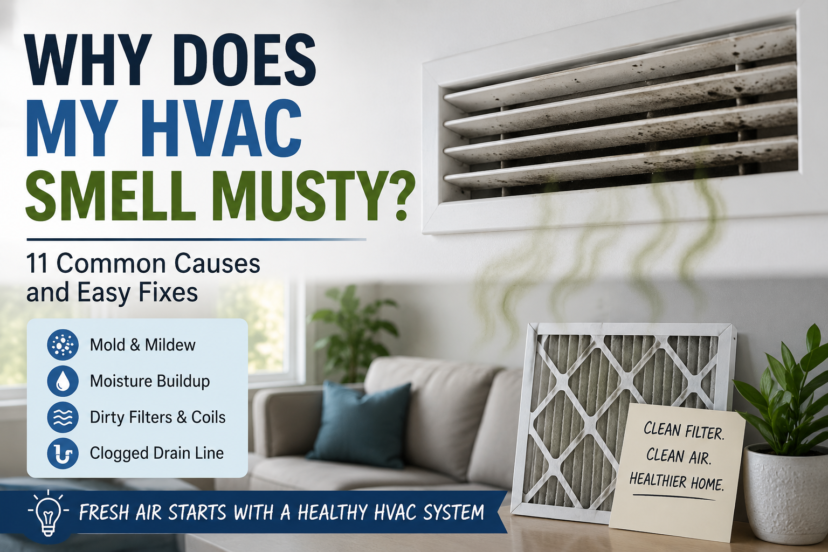
If you’ve been asking yourself, why does my HVAC smell musty, you’re not alone. A musty smell coming from your heating or air conditioning system is one of the most common complaints homeowners experience, especially when switching between seasons or turning on the air conditioner after it has been sitting unused. While the odor may simply be caused by accumulated dust or moisture, it can also signal mold growth, clogged drain lines, dirty evaporator coils, or excessive indoor humidity.
Fortunately, a musty HVAC smell is usually fixable without replacing your entire system. Identifying the source early can improve indoor air quality, increase system efficiency, and prevent more expensive repairs down the road. This guide explains the most common causes, how to confirm the problem, practical solutions you can try yourself, and when it’s time to call an HVAC professional.
⭐ Quick Answer: Why Does My HVAC Smell Musty
If you’re wondering why does my HVAC smell musty, the most likely causes are moisture buildup inside the HVAC system, mold or mildew on the evaporator coil, a clogged condensate drain, dirty air filters, or excessive indoor humidity. Most problems can be resolved through regular maintenance, improved airflow, proper drainage, and routine filter changes.
Key Takeaways
Most likely cause: Moisture inside the HVAC system allowing mold or mildew to develop on the evaporator coil or drain pan.
Usually serious? Usually not, but persistent odors can indicate mold growth or drainage problems that should be addressed.
First thing to check: Inspect the HVAC air filter, look for visible moisture around the indoor unit, and check whether the smell only occurs when the air conditioner is running.
Best solution: If you’re asking why does my HVAC smell musty, cleaning the evaporator coil, clearing the condensate drain, replacing dirty filters, reducing indoor humidity, and scheduling annual HVAC maintenance usually solve the problem.
🔍 Why This Happens – How To Identify The Problem
Your HVAC system continuously moves large amounts of air through your home. As warm indoor air passes over the cold evaporator coil, moisture naturally condenses. Under normal conditions, this water drains away through the condensate drain line.
Problems begin when moisture remains trapped inside the system. Damp conditions create the perfect environment for mold, mildew, bacteria, and other microorganisms to grow. When the blower starts, these odors are distributed throughout your home.
To help identify the source, ask yourself:
- Does the smell only occur when the AC runs?
- Is the odor strongest at one vent or throughout the house?
- Has the air filter been replaced recently?
- Do you notice higher-than-normal indoor humidity?
- Is there visible water near the indoor HVAC unit?
These clues can narrow down the cause before repairs begin.
🛠️ The 11 Most Common Causes
1. Mold On The Evaporator Coil
The evaporator coil is one of the most common places for mold and mildew to grow because it stays cool and damp during air conditioning season.
How To Confirm
The smell is strongest shortly after the air conditioner starts and gradually decreases during longer cooling cycles.
2. Clogged Condensate Drain Line
As moisture leaves the evaporator coil, it drains through a small pipe. Dirt, algae, or debris can clog this line, allowing water to back up into the system.
Standing water quickly develops musty odors.
How To Confirm
Look for water around the indoor air handler or a full condensate drain pan.
3. Dirty Air Filter
A neglected air filter traps dust, pollen, pet hair, and organic material. Combined with moisture, these contaminants can develop unpleasant odors.
Dirty filters also reduce airflow, making moisture problems worse.
How To Confirm
Remove the filter and inspect it. If it’s gray, clogged, or overdue for replacement, it’s likely contributing to the smell.
4. Mold Inside Air Ducts
Although less common than coil problems, mold can develop inside ductwork when moisture enters poorly insulated or leaking ducts.
How To Confirm
Musty odors continue even after replacing the filter and cleaning the HVAC unit.
5. Excess Indoor Humidity
High humidity allows mold and mildew to thrive throughout your home—including inside the HVAC system.
Homes in humid climates often experience this issue.
How To Confirm
Indoor humidity consistently exceeds 60%, and condensation appears on windows.
6. Dirty Blower Fan
Dust and moisture can accumulate on the blower wheel and motor housing.
As the blower runs, it spreads odors throughout the duct system.
How To Confirm
Professional inspection reveals dirt buildup on the blower assembly.
7. Standing Water In The Drain Pan
If the drain pan remains full because of improper drainage, bacteria and mildew begin growing rapidly.
How To Confirm
Inspect the drain pan beneath the evaporator coil for standing water.
8. HVAC System Sitting Unused
After months without operation, moisture inside the unit may allow mildew to develop.
This often occurs when switching from heating season to cooling season.
How To Confirm
The odor disappears after several days of continuous HVAC operation.
9. Poor Ventilation
Homes with limited ventilation trap humidity and airborne contaminants indoors.
The HVAC system continually circulates stale air.
How To Confirm
The home feels stuffy, and bathroom mirrors stay fogged for long periods.
10. Air Duct Leaks
Leaky ducts located in crawl spaces, attics, or basements can draw musty air into the HVAC system.
How To Confirm
Some rooms smell worse than others, especially those served by ducts passing through damp areas.
11. Mold Elsewhere In The Home
Sometimes the HVAC isn’t causing the smell—it simply distributes odors from another moisture problem.
Possible sources include:
- Crawl spaces
- Basements
- Bathrooms
- Attics
- Water-damaged walls
How To Confirm
The odor persists even when the HVAC system is turned off.
✅ How To Confirm The Cause
Before scheduling repairs, perform a basic inspection.
Check:
- The HVAC air filter
- Condensate drain line
- Drain pan
- Indoor humidity level
- Air vents for visible dust
- Areas around the air handler for moisture
- Whether the smell occurs during heating, cooling, or both
If the odor appears only during air conditioning, moisture-related causes are much more likely.
🔧 How To Fix It
Most musty HVAC odors can be eliminated through proper maintenance.
Replace The Air Filter
Install a clean, properly sized filter every one to three months.
Homes with pets or allergies may require more frequent replacement.
Clean The Evaporator Coil
Professional coil cleaning removes mold, dirt, and biofilm that ordinary homeowners often cannot access safely.
Clear The Condensate Drain
Flush clogged drain lines to restore proper water drainage and prevent standing water.
Many HVAC technicians include this service during annual maintenance.
Reduce Indoor Humidity
Maintain indoor humidity between 30% and 50%.
Helpful methods include:
- Running bathroom exhaust fans
- Using kitchen range hoods
- Operating a dehumidifier
- Repairing plumbing leaks
- Improving ventilation
Clean Supply Registers
Dust around vents can collect odors and circulate contaminants.
Vacuum and wipe vents regularly.
Schedule HVAC Maintenance
Annual inspections allow technicians to:
- Clean coils
- Inspect drain systems
- Check blower components
- Test airflow
- Detect mold before it spreads
Preventive maintenance is often the most effective long-term solution.
👷 When To Call A Professional
Contact a licensed HVAC technician if:
- The odor continues after replacing the filter.
- Water leaks from the indoor unit.
- Mold is visible inside the system.
- Drain lines repeatedly clog.
- The smell becomes stronger over time.
- Family members experience worsening allergy symptoms.
- The HVAC system performs poorly while producing odors.
Professional equipment allows technicians to safely inspect areas that homeowners cannot easily access.
🛡️ How To Prevent It
Preventing musty HVAC odors is easier than eliminating established mold.
Helpful maintenance habits include:
- Replace filters every 1–3 months.
- Schedule annual HVAC tune-ups.
- Keep indoor humidity below 50%.
- Flush the condensate drain annually.
- Keep supply vents unobstructed.
- Use exhaust fans during showers and cooking.
- Repair water leaks quickly.
- Keep the area around the indoor unit clean.
Routine maintenance significantly reduces moisture-related problems.
❓ Frequently Asked Questions
Is a musty HVAC smell dangerous?
Usually not, but persistent mold growth can affect indoor air quality and aggravate allergies or asthma.
Why does my AC smell musty only when it first turns on?
Moisture often sits on the evaporator coil between cooling cycles. The odor usually becomes noticeable when airflow first begins.
Can changing the air filter remove the smell?
Sometimes. If the filter is heavily contaminated, replacing it may solve the problem. If mold is growing inside the HVAC system, additional cleaning will likely be necessary.
Can high humidity make my HVAC smell?
Yes. High indoor humidity encourages mold and mildew growth inside the HVAC system and throughout the home.
How often should my HVAC system be serviced?
Most HVAC professionals recommend a full inspection and maintenance visit at least once per year, with many homeowners benefiting from spring and fall seasonal service.
🏡 Related Home Problems
If your HVAC smells musty, you may also be interested in:
- Why does my house smell musty?
- Why is my basement damp?
- Why is my bathroom always humid?
- How to improve indoor air quality
- Condensation on windows
- Why does my crawl space smell musty?
- Why does my house smell after rain?
- Why does my house feel stuffy?
Many of these issues share common causes involving moisture, ventilation, and indoor air quality.
💡 Final Thoughts On Why Does My HVAC Smell Musty
A musty HVAC smell is often your home’s way of telling you that moisture is lingering where it shouldn’t. In most cases, the problem can be traced to dirty evaporator coils, clogged condensate drains, high indoor humidity, or neglected maintenance. Addressing these issues promptly not only eliminates unpleasant odors but also improves indoor air quality, boosts HVAC efficiency, and helps extend the life of your heating and cooling system. Regular filter changes, annual inspections, and moisture control are simple steps that can keep your home smelling fresh year-round.
Disclaimer
This article is intended for informational and educational purposes only and should not replace professional HVAC diagnosis or repair. If you suspect extensive mold growth, electrical issues, refrigerant leaks, or significant HVAC system damage, consult a qualified HVAC technician for a complete inspection and appropriate repairs.