
Why Is My Air Conditioner Freezing Up? 10 Common Causes And How To Fix It
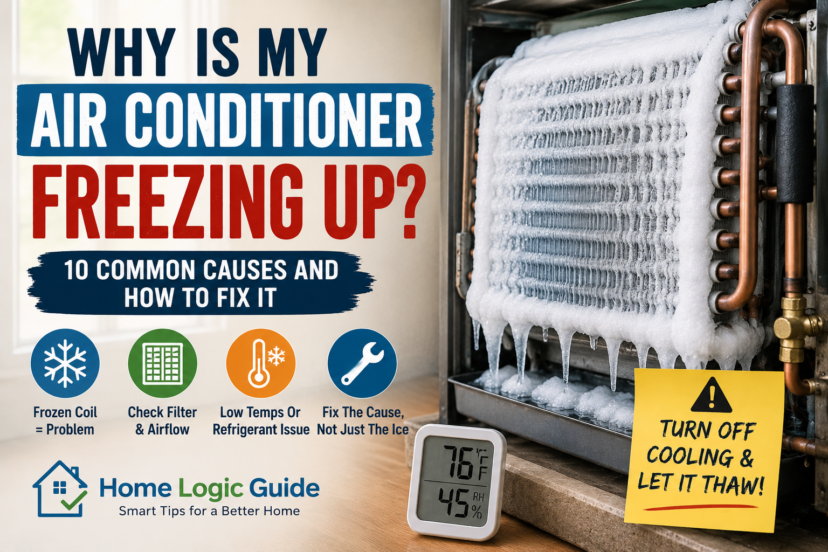
Seeing ice on your air conditioner in the middle of summer can seem strange. After all, the system is supposed to cool your home—but it shouldn’t actually freeze. If you’re wondering why is my air conditioner freezing up, the problem usually involves insufficient airflow across the evaporator coil, improper refrigerant conditions, or another issue preventing the system from absorbing heat correctly.
A frozen AC can start with subtle symptoms. You might notice weaker airflow, longer cooling cycles, warmer rooms, water around the indoor unit, or unusually high energy bills before you ever see ice.
Continuing to run an air conditioner while it’s frozen can potentially cause additional problems, so this isn’t something to ignore.
Fortunately, simple issues such as a dirty filter or blocked return vent may be responsible. Other causes, including refrigerant leaks, blower problems, or damaged components, require professional diagnosis.
Here’s how to recognize the likely cause and what you should do next.
⚡ Quick Answer: Why Is My Air Conditioner Freezing Up?
If you’re asking why is my air conditioner freezing up, the most common possibilities include restricted airflow, a dirty filter, blocked vents, a dirty evaporator coil, blower problems, or improper refrigerant conditions. When too little warm air moves across the cold evaporator coil, its temperature can drop enough for moisture to freeze on it. Turn off cooling and allow the system to thaw before troubleshooting further.
Key Takeaways
Most likely cause: Restricted airflow across the evaporator coil, often related to a dirty filter, blocked airflow, or blower problem.
Usually serious? Sometimes. A simple airflow restriction may be easy to correct, while refrigerant or mechanical problems require professional repair.
First thing to check: If you’re wondering why is my air conditioner freezing up, turn off cooling, check the air filter and accessible vents, and allow the ice to thaw completely.
Best solution: Correct basic airflow problems when safe to do so. If the AC freezes again, have an HVAC professional diagnose the underlying cause.
🔍 Why This Happens – How To Identify The Problem
Your air conditioner removes heat from indoor air using an evaporator coil located inside the indoor HVAC equipment.
Refrigerant circulating through the coil allows it to become cold. Your blower then moves warm household air across that coil. Heat transfers from the indoor air into the refrigerant, and cooled air returns to your rooms.
The system depends on the right balance between airflow, coil temperature, refrigerant conditions, and heat load.
When something disrupts that balance, the evaporator coil can become excessively cold.
Moisture naturally condenses on the coil during normal AC operation. If the coil temperature falls below freezing, that moisture can turn into ice.
As ice builds, it restricts airflow even further. This can create a cycle where reduced airflow produces more freezing, which causes even less airflow.
Possible signs include:
- Ice on refrigerant lines
- Weak airflow from vents
- AC running without cooling properly
- Water around the indoor unit
- Long cooling cycles
- A house becoming warmer despite the AC running
If you notice these symptoms, don’t continue lowering the thermostat. Find out why the system is freezing.
🛠️ 10 Most Common Causes Of An Air Conditioner Freezing Up
1. A Dirty Air Filter
A clogged HVAC filter is one of the first things to investigate.
Your system needs a steady supply of air moving across the evaporator coil. A filter loaded with dust, pet hair, and debris can restrict that airflow.
When airflow becomes too low, the coil may not receive enough warm air to maintain the proper temperature.
Inspect the filter after turning the system off.
If it’s visibly dirty, replace it with the correct type and size recommended for your HVAC system.
2. Blocked Return Airflow
Return vents pull indoor air back toward the HVAC equipment.
If they’re blocked by furniture, rugs, boxes, curtains, or other objects, the system may struggle to move enough air.
Walk through your home and locate the return grilles.
Make sure they’re open and unobstructed. Large furniture should not be positioned directly against them.
Restricted return airflow can affect comfort, efficiency, and HVAC performance.
3. Too Many Closed Supply Vents
Closing vents in unused rooms may seem like an easy way to save energy, but central HVAC systems are generally designed to operate with specific airflow requirements.
Closing too many registers can change system pressure and reduce airflow.
Make sure supply vents are open unless an HVAC professional has specifically recommended otherwise as part of a properly balanced system.
If some rooms receive too much cooling while others receive too little, professional balancing is a better solution than randomly closing vents.
4. A Dirty Evaporator Coil
Even with a clean filter, dirt can eventually accumulate on an evaporator coil.
Dust and debris can interfere with heat transfer and airflow across the coil.
Because the evaporator coil is usually inside HVAC equipment, cleaning it isn’t the same as wiping dust from a household surface.
If you suspect a dirty coil, professional inspection is generally the safer choice.
Regular filter maintenance helps reduce the amount of contamination reaching the coil in the first place.
5. The Blower Fan Isn’t Working Properly
The blower moves household air across the evaporator coil and through your duct system.
If the blower motor, fan, controls, or related components aren’t operating correctly, airflow may drop dramatically.
You may notice very weak air coming from multiple supply vents even though the outdoor AC unit appears to be operating.
Blower problems involve electrical and mechanical equipment and should normally be diagnosed by a qualified HVAC technician.
6. A Refrigerant Leak Or Improper Refrigerant Charge
Airflow isn’t the only reason an evaporator coil can freeze.
Refrigerant conditions also affect coil pressure and temperature. A system operating with an improper refrigerant charge—potentially because of a leak—can experience abnormal cooling performance and icing.
You may notice:
- Ice on refrigerant tubing
- Poor cooling
- Longer AC cycles
- Repeated freezing after thawing
- Increasing energy consumption
Refrigerant isn’t something homeowners should add themselves.
A technician should identify whether a leak exists, repair it when appropriate, and service the refrigerant circuit according to applicable requirements.
7. Ductwork Is Restricting Airflow
Problems inside the duct system can reduce how much air reaches and returns from different parts of the house.
Possible problems include damaged flexible ducts, collapsed sections, severe restrictions, disconnected ducts, or poorly designed ductwork.
If airflow seems weak throughout the house even with a clean filter and open vents, the duct system may need evaluation.
Duct problems can also contribute to uneven room temperatures and higher energy costs.
8. The AC Is Running When Outdoor Temperatures Are Too Low
Central air conditioners are typically designed to operate within specific outdoor temperature ranges.
Running some residential AC systems during unusually cool outdoor conditions can interfere with normal system pressures and contribute to coil icing.
This may occur during cool nights or unusual seasonal weather when indoor spaces still generate heat.
Follow your equipment manufacturer’s operating recommendations.
Special applications that require cooling during low outdoor temperatures may need equipment specifically designed or controlled for those conditions.
9. The Drainage System Has Problems
Your evaporator coil normally produces condensation while the AC operates.
That moisture should collect in a drain pan and exit through the condensate drainage system.
Drainage problems don’t necessarily cause the initial freeze, but they can make the aftermath much worse when accumulated ice begins melting.
A clogged drain can lead to overflowing water, damaged ceilings or floors, and excessive moisture around HVAC equipment.
Water around your air handler deserves prompt attention.
10. HVAC Components Are Failing
Aging or malfunctioning equipment can create airflow or refrigeration problems that contribute to freezing.
Possible components involved include:
- Blower motors
- Fan controls
- Electrical components
- Sensors
- Refrigerant-system components
- Control boards
Avoid replacing parts based solely on visible ice.
Ice tells you that something is wrong, but it doesn’t identify the underlying cause.
Professional diagnostic testing can prevent unnecessary repairs.
🔎 How To Confirm The Cause
First, turn off the cooling function.
Don’t attempt to chip, scrape, or break ice from the evaporator coil or refrigerant lines. This can damage delicate components.
Allow the system to thaw naturally.
Depending on the amount of ice, this may take several hours or longer. If your system allows fan-only operation and there are no other signs of damage or water-related concerns, circulating room-temperature air may sometimes help, but follow manufacturer guidance.
While the system is off, check:
- The HVAC filter
- Supply registers
- Return grilles
- Visible refrigerant lines
- Water around the indoor unit
- Accessible condensate drainage areas
After the system has completely thawed and you’ve corrected an obvious airflow problem such as a dirty filter, you may test cooling again.
If freezing returns, shut the system down and arrange professional service.
Repeated icing isn’t normal.
🔧 How To Fix A Frozen Air Conditioner
The first priority is allowing the AC to thaw.
After that, address simple airflow problems you can safely identify.
Replace a dirty filter with the correct replacement. Open blocked supply registers and make sure return vents have adequate clearance.
Don’t attempt to accelerate thawing with boiling water, sharp tools, heat guns, or other methods that could damage equipment.
Once completely thawed, monitor the AC carefully.
If it operates normally and doesn’t freeze again, the problem may have been a temporary airflow restriction.
However, if ice returns, don’t keep repeating the thaw-and-restart process.
An HVAC technician may need to inspect:
- Evaporator coil condition
- Blower operation
- System airflow
- Static pressure
- Refrigerant pressures and temperatures
- Duct restrictions
- Electrical controls
- Refrigerant leaks
Fixing the cause is more important than simply removing the ice.
🚨 When To Call A Professional
Call an HVAC technician if your AC freezes again after basic airflow issues have been corrected.
You should also arrange professional service if:
- The filter is clean, but the AC still freezes
- Airflow remains very weak
- Ice repeatedly appears on refrigerant lines
- The blower isn’t operating correctly
- Cooling performance has declined
- You hear unusual mechanical noises
- Water is leaking around HVAC equipment
- You suspect a refrigerant problem
Turn the system off immediately if you notice burning odors, smoke, electrical arcing, or other obvious electrical concerns.
Refrigerant and internal electrical repairs aren’t appropriate DIY projects.
🛡️ How To Prevent Your AC From Freezing
Regular maintenance is one of the easiest ways to reduce the risk of frozen coils.
Inspect your HVAC filter regularly and replace it according to the filter and equipment manufacturer’s recommendations.
Keep supply registers and return grilles open and unobstructed.
Avoid stacking furniture or storage items against return vents.
Professional HVAC maintenance can also help identify dirty coils, blower problems, drainage issues, abnormal refrigerant conditions, and airflow restrictions before they lead to a breakdown.
Pay attention to small changes in system performance.
Weak airflow or unusually long cooling cycles can be early warning signs. Addressing them promptly may prevent the evaporator coil from eventually icing over.
❓ Frequently Asked Questions
Why Does My AC Keep Freezing Up?
Repeated freezing usually means the underlying problem hasn’t been corrected. Common possibilities include restricted airflow, dirty coils, blower problems, duct restrictions, or improper refrigerant conditions.
Can A Dirty Air Filter Cause My AC To Freeze?
Yes. A heavily clogged filter can restrict airflow across the evaporator coil, potentially contributing to freezing. Checking the filter is one of the simplest first steps.
Should I Turn My AC Off If It Is Frozen?
Yes. Continuing to run the cooling system while the evaporator coil is frozen can worsen the problem. Turn cooling off and allow the ice to thaw before further troubleshooting.
How Long Does A Frozen AC Take To Thaw?
The time varies depending on how much ice has accumulated and indoor conditions. Light icing may disappear relatively quickly, while a heavily frozen coil can take several hours or longer to thaw completely.
Can I Pour Hot Water On A Frozen AC Coil?
It’s better to let the system thaw naturally. Avoid using boiling water, sharp tools, or excessive heat because evaporator coils and refrigerant lines can be damaged.
Does Low Refrigerant Cause An AC To Freeze?
Improper refrigerant conditions can cause the evaporator coil to operate at an abnormally low temperature and contribute to icing. A refrigerant leak or charge problem requires professional diagnosis.
Can I Run The Fan While My AC Is Frozen?
Fan-only operation may sometimes help circulate warmer indoor air across the coil while cooling is turned off. However, follow your equipment manufacturer’s guidance, and don’t operate the system if there are electrical, blower, or significant water-related problems.
🔗 Related Home Problems
A freezing air conditioner can overlap with several other HVAC symptoms. You may also want to investigate:
- Why is my AC blowing warm air?
- Why does my air conditioner blow weak airflow?
- How to improve indoor air quality?
- Why is my air conditioner so loud?
- Why is one room so hot?
- Why does my house feel humid with the AC on?
- Why is my house not cooling even with the AC running?
- Why is my energy bill so high?
These symptoms can sometimes share underlying causes such as airflow restrictions, duct problems, dirty HVAC components, or equipment malfunctions.
🎯 Conclusion: Why Is My Air Conditioner Freezing Up?
If you’re wondering why is my air conditioner freezing up, start with airflow.
A dirty filter, blocked return, closed vents, or another restriction can prevent enough warm air from passing over the evaporator coil. Once the coil becomes too cold, condensation can freeze and create a layer of ice that restricts airflow even further.
The most important immediate step is simple: stop running the cooling system and let it thaw.
Check the filter and accessible vents while you wait.
If correcting an obvious airflow restriction solves the problem and the ice doesn’t return, you may have found the cause.
But repeated freezing is different.
When the AC freezes again after thawing, professional diagnosis is the smarter approach. Refrigerant problems, blower failures, dirty coils, duct restrictions, and other mechanical issues can’t be reliably identified just by looking at the ice.
Fixing the underlying problem early can help restore cooling, reduce wasted energy, and potentially prevent more expensive HVAC damage.
Disclaimer: This article is intended for general informational and educational purposes only. HVAC systems contain high-voltage electrical components, moving parts, pressurized refrigerant, and other potential hazards. Do not open, dismantle, recharge, or repair HVAC equipment unless appropriately qualified. Consult a licensed HVAC professional for repeated freezing, refrigerant concerns, electrical problems, or repairs beyond basic homeowner maintenance.



Comments are closed.