
Why Does My House Feel Humid With The AC On? 10 Common Causes And How To Fix It
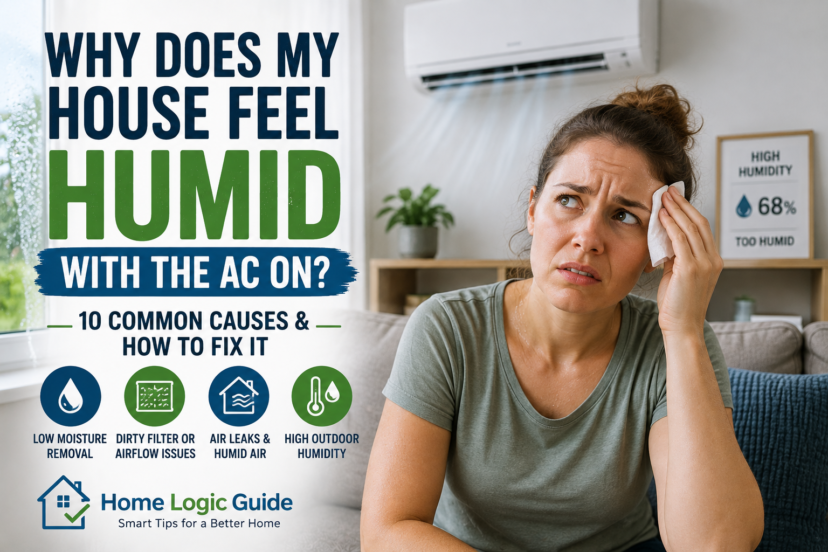
Few things are more frustrating on a hot summer day than walking into an air-conditioned house that feels cool but strangely sticky. If you’ve been wondering, why does my house feel humid with the AC on, the problem usually comes down to one thing: your cooling system isn’t removing enough moisture from the indoor air.
Air conditioners do two important jobs during warm weather. They lower indoor temperatures and remove moisture as warm air passes over the cold evaporator coil. When that process isn’t working effectively, your thermostat might show a comfortable temperature while the house still feels muggy.
The cause isn’t necessarily a broken air conditioner. An oversized AC, dirty filter, short cycling, thermostat settings, outdoor humidity, air leaks, or drainage problems can all contribute.
Fortunately, many humidity problems can be narrowed down with a few simple checks. Here’s how to determine what’s happening and what you can do about it.
⚡ Quick Answer: Why Does My House Feel Humid With The AC On?
If you’re asking why does my house feel humid with the AC on, your air conditioner may be cooling the house faster than it can remove moisture. Common causes include an oversized AC, short cycling, dirty filters, incorrect fan settings, clogged condensate drainage, air leaks, duct problems, or exceptionally humid outdoor weather. Ideally, indoor relative humidity is often most comfortable around 30% to 50%, although conditions and recommendations can vary.
Key Takeaways
Most likely cause: The AC isn’t running long enough or effectively enough to remove sufficient moisture from the indoor air.
Usually serious? Not necessarily. High humidity may result from thermostat settings, a dirty filter, weather conditions, or air leakage, but persistent problems can indicate HVAC or moisture-control issues.
First thing to check: If you’re wondering why does my house feel humid with the AC on, check your indoor humidity, HVAC filter, thermostat fan setting, and whether the system is frequently turning on and off.
Best solution: Improve airflow and moisture control, correct AC performance problems, seal unwanted air leaks, and have persistent humidity professionally diagnosed.
🔍 Why This Happens – How To Identify The Problem
An air conditioner doesn’t technically work as a dehumidifier, but dehumidification is a natural part of the cooling process.
Warm indoor air is pulled through the return ducts and moved across the cold evaporator coil. As the air cools, water vapor condenses on the coil. That water collects in a drain pan and exits through the condensate drain system.
The longer the AC operates under appropriate conditions, the more opportunity it generally has to remove moisture.
Problems arise when the system cools your home too quickly, doesn’t move air correctly, can’t drain condensate properly, or constantly receives humid outdoor air through leaks.
Before assuming something is wrong with your AC, measure the humidity.
An inexpensive digital hygrometer can show your home’s relative humidity. One reading isn’t enough to diagnose an HVAC problem, so check humidity at different times and in several rooms.
Also pay attention to other clues, such as:
- A sticky or clammy indoor feeling
- Condensation on windows
- Musty odors
- Damp-feeling fabrics or bedding
- AC cycles that seem unusually short
- Uneven temperatures between rooms
- Visible moisture around vents or HVAC equipment
These symptoms can help narrow down the source.
🛠️ 10 Common Causes Of High Humidity With The AC Running
1. Your Air Conditioner Is Oversized
Bigger isn’t always better when it comes to air conditioning.
An oversized AC can cool a house very quickly. That sounds beneficial, but rapid cooling may cause the system to shut down before it has run long enough to remove sufficient moisture.
The result can be a house that’s cool according to the thermostat but still feels clammy.
Correct AC sizing depends on far more than square footage. Climate, insulation, windows, air leakage, orientation, ceiling height, and other factors should be considered through a proper cooling-load calculation.
2. Your AC Is Short Cycling
Short cycling occurs when the air conditioner repeatedly turns on and off without completing normal cooling cycles.
Besides reducing moisture removal, frequent cycling can increase wear on HVAC components.
Possible causes range from thermostat issues and airflow restrictions to equipment problems.
If the system starts and stops every few minutes, don’t simply assume that’s normal because the house eventually reaches the desired temperature.
3. The Thermostat Fan Is Set To “On”
Check your thermostat.
Most systems provide AUTO and ON fan settings.
AUTO normally operates the blower when the system is actively cooling. ON keeps the blower running continuously.
With some systems, leaving the fan continuously ON may allow moisture remaining on the evaporator coil to re-enter the indoor air after the compressor shuts off.
Try the AUTO setting unless your HVAC manufacturer or technician recommends otherwise for your particular system.
4. Your Air Filter Is Dirty
A clogged HVAC filter restricts airflow.
Reduced airflow can affect cooling performance and interfere with the system’s ability to operate as designed. Severe airflow problems can even contribute to evaporator coil icing.
Inspect your filter regularly and replace it according to the manufacturer’s instructions.
Avoid assuming that the thickest or highest-rated filter is automatically best. Your HVAC system must be able to handle the filter’s airflow resistance.
5. The Evaporator Coil Is Dirty Or Icing
The evaporator coil plays a central role in cooling and moisture removal.
Dirt accumulation can interfere with heat transfer. Airflow problems or certain mechanical issues can also cause ice to form on the coil.
Signs can include:
- Weak airflow
- Poor cooling
- Ice around accessible refrigerant lines or equipment
- Water after the ice melts
- Long or unusual cooling cycles
If you suspect a frozen coil, turn off cooling and arrange for professional diagnosis rather than repeatedly restarting the system.
6. The Condensate Drain Is Clogged
All the moisture your AC removes has to go somewhere.
Normally, condensate drains away through a dedicated line. Algae, dirt, debris, or other buildup can sometimes restrict that drainage.
You might notice water around the indoor HVAC unit, a full drain pan, unexpected system shutdowns, or signs of moisture nearby.
Because standing water can damage surrounding building materials, drainage problems shouldn’t be ignored.
7. Humid Outdoor Air Is Leaking Into The House
Your air conditioner may be working correctly while your house continuously takes in humid outdoor air.
Common leakage points include:
- Gaps around windows and doors
- Poorly sealed attic openings
- Plumbing and electrical penetrations
- Fireplace dampers
- Recessed fixtures
- Gaps around exterior penetrations
During humid weather, uncontrolled air leakage can substantially increase the moisture your AC must remove.
8. Your Ductwork Has Leaks
Leaky ducts can create both comfort and humidity problems.
This can be particularly important when ducts travel through hot, humid unconditioned spaces such as attics or crawl spaces.
Depending on the location and pressure conditions, duct leakage can contribute to unwanted air exchange and reduce overall HVAC efficiency.
Common clues include unusually dusty rooms, uneven cooling, weak airflow, and higher energy bills.
Professional duct testing can provide a much clearer answer than visual inspection alone.
9. Your Home Produces Too Much Indoor Moisture
Not all humidity comes from outside.
Everyday activities release substantial amounts of moisture into your home.
Cooking, showering, drying laundry indoors, running certain appliances, and even having many people in the house can increase indoor humidity.
Bathrooms and kitchens are particularly important.
Use properly vented exhaust fans during moisture-producing activities, and make sure those fans actually vent outdoors rather than into an attic or other enclosed area.
10. Outdoor Humidity Is Exceptionally High
Sometimes the weather is simply putting your cooling system to the test.
During stretches of very hot, humid weather, indoor humidity can become harder to control, particularly in homes with significant air leakage or HVAC limitations.
A properly functioning AC should still remove moisture, but some homes may benefit from additional dehumidification.
Persistent indoor humidity above comfortable levels is worth investigating rather than automatically blaming the weather.
🔎 How To Confirm The Cause
Start with a hygrometer and record indoor relative humidity for several days.
Then check the easy variables.
Make sure the thermostat fan is set appropriately, inspect the filter, confirm that vents and returns aren’t blocked, and note how long the AC runs during each cycle.
Walk through the house and look for patterns.
Is one floor more humid? Is the problem strongest near bathrooms, the basement, attic access, or particular windows?
Also inspect the accessible area around your indoor HVAC equipment for water or unusual condensation.
If the humidity problem continues despite normal thermostat settings and basic maintenance, an HVAC technician can evaluate system sizing, airflow, coil performance, refrigerant operation, condensate drainage, and ductwork.
🔧 How To Fix A Humid House With The AC On
Start with simple, low-cost changes.
Set the thermostat fan to AUTO when appropriate for your equipment, replace a dirty filter, open blocked registers, and use bathroom and kitchen exhaust fans.
Seal obvious air leaks around doors and windows where appropriate.
Avoid creating unnecessary indoor moisture. Use lids while cooking, operate bathroom exhaust fans during and after showers, and vent clothes dryers outdoors according to applicable codes and manufacturer requirements.
If your AC is short cycling or not cooling properly, have it professionally inspected.
In particularly humid climates or homes with persistent moisture loads, a properly sized whole-house dehumidifier may be worth considering. However, it shouldn’t be used to hide an underlying AC, drainage, duct, or building-envelope problem.
🚨 When To Call A Professional
Contact an HVAC professional if humidity remains consistently high despite basic troubleshooting.
You should also arrange service if you notice:
- Frequent short cycling
- Ice on the AC equipment
- Weak airflow
- Water around the air handler
- Poor cooling
- Unusual HVAC noises
- Musty odors that persist
- Large humidity differences between rooms
- Condensate drainage problems
A professional can check airflow, temperature differences, equipment operation, refrigerant conditions, duct performance, and AC sizing.
If you see significant mold growth, recurring water intrusion, or structural moisture damage, additional evaluation by an appropriate moisture, building, or remediation professional may also be necessary.
🛡️ How To Prevent Indoor Humidity Problems
Prevention starts with controlling both airflow and moisture.
Inspect or replace HVAC filters as recommended. Keep vents and return grilles unobstructed and schedule HVAC maintenance according to your equipment’s needs.
Keep gutters, roofing, exterior drainage, and plumbing in good condition so liquid water isn’t entering the building.
Use exhaust ventilation when cooking and showering, and address obvious air leaks that allow humid outdoor air indoors.
Consider keeping inexpensive hygrometers in problem areas. Monitoring humidity helps you spot trends before the house begins feeling noticeably uncomfortable.
Most importantly, don’t compensate for humidity by simply lowering the thermostat dramatically. A colder house isn’t necessarily a drier house.
❓ Frequently Asked Questions
Why Is My House Cool But Still Humid?
Your AC may be lowering the temperature faster than it removes moisture. This is common with oversized equipment or short cycling. Indoor moisture sources and outdoor air leakage can also contribute.
What Should Indoor Humidity Be With The AC Running?
Many homes are comfortable at approximately 30% to 50% relative humidity. However, the ideal level depends on climate, outdoor temperature, building construction, and individual comfort.
Will Lowering The Thermostat Reduce Humidity?
Sometimes longer cooling cycles remove additional moisture, but simply making your house colder isn’t a reliable solution. If humidity remains high at a comfortable temperature, identify the underlying moisture or HVAC problem.
Can A Dirty Air Filter Make My House Humid?
A heavily clogged filter can restrict airflow and interfere with normal HVAC performance. If the filter is dirty, replacing it is one of the easiest troubleshooting steps.
Should My AC Fan Be On AUTO Or ON For Humidity?
AUTO is often preferable for humidity control because continuous fan operation can, in some systems, return moisture from a wet evaporator coil to the indoor air after cooling stops. Follow your system manufacturer’s recommendations.
Do I Need A Dehumidifier If I Have Air Conditioning?
Not necessarily. Many properly designed AC systems provide adequate moisture removal. Homes in very humid climates or those with unusually high moisture loads may benefit from supplemental dehumidification.
Can High Indoor Humidity Cause Mold?
Persistent excess moisture can create conditions that support mold growth, especially on damp materials and poorly ventilated surfaces. Controlling the moisture source is essential rather than simply cleaning recurring visible growth.
🔗 Related Home Problems
If your house feels humid even though the AC is running, other HVAC and home-comfort problems may be connected. Related topics to investigate include:
- Why is my house not cooling even with the AC running?
- Why is my AC blowing warm air?
- Why is my HVAC running constantly?
- Why does my air conditioner blow weak airflow?
- Why is my air conditioner so loud?
- Why is one room hotter than the rest?
- Why is my energy bill so high?
- How to improve indoor air quality
Looking at related symptoms together can often reveal whether the underlying issue involves your HVAC system, ductwork, insulation, ventilation, or building envelope.
🏠 Final Thoughts
If you’re wondering why does my house feel humid with the AC on, don’t assume your air conditioner needs to be replaced.
Start with the basics.
Measure your indoor humidity, check the filter, review your thermostat fan setting, make sure vents aren’t blocked, and pay attention to how frequently the AC cycles.
Then consider where moisture might be entering the house. Humid outdoor air, leaky ducts, cooking, showers, drainage problems, and other moisture sources can all make your home feel sticky even when the temperature is comfortable.
If the problem persists, professional testing can determine whether your system has an airflow, drainage, sizing, ductwork, or mechanical issue.
The goal isn’t simply to make your home colder. It’s to create the right balance of temperature, airflow, and humidity so your house feels genuinely comfortable throughout hot, humid weather.
Disclaimer: This article is intended for general informational and educational purposes only. HVAC systems contain electrical components, moving parts, and refrigerants that may present safety hazards. Do not dismantle or repair HVAC equipment unless you are appropriately qualified. For persistent humidity, water intrusion, mold, electrical, or HVAC problems, consult a qualified professional.



Comments are closed.