
Why Is My AC Not Cooling Enough? 10 Common Causes And How To Fix It
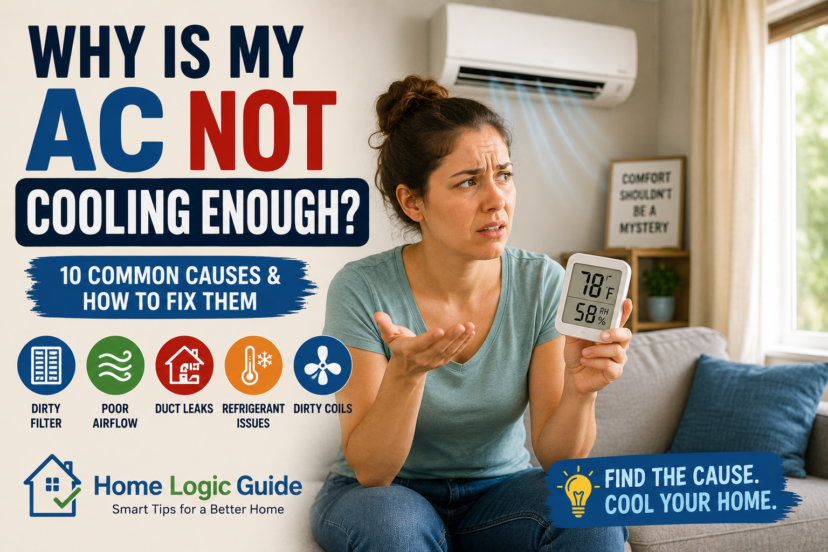
Few summer home problems are more frustrating than an air conditioner that’s running but can’t seem to make the house comfortable. If you’re asking why is my AC not cooling enough, the cause could be something simple like a dirty filter, blocked vent, or incorrect thermostat setting—or it could point to a more serious airflow, refrigerant, or equipment problem.
Air conditioners need the right combination of airflow, clean components, proper refrigerant conditions, and correctly sized equipment to cool effectively. When one part of that system isn’t working properly, you may notice longer cooling cycles, warmer rooms, weak airflow, rising energy bills, or an AC that runs almost constantly.
Before assuming you need a new air conditioner, start with a few basic checks. Many cooling problems can be narrowed down by looking at the thermostat, filter, vents, outdoor condenser, and temperature patterns throughout your home.
Here’s what to check first and when professional diagnosis makes sense.
⚡ Quick Answer: Why Is My AC Not Cooling Enough?
If you’re wondering why is my AC not cooling enough, start by checking your thermostat settings, HVAC filter, supply vents, and outdoor condenser. Common causes include restricted airflow, dirty coils, duct leaks, an undersized or poorly performing AC, extreme outdoor temperatures, or refrigerant problems. If basic troubleshooting doesn’t improve cooling, an HVAC technician can measure airflow and system performance to identify the actual cause.
Key Takeaways
Most likely cause: Restricted airflow, dirty HVAC components, thermostat issues, duct problems, or an AC struggling with the home’s cooling load.
Usually serious? Not always. Dirty filters and blocked vents are easy to correct, while refrigerant leaks, coil problems, or failing equipment require professional service.
First thing to check: If you’re asking why is my AC not cooling enough, verify the thermostat is set to COOL, inspect the filter, open the vents, and check whether airflow feels normal.
Best solution: Correct simple airflow and thermostat problems first. If cooling remains weak, have the system professionally evaluated instead of repeatedly lowering the thermostat.
🔍 Why This Happens – How To Identify The Problem
Your air conditioner doesn’t actually create cold air. It removes heat from inside your house and transfers that heat outdoors.
Indoor air passes across the cold evaporator coil, where heat is absorbed by the refrigerant. The refrigerant then carries that heat to the outdoor condenser, where it is released.
For this process to work efficiently, several things need to happen correctly.
Your system needs sufficient airflow, clean heat-transfer surfaces, properly operating fans and components, appropriate refrigerant conditions, and enough capacity for the home’s cooling load.
When cooling performance drops, first determine exactly what you’re experiencing.
Ask yourself:
- Is the AC blowing cool air, but not enough of it?
- Is airflow weak?
- Is the air coming from vents warmer than usual?
- Is the entire house hot or just certain rooms?
- Does the AC run constantly?
- Did the problem begin suddenly or gradually?
- Is the problem worse during the afternoon?
- Are outdoor temperatures unusually high?
These clues can help separate a simple airflow problem from an equipment or home-efficiency issue.
🛠️ 10 Common Reasons Your AC Isn’t Cooling Enough
1. The Thermostat Isn’t Set Correctly
Start with the easiest possibility.
Make sure your thermostat is set to COOL and the desired temperature is below the current indoor temperature.
Also check the fan setting.
For many systems, AUTO is the normal setting during cooling. Setting the fan to ON causes the blower to operate continuously, including periods when the compressor isn’t actively cooling.
If your thermostat uses batteries, replace them when necessary.
Also make sure the thermostat isn’t being influenced by unusual heat sources, direct sunlight, or other conditions that could affect its readings.
2. The Air Filter Is Dirty
A dirty filter is one of the most common homeowner-maintenance problems affecting HVAC airflow.
As dust, pet hair, and debris accumulate, the filter becomes increasingly restrictive.
That can reduce how much air moves through the evaporator coil and into your rooms.
You might notice:
- Weak airflow
- Longer cooling cycles
- Higher energy use
- Uneven room temperatures
- AC icing in severe cases
Inspect the filter and replace it when dirty according to your system and filter manufacturer’s recommendations.
Use the correct filter size and type for your HVAC equipment.
3. Supply Or Return Vents Are Blocked
Your HVAC system needs to move air both into and out of rooms.
Furniture, rugs, curtains, boxes, and other household objects can unintentionally block supply registers or return grilles.
Walk through your house and check every accessible vent.
Make sure supply registers are open, and returns aren’t obstructed.
Avoid closing numerous vents in unused rooms in an attempt to redirect cooling. Excessive vent closure can change system pressure and interfere with airflow.
4. The Outdoor Condenser Is Dirty Or Obstructed
Your outdoor unit releases heat absorbed from inside the house.
When vegetation, leaves, grass clippings, or other debris restrict airflow around the condenser, heat rejection can become less effective.
Keep the surrounding area clear of obvious obstructions.
Don’t place objects against the condenser or allow shrubs to grow tightly around it.
The internal coil can also become dirty over time. More involved cleaning or servicing should be performed according to manufacturer recommendations, preferably by a qualified technician when access or disassembly is required.
5. The Evaporator Coil Is Dirty Or Frozen
Your indoor evaporator coil must absorb heat effectively.
Dirt accumulation can interfere with heat transfer. Restricted airflow or certain refrigerant and mechanical problems can also cause the coil to become excessively cold and freeze.
Signs of a frozen evaporator coil may include:
- Very weak airflow
- Ice on refrigerant tubing
- Poor cooling
- Water around the indoor unit after thawing
- Long cooling cycles
If you see ice, turn off cooling and let the system thaw.
Don’t scrape or chip ice from the coil.
If freezing returns, have the AC professionally diagnosed.
6. Your Ductwork Is Leaking
Your air conditioner may be producing plenty of conditioned air—but some of it may never reach your rooms.
Leaky or disconnected ducts can lose cooled air into attics, crawl spaces, garages, and other unconditioned areas.
Possible clues include:
- Weak airflow
- One or more unusually warm rooms
- Excessive dust
- Higher energy bills
- Long cooling cycles
Because much of the duct system is hidden, professional duct testing may be necessary to determine how much air is actually being lost.
7. The AC Has A Refrigerant Problem
Refrigerant plays a critical role in transferring heat.
If the system has improper refrigerant conditions, potentially due to a leak, cooling performance can decline.
You may notice the AC running for long periods while struggling to lower indoor temperatures.
Other possible symptoms include evaporator icing or unusual changes in system performance.
Refrigerant should not simply be “topped off” without determining why the system is low.
A qualified HVAC technician should diagnose leaks and refrigerant problems and perform repairs according to applicable requirements.
8. Your AC Is Too Small For The House
An undersized air conditioner may operate correctly but still struggle to satisfy the home’s cooling load during hot weather.
Proper HVAC sizing depends on much more than square footage.
Professionals consider factors such as:
- Climate
- Insulation
- Window area
- Solar exposure
- Air leakage
- Ceiling height
- Building orientation
- Occupancy
- Internal heat sources
A proper load calculation is more reliable than choosing equipment based solely on the size of the previous AC.
If your system has always struggled on hot days, sizing may deserve investigation.
9. Your House Is Gaining Too Much Heat
Sometimes the AC isn’t the main problem.
Your home may simply be gaining heat faster than the system can remove it.
Common contributors include:
- Poor attic insulation
- Air leaks
- Large west-facing windows
- Unshaded glass
- Hot attic spaces
- Poorly sealed doors
- Heat-producing appliances
If rooms facing the afternoon sun become dramatically hotter than the rest of the house, solar heat gain may be a major factor.
Improving insulation, air sealing, and shading can reduce the cooling load and make existing HVAC equipment more effective.
10. The AC Has An Electrical Or Mechanical Problem
Air conditioners contain motors, capacitors, contactors, control boards, compressors, fans, and other components.
When one begins to fail, the system may continue operating but provide inadequate cooling.
Signs may include:
- Unusual noises
- Intermittent operation
- Outdoor fan problems
- Frequent cycling
- Breaker trips
- Poor airflow
- Reduced cooling
Internal electrical and mechanical problems aren’t appropriate DIY repairs.
Have the equipment professionally inspected.
🔎 How To Confirm The Cause
Start at the thermostat.
Confirm that cooling is selected and compare the thermostat reading with another reliable indoor thermometer.
Next, inspect the filter.
Then walk through the house and check supply and return airflow. Determine whether the cooling problem affects every room or only particular areas.
Look at the outdoor condenser from a safe distance.
Make sure it isn’t surrounded by leaves, vegetation, storage items, or other obvious airflow obstructions.
Listen to the system.
Does it sound normal? Is the outdoor fan operating? Is the indoor airflow weaker than you remember?
Finally, consider timing.
If the AC cools adequately in the morning but struggles only during extreme afternoon heat, the house may have a high cooling load.
If performance suddenly deteriorated regardless of outdoor temperature, a mechanical problem is more likely.
🔧 How To Fix An AC That Isn’t Cooling Enough
Begin with homeowner-safe maintenance.
Correct the thermostat settings, replace a dirty filter, open blocked vents, and clear obvious debris from around the outdoor condenser.
Close windows and exterior doors while the AC is operating.
Use blinds or shades to reduce strong afternoon sunlight, especially through west-facing windows.
Avoid producing unnecessary heat indoors during the hottest part of the day when possible.
If airflow is weak throughout the house, cooling doesn’t improve, or the AC continues running almost constantly, professional diagnosis is the next step.
A technician can evaluate:
- Blower airflow
- Evaporator and condenser coils
- Refrigerant conditions
- Duct pressure
- Electrical components
- Compressor performance
- System capacity
- Temperature differences
Accurate measurements are much better than replacing parts based on guesswork.
🚨 When To Call A Professional
Call an HVAC professional if your AC still isn’t cooling after you’ve checked the thermostat, filter, vents, and obvious outdoor obstructions.
Arrange service promptly if you notice:
- Ice on HVAC equipment
- Very weak airflow
- Warm air from vents
- Refrigerant-line icing
- Water around the indoor unit
- Unusual buzzing or grinding
- Frequent cycling
- Breaker trips
- Outdoor fan problems
- Sudden loss of cooling
If you notice smoke, sparking, or a burning electrical odor, shut the system off if it’s safe to do so and seek professional assistance.
🛡️ How To Prevent Poor AC Cooling
Preventive maintenance can reduce many common cooling problems.
Inspect your HVAC filter regularly and replace it when needed. Keep supply registers and return grilles unobstructed.
Maintain clearance around the outdoor condenser and keep vegetation from growing against it.
Use blinds, curtains, exterior shading, and appropriate air sealing to reduce unnecessary summer heat gain.
Attic insulation can also play an important role, particularly in homes where upper floors become difficult to cool.
Professional HVAC maintenance can help identify dirty coils, drainage issues, deteriorating electrical components, airflow problems, and other concerns before cooling performance noticeably declines.
❓ Frequently Asked Questions
Why Is My AC Running But Not Cooling The House?
Possible causes include a dirty filter, blocked airflow, dirty coils, duct leaks, thermostat problems, refrigerant issues, or failing HVAC components. Start with the filter and thermostat before moving to professional diagnosis.
Why Is My AC Blowing Cool Air But The House Is Still Hot?
The AC may not be delivering enough airflow, your ductwork may be leaking, or your home may be gaining too much heat through windows, air leaks, or inadequate insulation.
How Cool Should The Air Coming From My Vents Be?
Supply air should generally feel noticeably cooler than the room, but exact temperatures depend on system design and operating conditions. HVAC technicians often evaluate the temperature difference between return and supply air rather than relying on one vent reading.
Should I Turn My Thermostat Lower If The AC Isn’t Cooling?
Setting the thermostat dramatically lower usually won’t make the air conditioner cool faster. If the system can’t reach the current setting, lowering it further generally makes the AC run longer without addressing the underlying problem.
Can A Dirty Filter Stop My AC From Cooling?
Yes. A severely dirty filter can restrict airflow and reduce cooling performance. In extreme cases, airflow restriction can contribute to evaporator coil freezing.
Why Does My AC Struggle On Very Hot Days?
Extreme outdoor heat increases your home’s cooling load. Solar heat gain, air leakage, inadequate insulation, equipment sizing, and HVAC condition all influence how well the system maintains the desired temperature.
How Do I Know If My AC Needs Refrigerant?
Poor cooling or icing can be associated with refrigerant problems, but those symptoms have several possible causes. Refrigerant conditions should be measured by a qualified technician rather than diagnosed from symptoms alone.
🔗 Related Home Problems
Poor AC cooling can overlap with several other common summer home problems:
- How to improve indoor air quality?
- Why is one room so hot?
- Why does my house feel humid with the AC on?
- Why is my AC blowing warm air?
- Why does my air conditioner blow weak airflow?
- Why is my HVAC running constantly?
- Why is my air conditioner so loud?
- Why is my energy bill so high?
Looking at multiple symptoms together can help determine whether the underlying issue involves airflow, ductwork, insulation, HVAC maintenance, or mechanical equipment.
🏠 Final Thoughts On Why Is My AC Not Cooling Enough
If you’re asking why is my AC not cooling enough, don’t immediately assume the air conditioner needs to be replaced.
Start with the simplest possibilities.
Check the thermostat. Inspect the filter. Make sure supply and return vents are open and unobstructed. Look for obvious debris or vegetation around the outdoor condenser.
Then pay attention to how your house behaves.
Does every room stay warm, or just one? Does the problem happen all day or mainly during the hottest afternoon hours? Is airflow weak, or is plenty of air coming from the vents but the house still isn’t getting comfortable?
Those clues can help distinguish between an HVAC problem and excessive heat gain through your home’s windows, attic, insulation, or air leaks.
If basic troubleshooting doesn’t restore normal cooling, professional testing is the most reliable next step.
Finding and correcting the actual cause can improve comfort, reduce unnecessary energy use, and potentially prevent a relatively small HVAC problem from becoming a much more expensive repair.
Disclaimer: This article is intended for general informational and educational purposes only. HVAC systems contain high-voltage electrical components, moving parts, pressurized refrigerant, and other potential hazards. Do not open, dismantle, recharge, or repair HVAC equipment unless appropriately qualified. Contact a licensed HVAC professional for refrigerant problems, electrical issues, repeated icing, mechanical repairs, or persistent cooling problems.


Comments are closed.