
Why Is My House Not Cooling Even With The AC Running? 11 Common Causes And Easy Fixes
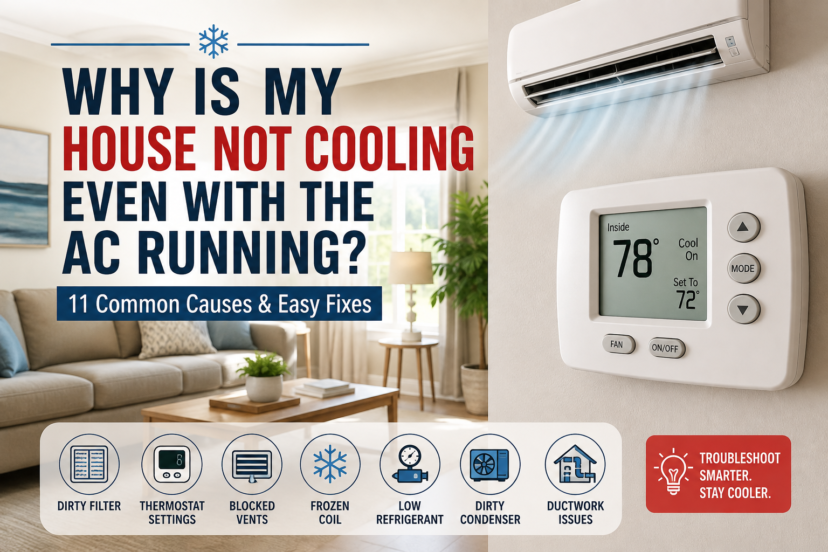
If your air conditioner seems to be working but your home still feels hot, you’re not alone. Many homeowners ask, “why is my house not cooling even with the AC running?” during the hottest months of the year. It can be frustrating to hear the AC running constantly while indoor temperatures barely change. Fortunately, this problem often has a logical explanation—and many causes are surprisingly simple to identify.
Your cooling system relies on several components working together, including clean air filters, unrestricted airflow, accurate thermostat settings, refrigerant, and properly sealed ductwork. When just one part isn’t functioning correctly, your home’s comfort can quickly suffer.
The good news is that many cooling issues can be diagnosed with a few simple checks before calling an HVAC technician. This guide explains the most common reasons your house isn’t cooling properly, how to confirm the cause, practical solutions, and when professional service is the safest option.
❄️ Quick Answer: Why Is My House Not Cooling Even With The AC Running?
If you’re wondering why is my house not cooling even with the AC running, the most common causes include a dirty air filter, blocked vents, incorrect thermostat settings, low refrigerant, frozen evaporator coils, leaking ductwork, poor attic insulation, or an air conditioner that’s too small or malfunctioning. Many airflow issues are easy to fix, while refrigerant and compressor problems require professional HVAC service.
Key Takeaways
🔍 Most likely cause: A clogged air filter or restricted airflow is the most common reason why my house is not cooling even with the AC running.
⚠️ Usually serious? Not usually. Many cooling problems are minor, but refrigerant leaks, compressor failures, or frozen coils should be addressed promptly.
🛠️ First thing to check: Verify the thermostat settings, replace the air filter, and make sure all supply and return vents are open and unobstructed.
✅ Best solution: Restore proper airflow first. If cooling performance doesn’t improve, schedule a professional HVAC inspection to diagnose refrigerant, electrical, or mechanical issues.
❄️ Why This Happens – How To Identify The Problem
An air conditioner removes heat from inside your home and releases it outdoors. If any part of that process is interrupted, the system may continue running without effectively lowering indoor temperatures.
Common signs include:
- The AC runs almost continuously.
- The thermostat never reaches the desired temperature.
- Certain rooms remain much warmer than others.
- Weak airflow from vents.
- Warm air blowing from registers.
- Higher-than-normal electric bills.
- Indoor humidity feels unusually high.
Pay attention to whether the issue affects the entire house or only specific rooms. This clue often helps narrow down the cause.
❄️ The 11 Most Common Causes
1. Dirty Air Filter
A clogged filter restricts airflow, making it difficult for cool air to circulate throughout your home.
Signs:
- Weak airflow
- Dust buildup
- Longer cooling cycles
How To Confirm The Cause
Remove the filter and inspect it. If it’s gray, dusty, or clogged, it likely needs replacement.
2. Incorrect Thermostat Settings
Sometimes the thermostat is accidentally set incorrectly or isn’t reading temperatures accurately.
Check for:
- Fan set to “On” instead of “Auto”
- Cooling mode disabled
- Dead batteries
- Incorrect schedule programming
How To Confirm The Cause
Compare the thermostat reading with a room thermometer.
3. Blocked Supply Or Return Vents
Furniture, curtains, rugs, or dust buildup can reduce airflow.
Look for:
- Closed registers
- Blocked return vents
- Dirty vent covers
How To Confirm The Cause
Walk through your home and verify that every vent is fully open and unobstructed.
4. Frozen Evaporator Coil
Ice on the indoor coil prevents efficient heat transfer.
Common causes include:
- Dirty filters
- Restricted airflow
- Low refrigerant
How To Confirm The Cause
Inspect the indoor air handler for visible ice or excessive condensation.
5. Low Refrigerant
Refrigerant absorbs indoor heat. Low levels usually indicate a leak.
Symptoms include:
- AC runs continuously
- Warm air
- Ice on refrigerant lines
- Hissing sounds
How To Confirm The Cause
Only an HVAC technician can accurately test refrigerant pressure.
6. Dirty Outdoor Condenser Unit
Leaves, grass clippings, dirt, and debris reduce the outdoor unit’s ability to release heat.
How To Confirm The Cause
Inspect the condenser and remove visible debris while the power is turned off.
7. Leaking Or Damaged Ductwork
Cool air may be escaping into the attic, crawl space, or walls before reaching living areas.
Signs include:
- Uneven temperatures
- High utility bills
- Weak airflow
How To Confirm The Cause
Look for disconnected or damaged duct sections if accessible.
8. Poor Attic Insulation
Even a perfectly functioning AC struggles if your attic allows excessive heat into the home.
Common signs:
- Upstairs much hotter
- Hot ceilings
- Long cooling cycles
How To Confirm The Cause
Inspect attic insulation depth and look for bare spots.
9. Air Conditioner Is Too Small
An undersized AC may never keep up during extreme summer heat.
Signs include:
- Runs constantly
- Never reaches thermostat setting
- Cooling only a few degrees
How To Confirm The Cause
Review the system’s capacity with an HVAC professional.
10. Compressor Problems
The compressor is the heart of your cooling system.
Symptoms:
- Outdoor unit running loudly
- Warm air indoors
- Frequent breaker trips
How To Confirm The Cause
Professional testing is usually required.
11. Extremely Hot Weather
During heat waves above 95–100°F, even properly functioning systems may struggle to maintain very low indoor temperatures.
Many systems are designed to keep indoor temperatures about 15–20°F cooler than outdoor conditions.
How To Confirm The Cause
Compare outdoor temperatures with your thermostat settings. Expect longer run times during extreme heat.
🔧 How To Fix It
Many cooling problems have simple solutions.
Start with these steps:
- Replace the air filter.
- Set the thermostat to Cool and Auto.
- Open all supply and return vents.
- Clean debris around the outdoor condenser.
- Close blinds during the hottest part of the day.
- Seal obvious air leaks around windows and doors.
- Reduce heat from ovens and dryers during the afternoon.
- Check attic insulation.
- Schedule annual HVAC maintenance.
If these steps don’t restore cooling, professional diagnosis is recommended.
👨🔧 When To Call A Professional
Contact a licensed HVAC technician if:
- The system blows warm air.
- Ice repeatedly forms on the coils.
- Refrigerant is leaking.
- The compressor won’t start.
- Circuit breakers continue tripping.
- Cooling performance suddenly drops.
- Strange noises develop.
- The unit is more than 12–15 years old and struggles to cool.
Attempting refrigerant or electrical repairs yourself can be dangerous and may void equipment warranties.
🛡️ How To Prevent Cooling Problems
Preventive maintenance greatly improves cooling performance.
Best practices include:
- Replace air filters every 1–3 months.
- Keep outdoor condenser coils clean.
- Trim plants at least 2 feet away from the outdoor unit.
- Schedule annual HVAC inspections.
- Seal leaking ductwork.
- Improve attic insulation if needed.
- Use ceiling fans to improve air circulation.
- Keep vents open throughout the home.
- Install a programmable or smart thermostat.
Small maintenance tasks often prevent expensive repairs later.
❓ Frequently Asked Questions
1. Why is my AC running but the house isn’t getting cooler?
The most common reasons are restricted airflow, dirty filters, refrigerant problems, or thermostat issues.
2. Can a dirty air filter really stop my house from cooling?
Yes. A severely clogged filter restricts airflow and can even cause the evaporator coil to freeze.
3. How often should I replace my AC filter?
Most homes benefit from replacing filters every 1–3 months, depending on filter type, pets, allergies, and system usage.
4. Why is my upstairs still hot?
Heat naturally rises, and poor attic insulation or inadequate airflow often makes upper floors significantly warmer.
5. Should my AC run all day?
During very hot weather, longer run times are normal. Continuous operation without reaching the thermostat setting may indicate a problem.
6. Can low refrigerant fix itself?
No. Refrigerant does not get “used up.” Low refrigerant almost always indicates a leak that requires professional repair.
7. Is it normal for my AC to struggle during a heat wave?
Yes. Most residential systems are designed for average local summer temperatures, not prolonged extreme heat. However, they should still provide noticeable cooling indoors.
🏠 Related Home Problems
If your home isn’t cooling properly, you may also find these topics helpful:
- Why Is My AC Running Constantly?
- Why Is My HVAC Blowing Warm Air?
- Why Is My House So Hot?
- Why Is One Room Hotter Than The Others?
- Why Is My Upstairs So Hot?
- Why Is My Energy Bill So High?
- Why Does My House Feel Humid?
- Why Is My Air Conditioner Freezing Up?
- Why Is My Air Conditioner So Loud?
- How To Improve Indoor Air Quality?
📌 Conclusion: Why Is My House Not Cooling Even With The AC Running?
If you’ve been asking why is my house not cooling even with the AC running, don’t assume your air conditioner is beyond repair. In many cases, the solution is as simple as replacing a dirty filter, opening blocked vents, or correcting thermostat settings. Regular maintenance, good airflow, and proper insulation all play essential roles in keeping your home comfortable and energy-efficient.
If basic troubleshooting doesn’t solve the problem, it’s worth scheduling an HVAC inspection before a minor issue develops into an expensive repair. Addressing cooling problems early can help lower energy bills, extend the life of your equipment, and keep your home comfortable throughout the hottest months of the year.
Disclaimer
This article is intended for informational and educational purposes only and should not replace advice from a licensed HVAC professional. Always follow your air conditioner’s manufacturer guidelines and consult a qualified technician for refrigerant, electrical, or mechanical repairs. If you suspect a gas leak, electrical hazard, or other dangerous condition, turn off the system and seek professional assistance immediately.


Comments are closed.