
Why Does My House Feel Stuffy? 10 Reasons And How To Improve Airflow
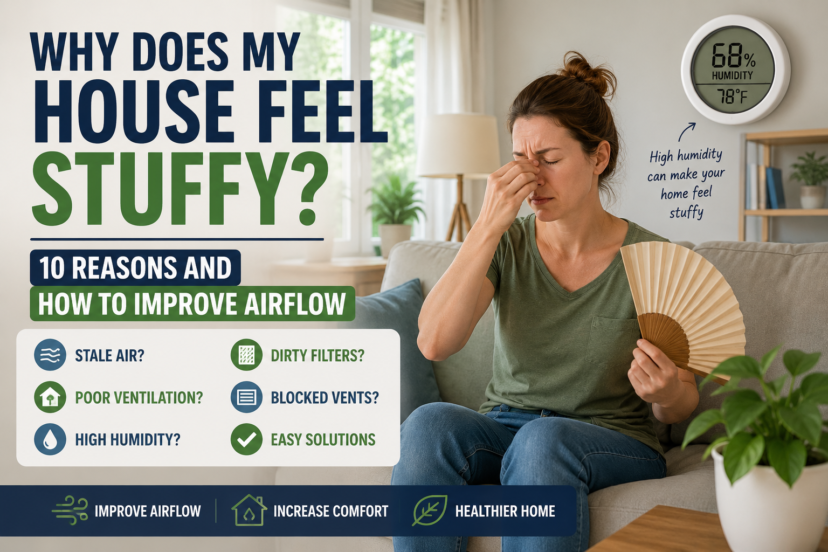
If you’ve been wondering, why does my house feel stuffy, you’re not alone. A stuffy home can feel warm, stale, humid, or difficult to breathe in—even when your heating or air conditioning seems to be working properly. Poor indoor airflow affects comfort year-round and may also contribute to lingering odors, excess humidity, and reduced indoor air quality.
The good news is that a stuffy house is usually caused by one or more common issues, such as poor ventilation, dirty HVAC filters, blocked vents, or excess indoor moisture. Identifying the root cause is the first step toward creating a fresher, healthier, and more comfortable living space.
In this guide, you’ll learn why your house feels stuffy, how to identify the source of the problem, the 10 most common causes, and practical solutions that can improve airflow and indoor comfort.
🔎 Quick Answer: Why Does My House Feel Stuffy?
A house usually feels stuffy because fresh air isn’t circulating properly. Poor ventilation, dirty HVAC filters, blocked air vents, high humidity, closed windows, or malfunctioning HVAC equipment can all reduce airflow and make indoor air feel stale. Improving ventilation, replacing filters, and controlling humidity often solve the problem.
Key Takeaways
Most likely cause: Poor ventilation combined with restricted HVAC airflow.
Usually serious? No, but prolonged poor airflow can contribute to mold, poor indoor air quality, and higher energy costs.
First thing to check: Inspect your HVAC air filter and make sure all supply and return vents are open and unobstructed.
Best solution: Improve ventilation, replace dirty filters, reduce indoor humidity, and maintain your HVAC system regularly.
🌬️ Why This Happens: How To Identify The Problem
A comfortable home depends on continuous air movement. Your HVAC system circulates conditioned air while fresh outdoor air helps remove stale indoor air. When this balance is disrupted, your home can quickly begin to feel stuffy.
Common signs include:
- Stale or musty air
- Rooms that feel warm despite the AC running
- High indoor humidity
- Lingering cooking or pet odors
- Condensation on windows
- Little airflow from vents
- Allergies seeming worse indoors
- Air that feels “heavy”
If several of these symptoms occur together, poor airflow or ventilation is likely the cause.
🔍 The 10 Most Common Causes Of A Stuffy House
1. Dirty HVAC Air Filter
This is one of the most common reasons a home feels stuffy.
As air filters collect dust, pollen, and debris, airflow becomes restricted. Your HVAC system must work harder while circulating less air throughout your home.
Signs include:
- Weak airflow
- Increased dust
- Longer HVAC run times
- Higher energy bills
Replace filters every 1–3 months, depending on the filter type and your home’s conditions.
2. Poor Home Ventilation
Modern homes are built to be energy efficient, which often means they are tightly sealed. While this reduces heating and cooling costs, it also limits the amount of fresh outdoor air entering the home.
Without adequate ventilation, stale indoor air builds up over time.
3. Blocked Or Closed Air Vents
Furniture, rugs, curtains, or even closed vent registers can reduce airflow.
Walk through your home and verify that every supply and return vent is fully open and unobstructed.
4. High Indoor Humidity
Excess moisture makes indoor air feel heavier and warmer.
Common moisture sources include:
- Long hot showers
- Cooking
- Drying clothes indoors
- Humidifiers
- Crawl spaces or basements
Indoor humidity should generally stay between 30% and 50% for comfort.
5. Dirty Air Ducts
Over time, dust and debris can accumulate inside ductwork.
While dirty ducts are not always the primary cause, significant buildup can reduce airflow and contribute to stale indoor air.
6. Poor HVAC System Performance
An aging or poorly maintained HVAC system may struggle to circulate enough air.
Possible issues include:
- Worn blower motor
- Dirty evaporator coil
- Failing capacitor
- Improper system sizing
Routine maintenance helps prevent these problems.
7. Closed Windows Year-Round
Keeping windows closed continuously limits fresh air exchange.
Even opening windows for 10–20 minutes during mild weather can noticeably improve indoor freshness.
8. Air Leaks In The Wrong Places
While some homes are too airtight, others lose conditioned air through:
- Attics
- Crawl spaces
- Leaky ductwork
- Unsealed wall penetrations
These leaks reduce HVAC efficiency and affect airflow.
9. Mold Or Mildew Growth
Moisture problems can lead to mold, which often produces a persistent musty odor that makes the house feel stale.
Look for mold in:
- Bathrooms
- Basements
- Crawl spaces
- Attics
- Around windows
If mold covers a large area, professional remediation may be necessary.
10. Indoor Air Pollution
Household contaminants can make indoor air feel unpleasant.
Common sources include:
- Cleaning chemicals
- Pet dander
- Smoke
- Candles
- Dust
- VOCs from paint or furniture
Improving ventilation and filtration helps remove these pollutants.
✅ How To Confirm The Cause
Before making repairs, try identifying where airflow is restricted.
Check the following:
- Is the HVAC filter dirty?
- Are all vents open?
- Does every room receive similar airflow?
- Is indoor humidity above 50%?
- Are there musty odors?
- Does airflow improve when windows are opened?
A simple digital hygrometer can measure indoor humidity, while an airflow imbalance may indicate HVAC or ductwork issues.
If the cause remains unclear, an HVAC technician can inspect the system and measure airflow throughout your home.
🛠️ How To Fix A Stuffy House
Fortunately, most stuffy homes can be improved with a few practical steps.
Replace Dirty HVAC Filters
Install a clean filter according to your HVAC manufacturer’s recommendations.
Improve Ventilation
Increase fresh air by:
- Opening windows when weather allows
- Running bathroom exhaust fans
- Using kitchen range hoods
- Installing whole-house ventilation if needed
Keep Air Vents Clear
Move furniture away from supply and return vents.
Avoid closing vents in unused rooms, as this can disrupt system airflow.
Reduce Indoor Humidity
If humidity remains high:
- Use a dehumidifier
- Repair plumbing leaks
- Vent moisture-producing appliances outdoors
- Dry wet areas promptly
Schedule HVAC Maintenance
Annual professional maintenance helps keep your system operating efficiently.
A technician can inspect:
- Blower motor
- Evaporator coil
- Refrigerant levels
- Airflow
- Thermostat calibration
Seal Air Leaks
Seal unwanted leaks around:
- Attic hatches
- Plumbing penetrations
- Windows
- Doors
- Ductwork
Proper air sealing improves comfort while maintaining controlled ventilation.
Improve Indoor Air Quality
Consider using:
- HEPA air purifiers
- Higher-quality HVAC filters (compatible with your system)
- Low-VOC household products
👷 When To Call A Professional
Some airflow problems require expert diagnosis.
Consider contacting an HVAC professional if:
- Airflow remains weak after replacing filters.
- Some rooms never receive adequate airflow.
- Humidity stays consistently high.
- Mold repeatedly returns.
- Your HVAC system cycles frequently.
- Energy bills continue increasing without explanation.
- You suspect damaged ductwork.
Professional testing can identify hidden airflow restrictions or equipment issues.
🛡️ How To Prevent A Stuffy House
Regular maintenance goes a long way toward preventing stale indoor air.
Helpful habits include:
- Replace HVAC filters regularly.
- Keep vents clean and unobstructed.
- Schedule annual HVAC inspections.
- Use bathroom and kitchen exhaust fans.
- Control indoor humidity.
- Open windows periodically when weather permits.
- Clean around return air vents.
- Repair moisture problems quickly.
- Vacuum frequently to reduce dust and allergens.
These simple habits help maintain healthier indoor air throughout the year.
❓ Frequently Asked Questions
Is it normal for a house to feel stuffy?
Occasionally, yes—especially during hot, humid weather. However, persistent stuffiness usually indicates poor airflow, inadequate ventilation, or excess indoor humidity.
Can a dirty HVAC filter make my house feel stuffy?
Yes. A clogged filter restricts airflow, making rooms feel stale while forcing your HVAC system to work harder.
Should I leave windows open to improve airflow?
Opening windows during mild weather can help replace stale indoor air with fresh outdoor air. However, during very humid or smoky conditions, it may be better to keep windows closed and rely on your HVAC system.
Can high humidity make a house feel stuffy?
Absolutely. High humidity makes indoor air feel warmer and heavier while reducing comfort.
Will an air purifier make my house feel less stuffy?
An air purifier can improve indoor air quality by removing dust, pollen, pet dander, and other particles, but it won’t solve airflow or ventilation problems by itself.
🏠 Related Home Problems
If your house feels stuffy, you may also be interested in:
- Why is my house so humid?
- Why does my house smell musty?
- Why does my bathroom stay humid?
- How to improve indoor air quality?
- Why is my house so dusty?
- Condensation on windows: What causes it?
- Why does my house smell after rain?
- Why is one room colder than the others?
🎯 Final Thoughts On Why Does My House Feel Stuffy?
If you’re asking why does my house feel stuffy, the answer is usually related to poor airflow, inadequate ventilation, excess humidity, or HVAC issues. Fortunately, most causes are straightforward to identify and fix.
Start with the simplest solutions—replace your HVAC filter, ensure vents are open, improve ventilation, and monitor indoor humidity. Regular maintenance and good airflow habits will help keep your home feeling fresh, comfortable, and energy-efficient throughout the year.
Disclaimer: This article is for informational purposes only and should not replace professional advice. If you experience persistent indoor air quality issues, mold growth, or suspected HVAC problems, consult a qualified HVAC technician or home inspection professional.


Comments are closed.