
Why Does My House Feel Humid With The AC On? 11 Common Causes And Easy Fixes
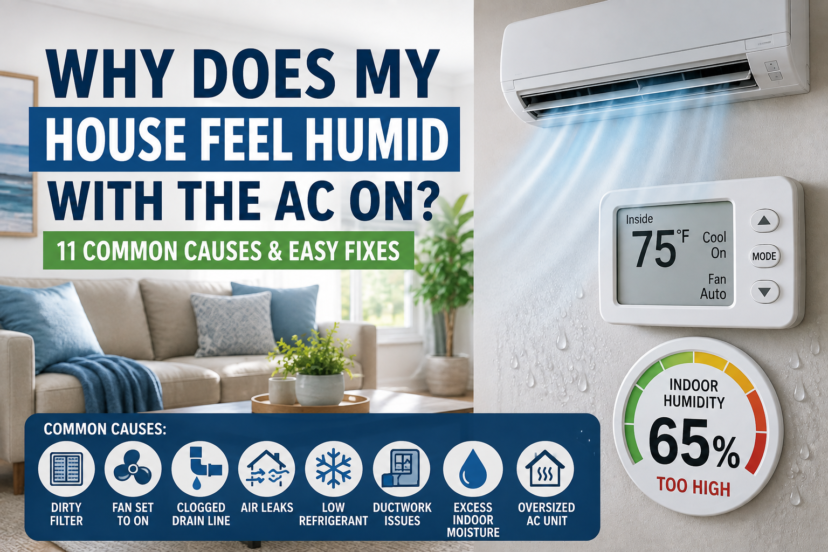
Your house feels humid with the AC on because the system cools the air without running long enough or effectively enough to remove water vapor from the indoor air. Ideal indoor relative humidity should sit between 45% and 55%.
Why does my house feel humid with the AC on? The most common causes include an oversized air conditioner, dirty air filter, thermostat fan set to “On,” clogged condensate drain, low refrigerant, duct leaks, excessive outdoor air entering the home, or extremely high outdoor humidity. Most issues can be identified with simple troubleshooting, while refrigerant and equipment problems require professional HVAC service.
Why Your Home Still Feels Humid
If you’ve ever wondered why your house feels humid with the AC on, you’re not alone. Air conditioners are designed to cool your home and remove excess moisture from the air. So when your house still feels sticky, damp, or uncomfortable while the AC is running, something isn’t working as it should. High indoor humidity doesn’t just make your home feel warmer—it can also encourage mold growth, create musty odors, and increase your energy bills because humid air feels hotter than dry air.
Fortunately, many humidity problems have simple causes that homeowners can identify themselves. A dirty air filter, incorrect thermostat setting, oversized AC system, clogged condensate drain, or air leaks may all contribute to excessive indoor moisture. In other cases, professional HVAC service may be necessary.
This guide explains why your home still feels humid despite running the air conditioner, how to diagnose the problem, and the best ways to restore a cooler, drier, and more comfortable indoor environment.
💧 Why This Happens – How To Identify The Problem
Air conditioners don’t just cool your home—they also remove moisture from the air. Warm indoor air passes over the cold evaporator coil, causing water vapor to condense into liquid that drains away through the condensate line.
If this process is interrupted, humidity remains inside your home even though the air conditioner continues running.
Signs your indoor humidity is too high include:
- Sticky or clammy indoor air
- Rooms feel warmer than the thermostat reading
- Condensation on windows
- Musty odors
- Mold or mildew growth
- Damp-feeling furniture or fabrics
- Increased allergy symptoms
- Longer AC run times
For most homes, indoor humidity should stay between 30% and 50%, with up to 60% being acceptable during very humid summer weather.
💧 The 11 Most Common Causes
1. Oversized Air Conditioner
An oversized AC cools the house too quickly and shuts off before removing enough moisture.
Signs:
- Short cooling cycles
- Cool but clammy rooms
- Frequent system starts and stops
How To Confirm The Cause
If your AC runs only a few minutes before shutting off while humidity remains high, oversized equipment could be the culprit.
2. Thermostat Fan Set To “On”
When the fan runs continuously, moisture sitting on the evaporator coil can be blown back into your home after the compressor shuts off.
How To Confirm The Cause
Check your thermostat. The fan should normally be set to Auto, not On.
3. Dirty Air Filter
Restricted airflow prevents proper heat and moisture removal.
Signs include:
- Weak airflow
- Dust buildup
- Longer cooling cycles
How To Confirm The Cause
Inspect the filter. If it’s dirty or clogged, replace it.
4. Clogged Condensate Drain
Water removed from the air must drain outside. A clogged drain can reduce moisture removal and even cause water damage.
Signs include:
- Water near the indoor unit
- Overflow safety switch trips
- Musty smells
How To Confirm The Cause
Inspect the drain line and drain pan for standing water.
5. Low Refrigerant
Low refrigerant reduces the evaporator coil’s ability to remove both heat and moisture.
Other symptoms include:
- Warm airflow
- Frozen coils
- Longer run times
How To Confirm The Cause
A licensed HVAC technician should test refrigerant levels.
6. Air Leaks Around Windows And Doors
Outdoor humid air constantly entering your home forces your AC to work harder.
How To Confirm The Cause
Check for drafts around windows, exterior doors, attic hatches, and utility penetrations.
7. Leaky Ductwork
Damaged ducts in attics or crawl spaces may pull humid outdoor air into the HVAC system.
Signs include:
- Uneven cooling
- Higher humidity
- High utility bills
How To Confirm The Cause
Inspect visible ductwork for loose joints or disconnected sections.
8. Excess Indoor Moisture
Daily activities produce surprising amounts of humidity.
Common sources include:
- Long hot showers
- Cooking
- Drying clothes indoors
- Aquariums
- Houseplants
How To Confirm The Cause
Notice whether humidity spikes after showers, cooking, or laundry.
9. Extremely Humid Outdoor Weather
During periods of very high humidity, even a properly functioning AC may struggle to maintain ideal indoor moisture levels.
How To Confirm The Cause
Check your local humidity levels. Outdoor humidity above 70–80% makes moisture removal much more difficult.
10. Dirty Evaporator Coil
Dust buildup reduces the coil’s ability to remove moisture efficiently.
How To Confirm The Cause
Professional inspection usually reveals dirty coils.
11. Aging Or Failing Air Conditioner
Older systems naturally lose efficiency and may no longer dehumidify effectively.
Signs include:
- System over 12–15 years old
- Frequent repairs
- High electric bills
- Poor cooling performance
How To Confirm The Cause
Have the system evaluated during annual HVAC maintenance.
🔧 How To Fix It
Fortunately, many humidity issues can be corrected without replacing your air conditioner.
Start with these steps:
- Replace the air filter.
- Set the thermostat fan to Auto.
- Clean around the outdoor condenser.
- Keep supply and return vents open.
- Use bathroom and kitchen exhaust fans.
- Repair air leaks around windows and doors.
- Seal leaking ductwork.
- Keep blinds closed during the hottest part of the day.
- Reduce indoor moisture from cooking and laundry.
- Consider adding a whole-home dehumidifier if humidity remains consistently high.
If humidity stays above 60% despite these improvements, professional HVAC diagnosis is recommended.
👨🔧 When To Call A Professional
Contact an HVAC technician if:
- Indoor humidity consistently exceeds 60%.
- Ice forms on refrigerant lines.
- Water leaks from the indoor unit.
- The condensate drain repeatedly clogs.
- The AC short cycles frequently.
- Warm air blows from the vents.
- Refrigerant is suspected to be low.
- Your system is older than 12–15 years and struggles to control humidity.
Professional equipment can measure airflow, refrigerant pressure, humidity levels, and system performance accurately.
🛡️ How To Prevent High Indoor Humidity
Preventing humidity problems is easier than fixing them.
Helpful maintenance tips include:
- Replace HVAC filters every 1–3 months.
- Schedule annual HVAC tune-ups.
- Keep the outdoor condenser clean.
- Clean the condensate drain regularly.
- Seal air leaks around doors and windows.
- Use exhaust fans when showering or cooking.
- Maintain attic insulation.
- Install a smart thermostat with humidity monitoring.
- Keep indoor humidity between 30% and 50%.
Routine maintenance improves comfort while lowering energy costs.
❓ Frequently Asked Questions
1. Is it normal for my house to feel humid while the AC is running?
No. A properly functioning air conditioner should cool your home while removing excess moisture.
2. What humidity level should my home have?
Most experts recommend maintaining indoor humidity between 30% and 50%, with no more than 60%.
3. Can a dirty filter cause humidity?
Yes. Restricted airflow reduces your air conditioner’s ability to remove moisture efficiently.
4. Why does my AC cool but not remove humidity?
An oversized unit, thermostat fan setting, dirty coils, or refrigerant problems are common reasons.
5. Should I buy a dehumidifier?
If your HVAC system works properly but humidity remains high because of your climate, a whole-home or portable dehumidifier may improve comfort.
6. Why does my house feel sticky at night?
Outdoor humidity often rises overnight, and reduced airflow or oversized AC systems may allow indoor humidity to increase.
7. Can high humidity damage my home?
Yes. Prolonged humidity can encourage mold growth, warp wood flooring, damage furniture, and reduce indoor air quality.
🎯 Conclusion: Why Does My House Feel Humid With The AC On?
If you’ve been asking why does my house feel humid with the AC on, remember that your air conditioner should do more than lower the temperature—it should also remove moisture from the air. When humidity remains high, simple issues like dirty filters, thermostat settings, or air leaks are often to blame. In other cases, equipment sizing, refrigerant levels, or drainage problems require professional attention.
By performing regular maintenance, improving airflow, and addressing moisture problems early, you can create a cooler, drier, healthier home while reducing strain on your HVAC system and lowering your energy bills.
Disclaimer: This article is intended for educational and informational purposes only and should not replace advice from a licensed HVAC professional. Always follow your air conditioner’s manufacturer recommendations and consult a qualified technician for refrigerant, electrical, or mechanical repairs. If you suspect water damage, mold growth, electrical hazards, or refrigerant leaks, seek professional assistance promptly.
🏠 Related Home Problems
If your home feels humid, you may also find these articles helpful:

Comments are closed.