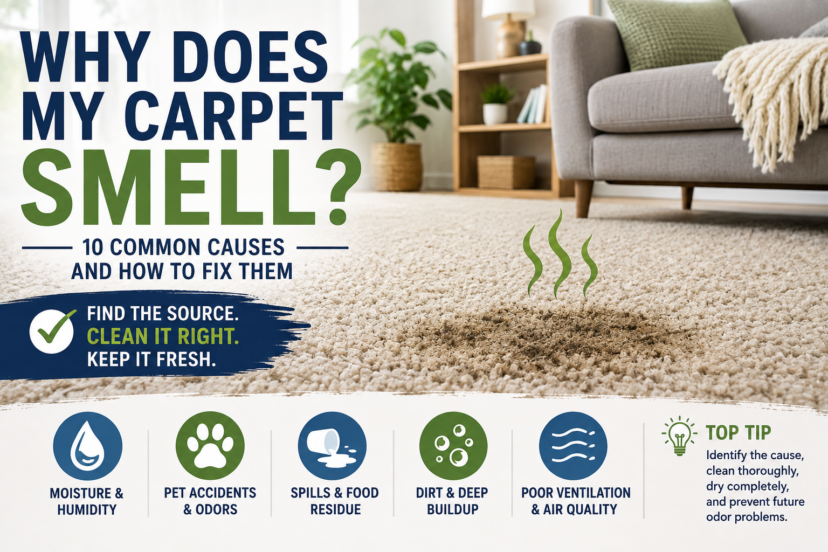
Why Does My Carpet Smell? 10 Most Common Reasons Your Carpet Smells
Carpets develop unpleasant odors because their fibers act like giant sponges, trapping moisture, organic matter, and debris. Have you ever walked into a room and immediately noticed an unpleasant odor coming from the floor? If you’re asking, “Why does my carpet smell?”, the answer may be more complicated than simply needing to vacuum. Carpet fibers, padding, and even the subfloor underneath can trap moisture, spills, pet accidents, dirt, smoke, and other odor-causing materials.
Sometimes the solution is as simple as a thorough cleaning and better ventilation. Other times, a persistent musty, sour, or urine-like smell can point to moisture trapped underneath the carpet, contaminated padding, or even a hidden plumbing problem.
The key is figuring out what the odor smells like, where it’s strongest, and when it appears. Those clues can help you avoid repeatedly deodorizing a carpet without fixing the actual cause.
Here’s how to track down the source and get your home smelling fresh again.
🔍 Why Carpet Starts To Smell
Carpet is designed to provide a soft, comfortable surface, but that same construction makes it good at trapping unwanted materials.
Dust, skin cells, food particles, soil, pollen, pet hair, oils, and other debris can settle between carpet fibers. Vacuuming removes much of this material, but some can work its way deeper.
Moisture makes the situation worse.
When carpet or padding stays damp, bacteria and other microorganisms may contribute to unpleasant odors. Persistent moisture can also create conditions where mold may grow.
Carpet padding is particularly important because you can’t see it during normal cleaning. A carpet may look clean on the surface while the material underneath continues producing an odor.
👃 How To Identify The Carpet Odor
Before cleaning anything, pay attention to what you’re smelling.
A musty or earthy odor often suggests moisture.
A sour smell may come from an old food or beverage spill, bacteria, or carpet that stayed damp after cleaning.
A urine or ammonia-like odor commonly points toward pet accidents.
A smoky smell can remain after cigarettes, fireplaces, candles, or cooking.
Also determine whether the odor affects the entire room or one specific area.
Walk slowly around the carpet and identify where the smell becomes strongest. Check around furniture, exterior walls, doors, pet areas, HVAC vents, and places where spills may have occurred.
These clues can significantly narrow down the possibilities.
🏠 The 10 Most Common Reasons Your Carpet Smells
1. Moisture Trapped In The Carpet
Moisture is one of the most common reasons carpet develops a musty smell.
Water can enter carpet from wet shoes, spills, high indoor humidity, plumbing problems, window leaks, or accidental flooding.
The carpet surface may dry while the padding underneath remains damp.
If the odor becomes stronger during humid weather or after the room has been closed for several hours, trapped moisture deserves investigation.
2. The Carpet Didn’t Dry Properly After Cleaning
A freshly cleaned carpet should smell better—not worse.
However, carpet that becomes overly saturated during shampooing or steam extraction may take too long to dry. Moisture can remain inside the fibers and padding, producing a stale or musty odor.
Poor ventilation makes the problem more likely.
After carpet cleaning, use fans, air conditioning, ventilation, or a dehumidifier as appropriate to help the carpet dry thoroughly.
3. Pet Urine Has Reached The Padding
Pet accidents are especially difficult because urine doesn’t necessarily remain on the carpet surface.
Liquid can soak through the fibers and backing into the padding. In more severe cases, it may even reach the subfloor.
Surface cleaning may temporarily improve the smell, only for the odor to return later—particularly during warm or humid weather.
Enzyme-based products designed for pet contamination may help with appropriate surfaces, but heavily contaminated padding may require replacement.
4. Old Food And Drink Spills
Milk, juice, coffee, sauces, and other foods can penetrate deeper into carpet than they initially appear to.
You may blot the visible spill and assume the problem is solved. Days later, an unpleasant sour smell appears.
Organic residue left behind can contribute to odors as it breaks down.
Treat spills promptly and use cleaning methods appropriate for your carpet type.
5. Dirt Has Accumulated Deep In The Fibers
Even carpet that looks reasonably clean can contain significant amounts of embedded dirt.
Shoes carry soil and organic material indoors. Pets bring additional debris, and everyday household dust settles continuously.
Regular vacuuming helps prevent buildup, especially in hallways, entryways, family rooms, and other high-traffic areas.
If your carpet hasn’t been thoroughly cleaned in a long time, accumulated debris could be contributing to the room’s overall odor.
6. High Indoor Humidity
Sometimes the carpet isn’t experiencing a direct leak. The entire room is simply too humid.
Carpet can absorb moisture from humid indoor air, especially in basements, lower levels, and homes in humid climates.
If the room frequently feels damp or sticky, measure the relative humidity with an inexpensive hygrometer.
The U.S. Environmental Protection Agency generally recommends keeping indoor humidity below 60%, ideally around 30–50% when practical, to help limit moisture-related problems.
7. Mold Or Mildew May Be Developing
A persistent earthy or musty smell shouldn’t automatically be labeled mold, because many moisture problems can create similar odors.
However, carpet that has remained wet for an extended period can support microbial growth.
The bigger concern may be underneath the carpet, where moisture can remain unnoticed.
If the carpet has experienced flooding, a significant leak, or prolonged dampness, professional evaluation may be appropriate—particularly if you see visible growth or the odor persists after drying and cleaning.
8. Smoke Has Been Absorbed By The Carpet
Carpet fibers can absorb smoke odors from cigarettes, fireplaces, cooking, candles, and previous occupants.
Smoke-related particles may also settle on walls, ceilings, upholstery, curtains, and HVAC components.
That’s why cleaning only the carpet may not completely remove a smoky smell from a room.
Older homes previously occupied by smokers may require more extensive cleaning of multiple surfaces.
9. The Carpet Padding Is Old Or Contaminated
Sometimes the carpet itself isn’t the real problem.
Padding underneath can absorb years of spills, pet accidents, moisture, and odors. Because it isn’t accessible during normal surface cleaning, those smells can persist.
If professional carpet cleaning improves the room temporarily but the odor keeps returning, contaminated padding could be responsible.
Replacing the padding—and sometimes the carpet—may be the most practical solution.
10. A Hidden Leak Is Wetting The Carpet
If one section of carpet repeatedly smells musty or feels damp, investigate the possibility of a water source.
Potential causes include:
- Leaking plumbing
- Water entering around windows or doors
- Foundation moisture
- HVAC condensation problems
- Appliance leaks
- Water intrusion after storms
Don’t repeatedly clean the carpet without finding out why it keeps becoming damp.
A moisture problem can damage much more than the carpet.
🧪 How To Confirm What’s Causing The Smell
Start by locating the strongest part of the odor.
Inspect the carpet closely for stains, discoloration, dampness, changes in texture, or damaged areas.
Think about recent events. Was the carpet professionally cleaned? Did a pet have an accident? Was there heavy rain? Did an appliance leak?
For suspected pet urine, a UV flashlight can sometimes help identify older urine contamination, although not every glowing spot is necessarily urine.
For suspected moisture, compare the affected area with dry sections of carpet. If dampness keeps returning, investigate nearby plumbing, walls, windows, appliances, and HVAC equipment.
If necessary, a professional can use moisture-detection equipment to investigate areas that aren’t easily accessible.
🧹 How To Fix A Smelly Carpet
The correct cleaning method depends on what’s causing the odor.
For general dirt and stale smells, begin with a thorough vacuuming. Move furniture where practical and slowly vacuum high-traffic areas in multiple directions.
Spot-treat stains with a cleaner appropriate for your carpet material. Always follow manufacturer instructions and test unfamiliar products in an inconspicuous location first.
For pet accidents, enzyme-based carpet products can help break down odor-causing organic material. Follow the label carefully because successful treatment may require reaching the same depth as the original contamination.
If the carpet needs deep cleaning, avoid oversaturating it.
Afterward, help it dry quickly by increasing ventilation, running fans, using air conditioning, or operating a dehumidifier when appropriate.
Most importantly, repair any leak before cleaning or replacing the carpet.
If padding or subflooring remains contaminated, surface cleaning alone may not solve the problem.
👷 When To Call A Professional
Professional carpet cleaning can be useful when ordinary vacuuming and spot cleaning don’t remove deeply embedded odors.
But sometimes you need more than a carpet cleaner.
Consider professional help if:
- The carpet was affected by significant flooding
- A musty odor keeps returning
- Carpet remains damp without an obvious reason
- Pet contamination covers a large area
- Padding or subflooring may be affected
- You suspect mold growth
- The odor appeared after a plumbing or roof leak
- Water may have come from sewage or another contaminated source
Water from sewage backups and other contaminated sources should be handled cautiously because it can present health risks.
A qualified water-damage, mold-remediation, plumbing, or flooring professional can help determine how far the damage extends.
🛡️ How To Prevent Carpet Odors
Preventing odors is usually easier than removing them after they penetrate the carpet padding.
Vacuum high-traffic areas regularly and clean spills immediately rather than allowing liquids to soak into the floor.
If you have pets, address accidents as soon as you find them.
Keeping shoes near the entrance can also reduce the amount of dirt, moisture, and outdoor contaminants entering carpeted areas.
Watch indoor humidity as well. If your home consistently feels damp, investigate ventilation, air conditioning, drainage, or moisture problems instead of relying solely on carpet deodorizer.
When deep-cleaning carpet, use the appropriate amount of water and ensure the room has enough airflow for fast drying.
Finally, repair plumbing, window, roofing, and appliance leaks promptly.
The longer carpet remains wet, the more difficult—and expensive—the problem can become.
❓ Frequently Asked Questions
Why Does My Carpet Smell Musty?
A musty carpet smell often indicates excess moisture. The carpet may have been wet recently, the padding may still be damp, or the room may have high humidity. Check for leaks and moisture before attempting to cover the smell with deodorizer.
Why Does My Carpet Smell Worse After Cleaning?
The carpet may have been oversaturated or may be drying too slowly. Moisture trapped in the fibers or padding can produce a stale or musty odor. Increase airflow and investigate further if the smell doesn’t improve as the carpet dries.
Why Does My Carpet Smell Like Urine When I Don’t See A Stain?
Old pet urine can soak beneath the visible carpet surface. The stain may no longer be obvious even though contamination remains in the backing or padding.
Can Baking Soda Remove Carpet Odors?
Baking soda may absorb some mild surface odors, but it won’t repair a leak or remove contamination deep inside carpet padding. Check your carpet manufacturer’s recommendations before applying powders because they may not be appropriate for every carpet or cleaning system.
Can Carpet Smell Without Having Mold?
Yes. Carpet odors can come from dirt, pets, food spills, smoke, humidity, cleaning residue, or old padding. A musty smell indicates a moisture issue that deserves attention, but odor alone doesn’t confirm mold.
How Do I Know If The Smell Is Coming From The Carpet Padding?
If the carpet surface has been thoroughly cleaned and dried but the odor quickly returns, the source may be deeper. Previous flooding, repeated pet accidents, or large spills make contaminated padding more likely.
Should I Replace Carpet That Smells?
Not automatically. Many carpet odors can be corrected through cleaning, drying, and moisture control. Replacement becomes more reasonable when carpet or padding is heavily contaminated, repeatedly wet, physically damaged, or cannot be successfully cleaned.
🏡 Final Thoughts On Why Does My Carpet Smell
If you’ve been asking “Why does my carpet smell?”, don’t assume the solution is simply adding a stronger deodorizer.
The smell is a clue. Start by determining whether the odor is musty, sour, smoky, or pet-related. Find where it’s strongest, inspect for moisture or stains, and think about recent spills, cleaning, leaks, or pet accidents.
For many homes, a thorough cleaning combined with better drying and humidity control can make a significant difference. But if moisture keeps returning or the odor seems to originate underneath the carpet, investigate the padding, subfloor, and surrounding area.
Removing the source of the odor rather than covering it up is what gives you the best chance of getting your carpet—and your home—smelling fresh again.
Disclaimer: This article provides general home-maintenance information and is not a substitute for an on-site assessment. Significant water damage, sewage contamination, suspected mold growth, persistent moisture, or extensive carpet contamination may require evaluation by a qualified cleaning, flooring, plumbing, water-damage, or mold-remediation professional.
🔗 Related Home Problems
Carpet odors often provide clues about other conditions inside the home. You may also want to investigate:
- Why your house smells musty
- Why your house feels humid with the AC running
- Why one room smells different from the rest
- Why your basement smells damp
- Why your HVAC smells musty
- Why your home feels stuffy
Many of these problems share common causes involving moisture, ventilation, humidity, or hidden water intrusion.