
Why Is My Basement Damp? Common Moisture Problems Explained
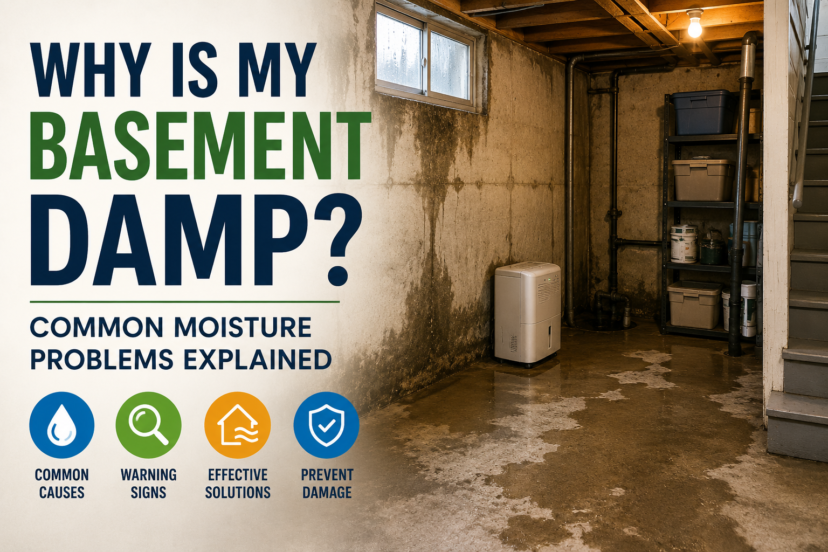
If you’ve been asking, why is my basement damp, you’re certainly not alone. A damp basement is one of the most common home problems homeowners face, especially after heavy rain or during humid seasons. While a slightly cool basement may seem normal, persistent dampness is often a sign that excess moisture is finding its way into your home.
Ignoring the problem can lead to mold growth, musty odors, damaged belongings, peeling paint, and even structural issues over time. Fortunately, many basement moisture problems are caused by issues that can be identified and corrected before they become expensive repairs.
In this guide, you’ll learn why basements become damp, how to identify the source of the moisture, practical ways to fix the problem, and when it’s time to call a professional.
💧 Quick Answer: Why Is My Basement Damp?
A basement usually becomes damp because moisture enters through foundation walls or floors, indoor humidity is too high, or water isn’t draining away from the house properly. Poor grading, clogged gutters, foundation cracks, plumbing leaks, and inadequate ventilation are among the most common causes. Finding the source of the moisture is the first step toward keeping your basement dry.
Key Takeaways
Most likely cause: Moisture entering through the foundation due to poor drainage around the home.
Usually serious? Not always, but ongoing dampness can lead to mold, wood rot, and structural damage.
First thing to check: Look for water stains, foundation cracks, clogged gutters, and signs of poor drainage outside your home.
Best solution: Improve exterior drainage, lower indoor humidity, seal minor foundation cracks, and use a dehumidifier if needed.
🔍 Why This Happens: How To Identify The Problem
Basements naturally stay cooler than the rest of the house because they’re surrounded by soil. Cool surfaces combined with moisture often create the perfect conditions for dampness.
Moisture can enter your basement in several ways:
- Rainwater seeping through foundation walls
- Groundwater pressure forcing moisture inside
- Humid indoor air condensing on cool surfaces
- Plumbing leaks
- Poor drainage around the home
Start by asking yourself:
- Does the basement feel damp only after rain?
- Are there visible water stains?
- Do you notice a musty smell?
- Is the moisture on walls, floors, or windows?
- Are there puddles or only high humidity?
The answers can help identify the underlying problem.
🏡 The Most Common Causes Of Why Your Basement Is Damp
1. Poor Drainage Around The Foundation
Poor exterior drainage is one of the leading causes of basement moisture.
If rainwater collects next to your home’s foundation, it can gradually seep through concrete walls and floors.
Common drainage problems include:
- Soil sloping toward the house
- Low spots around the foundation
- Standing water after storms
Signs:
- Damp walls after rainfall
- Water stains near the floor
- Wet corners
2. Clogged Or Overflowing Gutters
Gutters direct rainwater away from your home.
When clogged with leaves or debris, water spills over the sides and soaks the soil around the foundation.
Over time, that moisture can find its way into the basement.
3. Downspouts Draining Too Close To The House
Even clean gutters can cause problems if downspouts discharge water directly beside the foundation.
Ideally, downspouts should carry water at least 5 to 10 feet away from your home.
4. Foundation Cracks
Small cracks may seem harmless, but they often allow moisture to enter during heavy rain.
Look for:
- Vertical cracks
- Horizontal cracks
- Floor cracks
- Gaps around utility pipes
Water usually follows the path of least resistance.
5. High Indoor Humidity
Sometimes the basement isn’t leaking at all.
Instead, humid indoor air condenses on cool concrete walls, pipes, or floors.
Common sources include:
- Laundry rooms
- Water heaters
- Dryers
- Humid summer weather
This often creates damp surfaces without visible leaks.
6. Condensation On Cold Surfaces
Cold pipes, concrete floors, and basement walls often collect condensation when warm humid air enters the basement.
You may notice:
- Water droplets
- Damp pipes
- Wet floor edges
This is especially common during summer.
7. Plumbing Leaks
Leaking pipes can slowly add moisture for weeks or months before becoming obvious.
Check around:
- Water heaters
- Washing machines
- Utility sinks
- Bathrooms above the basement
- Water supply lines
Small leaks often create localized damp spots.
8. Hydrostatic Pressure
After heavy rainfall, groundwater builds up around the foundation.
This pressure pushes moisture through tiny pores in concrete walls and floors.
Signs include:
- Water seeping through floor joints
- Damp concrete
- White mineral deposits (efflorescence)
9. Poor Basement Ventilation
Without proper airflow, moisture becomes trapped.
Poor ventilation often leads to:
- Musty odors
- High humidity
- Mold growth
- Slow drying after rain
Finished basements are particularly vulnerable.
10. Failed Waterproofing
Older homes may have exterior waterproofing that has deteriorated over time.
As waterproof coatings break down, moisture more easily penetrates the foundation.
This usually develops gradually over many years.
✅ How To Confirm The Cause
Before making repairs, spend time identifying where the moisture is coming from.
Helpful checks include:
- Inspect walls for water stains.
- Look for foundation cracks.
- Check gutters and downspouts during rain.
- Feel for damp concrete.
- Measure humidity with a hygrometer.
- Look for white powdery deposits (efflorescence).
- Inspect plumbing for leaks.
- Observe whether dampness appears only after storms.
These clues often reveal whether the issue is condensation, drainage, or water intrusion.
🛠️ How To Fix A Damp Basement
The best solution depends on the source of the moisture.
Improve Exterior Drainage
- Clean gutters regularly.
- Extend downspouts away from the foundation.
- Regrade soil so it slopes away from the house.
- Fill low spots where water collects.
Reduce Indoor Humidity
Aim for indoor humidity between 30% and 50%.
You can lower humidity by:
- Running a dehumidifier
- Improving ventilation
- Using exhaust fans
- Keeping windows closed during humid weather
Seal Minor Foundation Cracks
Small cracks can often be repaired with masonry crack sealants or epoxy injection products.
Large or expanding cracks should be professionally evaluated.
Repair Plumbing Leaks
Even a slow drip can keep a basement damp.
Repair leaking pipes promptly to prevent mold and water damage.
Improve Air Circulation
Good airflow helps surfaces dry faster.
Consider:
- Ceiling fans
- Portable fans
- Opening interior doors
- Avoiding storage directly against exterior walls
Waterproof The Basement
If water regularly enters during storms, professional waterproofing may be the best long-term solution.
Options include:
- Exterior waterproof membranes
- Interior drainage systems
- French drains
- Sump pumps
👷 When To Call A Professional
Contact a professional if you notice:
- Standing water after rain
- Large foundation cracks
- Mold covering large areas
- Persistent dampness despite improvements
- Water entering through walls or floors
- Bowing foundation walls
- Structural movement
A foundation specialist or waterproofing contractor can determine whether the issue involves drainage, hydrostatic pressure, or structural damage.
🌧️ How To Prevent Basement Dampness
Preventive maintenance can keep your basement dry for years.
Helpful habits include:
- Clean gutters twice a year.
- Extend downspouts away from the home.
- Keep soil sloping away from the foundation.
- Repair plumbing leaks promptly.
- Use a dehumidifier during humid months.
- Inspect foundation walls annually.
- Avoid storing cardboard directly on basement floors.
- Check for water after heavy storms.
Small maintenance tasks often prevent expensive repairs later.
❓ Frequently Asked Questions
Is a damp basement always a leak?
No. High humidity and condensation are also common causes of basement dampness.
Can a dehumidifier solve the problem?
If humidity is the main issue, yes. However, a dehumidifier won’t fix water entering through the foundation.
Is a musty smell a sign of mold?
Often, yes. Musty odors frequently indicate excess moisture and possible mold growth.
Why is my basement damp only after rain?
Rainwater is likely collecting around your foundation due to poor drainage, clogged gutters, or foundation cracks.
Is basement condensation normal?
Some condensation is common during humid weather, but persistent moisture should be investigated.
Can basement moisture damage my home?
Yes. Long-term moisture can lead to mold, wood rot, damaged drywall, ruined flooring, and structural deterioration.
🔗 Related Home Problems
If you’re dealing with a damp basement, you may also find these articles helpful:
- Why is my house so humid?
- Why does my house smell musty?
- Condensation on windows: what causes it?
- Why are my windows sweating?
- Why does my house smell after rain?
- Why is one room colder than the others?
- Why does my house smell musty?
- Why is my crawl space damp?
🏡 Final Thoughts On Why Is My Basement Damp
If you’re wondering why my basement is damp, the answer usually comes down to excess moisture entering your home through drainage problems, foundation issues, high humidity, or condensation. While a damp basement may seem like a minor inconvenience, leaving it untreated can result in mold growth, damaged belongings, and costly structural repairs.
Fortunately, many moisture problems can be corrected by improving drainage, lowering indoor humidity, fixing leaks, and maintaining your home’s foundation. Taking action early is the best way to keep your basement dry, healthy, and comfortable year-round.
Disclaimer: This article is for informational purposes only and should not be considered professional engineering, waterproofing, or home inspection advice. If your basement has significant water intrusion, structural damage, extensive mold growth, or recurring flooding, consult a qualified waterproofing contractor, foundation specialist, or home inspector for a thorough evaluation.




Comments are closed.