
Condensation On Windows: What Causes It And When Should You Be Concerned?
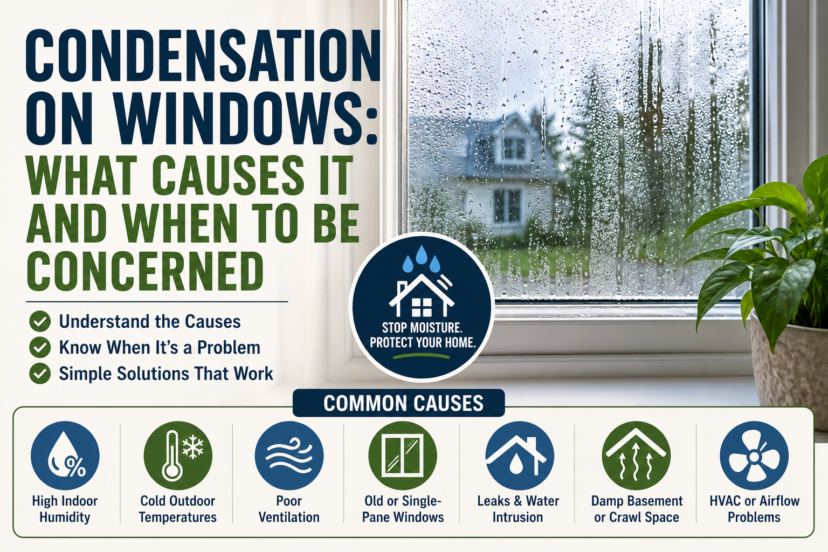
If you’ve noticed condensation on windows, especially during cold mornings or after cooking and showering, you’re not alone. Window condensation is one of the most common household issues homeowners experience, particularly during the fall and winter months. While a little moisture on your windows isn’t always a problem, excessive or persistent condensation can indicate poor ventilation, high indoor humidity, or even failing windows.
Ignoring the issue can eventually lead to mold growth, damaged window frames, peeling paint, and reduced indoor air quality. Fortunately, most condensation problems have straightforward causes and practical solutions that don’t require replacing every window in your home.
This guide explains why condensation forms on windows, how to determine whether it’s normal or a sign of a larger issue, and the best ways to reduce moisture and protect your home.
💡 Quick Answer: Condensation On Windows
Condensation on windows occurs when warm, moist indoor air comes into contact with a cooler window surface, causing water vapor to turn into liquid droplets. A small amount of condensation is normal under certain conditions, but excessive or frequent moisture may indicate high indoor humidity, poor ventilation, inadequate insulation, or window seal failure.
Key Takeaways
Most likely cause: High indoor humidity combined with cold window glass is the most common reason condensation forms on windows. Poor ventilation, inadequate insulation, or failed window seals can also contribute.
Usually serious? No. Occasional condensation is normal, especially during cold weather. However, persistent moisture, condensation between window panes, or mold around window frames may indicate ventilation problems or window seal failure.
First thing to check: Determine where the condensation is forming. Moisture on the inside of the glass usually points to high indoor humidity, while condensation between the panes often indicates a failed window seal.
Best solution: Keep indoor humidity between 30% and 50%, improve ventilation with exhaust fans, increase airflow around windows, use a dehumidifier if needed, and repair or replace windows with failed seals.
💧 Why This Happens
Air naturally contains water vapor.
Warm air can hold much more moisture than cold air. When warm, humid indoor air touches a cold window, the air cools rapidly and can no longer hold all of its moisture.
The excess moisture forms water droplets on the glass.
This process is similar to how a cold drink “sweats” on a warm day.
Whether condensation becomes a problem depends on:
- Indoor humidity
- Outdoor temperature
- Window quality
- Air circulation
- Home ventilation
🏠 Most Common Causes Of Condensation On Windows
1. High Indoor Humidity
The most common cause is excessive indoor moisture.
Everyday activities that increase humidity include:
- Showering
- Cooking
- Washing dishes
- Drying clothes indoors
- Breathing
- Houseplants
2. Cold Outdoor Temperatures
The colder the outside temperature, the colder your window glass becomes.
Cold glass allows condensation to form much more easily.
3. Poor Ventilation
Without proper airflow, moisture remains trapped inside your home.
Bathrooms, kitchens, and laundry rooms are especially vulnerable.
4. Energy-Efficient Homes
Modern homes are sealed more tightly than older homes.
While this improves energy efficiency, it also traps more indoor moisture unless proper ventilation is provided.
5. Single-Pane Windows
Older single-pane windows lose heat quickly.
Their interior glass surface becomes much colder than modern double- or triple-pane windows.
6. Window Seal Failure
Double-pane windows contain insulating gas between the panes.
If the seal fails, moisture may become trapped between the glass layers.
Unlike normal condensation, this moisture cannot be wiped away.
7. Blocked Airflow Around Windows
Closed curtains, heavy drapes, or furniture placed directly against windows reduce warm air circulation.
The glass remains colder, encouraging condensation.
8. New Windows During Construction
New homes or recently renovated houses often contain significant moisture from:
- Drywall
- Concrete
- Paint
- Lumber
This moisture gradually dries out during the first year.
9. Crawl Space Or Basement Moisture
Moisture from damp basements or crawl spaces increases humidity throughout the home.
This often contributes to window condensation.
10. HVAC Problems
Heating and cooling systems help regulate humidity.
Dirty filters, poor airflow, or malfunctioning equipment may allow indoor moisture levels to rise.
🔎 How To Confirm The Cause
Start by identifying where the condensation appears.
Condensation On The Inside Of The Glass
This usually indicates excess indoor humidity or poor ventilation.
Condensation Between Window Panes
This typically means the insulated window seal has failed.
The window may need professional repair or replacement.
Condensation On The Outside Of The Glass
This is generally normal.
It often occurs during cool mornings when outdoor humidity is high and usually indicates your windows are well insulated.
Also look for:
- Mold around window frames
- Peeling paint
- Soft wood
- Persistent dampness
- High indoor humidity readings
Using a digital hygrometer makes it easy to monitor indoor humidity.
🛠️ How To Fix Condensation On Windows
The right solution depends on the underlying cause.
Reduce Indoor Humidity
Aim to keep humidity between 30% and 50%.
A hygrometer makes monitoring easy.
Use Exhaust Fans
Always run bathroom and kitchen exhaust fans during and after showers or cooking.
These fans remove moisture before it spreads through the house.
Open Curtains During The Day
Allow warm air from your heating system to circulate across the glass.
This helps keep window surfaces warmer.
Improve Air Circulation
Ceiling fans and portable fans help distribute warm air more evenly.
Better airflow reduces moisture buildup.
Use A Dehumidifier
Portable or whole-home dehumidifiers can significantly reduce condensation in humid homes.
Replace Damaged Weatherstripping
Air leaks around windows can cool interior glass and encourage condensation.
Replacing worn weatherstripping helps maintain warmer window surfaces.
Upgrade Older Windows
Modern double- or triple-pane windows stay much warmer than older single-pane windows.
They greatly reduce condensation during cold weather.
Maintain Your HVAC System
Replace air filters regularly and schedule annual maintenance to keep humidity under control.
👷 When To Call A Professional
While occasional condensation is normal, some situations require professional evaluation.
Contact a professional if:
- Condensation forms between window panes.
- Mold continues returning around windows.
- Window frames feel soft or rotten.
- Water damage develops.
- Indoor humidity stays above 60%.
- Condensation appears year-round.
- You suspect hidden water leaks.
Prompt repairs can prevent expensive structural damage later.
🌿 How To Prevent Condensation On Windows
Simple maintenance helps reduce future moisture problems.
Helpful habits include:
- Monitor indoor humidity.
- Use bathroom and kitchen exhaust fans.
- Open curtains during the day.
- Replace HVAC filters regularly.
- Keep air vents unobstructed.
- Repair plumbing leaks promptly.
- Improve attic and crawl space ventilation.
- Avoid drying laundry indoors when possible.
- Use a dehumidifier during humid seasons.
- Inspect window seals regularly.
Small changes often produce noticeable improvements.
❓ FAQs: Condensation On Windows
Is Condensation On Windows Normal?
Yes. Small amounts of condensation on the inside of windows during cold weather are often normal, especially after cooking, showering, or sleeping.
Why Do My Windows Sweat Every Morning?
Overnight, indoor humidity rises while outdoor temperatures drop. The colder glass causes moisture in the indoor air to condense into water droplets.
Can Condensation Damage My Windows?
Yes. Persistent condensation can damage wooden frames, peeling paint, drywall, and surrounding trim if moisture isn’t controlled.
Should I Replace Windows Because Of Condensation?
Not always. If condensation appears only on the inside surface, improving ventilation and reducing humidity may solve the problem. Moisture trapped between panes usually indicates seal failure that may require replacement.
What Humidity Level Prevents Window Condensation?
Most homes experience fewer condensation problems when indoor humidity remains between 30% and 50%, depending on outdoor temperatures.
🏡 Related Home Problems
If you’re dealing with condensation on windows, you may also find these articles helpful:
- Why Is My House So Humid?
- Why Does My House Smell After Rain?
- Why Does My House Smell Musty?
- Why Is One Room Colder Than The Others?
- Why Is My House So Dusty?
- Why Does My Bedroom Smell?
- Why Are My Windows Sweating?
- Why Are My Windows Always Dirty Inside?
🎯 Final Thoughts
Condensation on windows is often a normal response to differences between indoor humidity and outdoor temperatures, but excessive moisture shouldn’t be ignored. Persistent condensation can signal ventilation issues, excessive indoor humidity, or even failing insulated windows.
By improving airflow, reducing humidity, maintaining your HVAC system, and addressing moisture problems early, you can protect your windows, improve indoor comfort, and reduce the risk of mold and water damage throughout your home.
Disclaimer: This article is intended for informational and educational purposes only. Every home is different, and condensation can have multiple causes. If you suspect hidden water damage, mold growth, structural issues, or failed insulated windows, consult a qualified window professional, HVAC technician, or licensed contractor for a thorough inspection and appropriate repairs.




Comments are closed.