
Why Is One Room Colder Than The Others? 10 Possible Reasons And Easy Fixes
Have you ever walked from one room in your house into another and immediately noticed a significant temperature difference? If you’ve been asking yourself why is one room colder than the others, you’re dealing with one of the most common comfort complaints among homeowners. Whether it’s a chilly bedroom, a freezing bonus room, or a cold basement office, uneven temperatures can make parts of your home uncomfortable year-round.
A colder room isn’t always a sign that your heating system is failing. In many cases, the problem is caused by airflow issues, poor insulation, blocked vents, drafty windows, or the way your home’s HVAC system distributes air. Fortunately, many of these problems are relatively easy to identify and often inexpensive to fix.
This guide explains the most common reasons one room stays colder than the rest of your home, how to diagnose the cause, and practical solutions that can improve comfort and energy efficiency.
Quick Answer: Why Is One Room Colder Than The Others
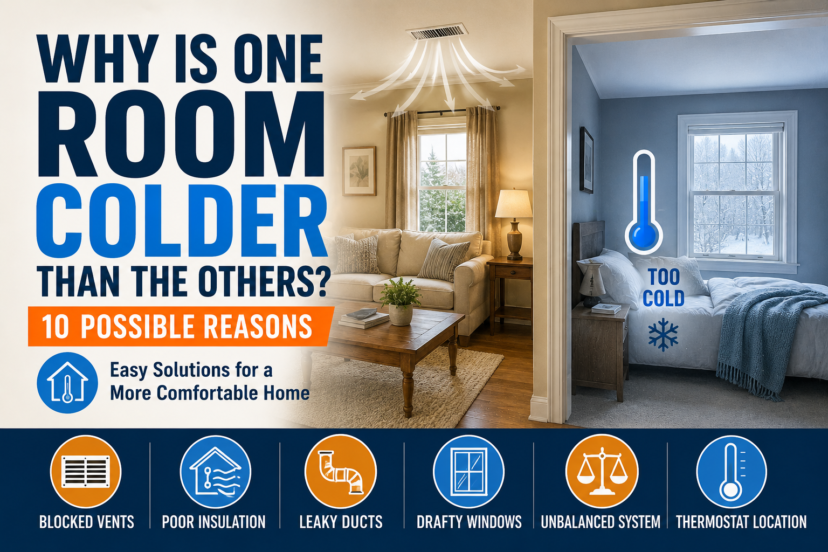
If you’re wondering why is one room colder than the others, the most common causes include blocked air vents, poor insulation, leaky ductwork, drafty windows, an unbalanced HVAC system, or the room’s location within the home. Identifying the specific cause allows you to improve airflow, reduce heat loss, and create more consistent temperatures throughout your house.
Key Takeaways
Most likely cause: Blocked air vents, poor insulation, leaky ductwork, drafty windows, or an unbalanced HVAC system are the most common reasons one room stays colder than the rest of the house.
Usually serious? No. Most cold-room problems can be improved with better airflow, sealing drafts, replacing HVAC filters, or adding insulation. However, persistent temperature differences may point to ductwork or HVAC issues that require professional attention.
First thing to check: Make sure the room’s supply and return vents are fully open and producing strong airflow. Then inspect for drafts around windows and doors and check whether the HVAC filter needs replacing.
Best solution: Improve airflow by opening and cleaning vents, replace dirty HVAC filters, seal air leaks, add insulation where needed, and balance your HVAC system to distribute heat more evenly throughout the home.
🌡️ Why This Happens
Your home’s heating system is designed to distribute warm air evenly, but several factors can interfere with that process.
Some rooms naturally lose heat faster than others because they have:
- More exterior walls
- Larger windows
- Less insulation
- Longer duct runs
- Greater exposure to wind
At the same time, heating systems don’t always deliver equal airflow to every room. Even small airflow restrictions can create noticeable temperature differences.
The result is one room feeling several degrees colder than the rest of the house, even though your thermostat shows the desired temperature.
🏠 Most Common Causes Of One Room Being Colder
1. Blocked Or Closed Air Vents
Furniture, rugs, curtains, or accidentally closed registers can reduce airflow into a room.
Even partially blocked vents can significantly reduce heating performance.
2. Poor Insulation
Rooms with insufficient insulation lose heat much faster than well-insulated areas.
Common trouble spots include:
- Exterior walls
- Attics
- Ceilings
- Garage ceilings
3. Leaky HVAC Ductwork
Warm air traveling through damaged or disconnected ducts may escape before reaching the room.
Older homes commonly develop duct leaks over time.
4. Drafty Windows And Doors
Cold outdoor air entering through gaps around windows or doors can overwhelm the heat entering the room.
Worn weatherstripping is a frequent culprit.
5. The Room Is Far From The Furnace
Rooms located at the end of long duct runs often receive less airflow than rooms closer to the HVAC system.
This becomes more noticeable during very cold weather.
6. Dirty HVAC Air Filter
A clogged filter restricts airflow throughout the entire system.
Some rooms may be affected more than others depending on the duct layout.
7. Unbalanced HVAC System
Many homes need occasional airflow balancing.
If dampers or duct adjustments aren’t properly set, some rooms receive too much air while others receive too little.
8. High Or Vaulted Ceilings
Warm air naturally rises.
Rooms with tall ceilings often feel cooler near the floor where people spend most of their time.
9. Heat Loss Through Exterior Walls
Corner rooms or rooms with multiple outside walls lose more heat than interior rooms.
This is especially common in older homes with outdated insulation.
10. Thermostat Location
Your thermostat measures the temperature only where it’s installed.
If it’s located near a warm area, the heating system may shut off before colder rooms become comfortable.
🔎 How To Confirm The Cause
Start by comparing the cold room to the rest of your home.
Look for clues such as:
- Weak airflow from supply vents
- Drafts around windows or doors
- Cold walls or floors
- Condensation on windows
- Rooms above garages
- Uneven temperatures throughout the day
You can also use an inexpensive infrared thermometer to compare wall, ceiling, floor, and vent temperatures.
If warm air isn’t reaching the room properly, airflow or insulation is often the issue.
🛠️ How To Fix A Cold Room
Many uneven temperature problems can be improved without replacing your heating system.
Open And Clean Air Vents
Make sure supply and return vents are fully open and free from furniture or dust buildup.
Proper airflow is essential for balanced heating.
Replace HVAC Filters
Dirty filters reduce airflow throughout the system.
Replace disposable filters every one to three months, depending on usage.
Seal Air Leaks
Inspect:
- Windows
- Exterior doors
- Baseboards
- Electrical outlets on exterior walls
Weatherstripping and caulk can eliminate many drafts.
Improve Insulation
Adding insulation to attics, crawl spaces, or exterior walls often provides noticeable improvements in comfort and energy efficiency.
Balance The HVAC System
Some HVAC systems include adjustable dampers that allow airflow to be redirected toward colder rooms.
Proper balancing may require professional adjustment.
Use Ceiling Fans Correctly
During winter, ceiling fans should rotate clockwise at a low speed.
This gently pushes warm air back down into the room.
Keep Interior Doors Open
Leaving doors open helps warm air circulate more evenly throughout the house.
Add Thermal Curtains
Insulated curtains reduce heat loss through windows during winter.
They can make a significant difference in rooms with large windows.
Consider A Smart Thermostat Or Zoned HVAC System
Homes with persistent temperature differences may benefit from zoning systems that allow separate temperature control for different areas.
👷 When To Call A Professional
While many cold-room problems have simple solutions, some require professional diagnosis.
Contact an HVAC technician if:
- Airflow from vents is extremely weak.
- One room is consistently more than 5°F colder than others.
- You suspect leaking ductwork.
- Your furnace runs constantly without improving comfort.
- Certain vents produce no airflow.
- Utility bills have increased significantly.
- You suspect insulation problems inside walls.
A professional HVAC inspection or home energy audit can often identify issues that aren’t visible during a basic inspection.
🌿 How To Prevent Uneven Room Temperatures
Keeping your heating system and home well-maintained helps prevent cold rooms.
Helpful habits include:
- Replace HVAC filters regularly.
- Schedule annual heating system maintenance.
- Keep vents open and unobstructed.
- Seal drafts around windows and doors.
- Add insulation where needed.
- Keep return vents clear.
- Clean supply registers periodically.
- Inspect ductwork for damage.
- Use ceiling fans during winter.
- Monitor room temperatures throughout the home.
Routine maintenance can improve comfort while reducing heating costs.
❓ Frequently Asked Questions
Why Is My Bedroom Colder Than The Rest Of The House?
Bedrooms are often located farther from the furnace, have more exterior walls, or receive less airflow than central living areas.
Can Dirty Air Filters Cause One Room To Be Cold?
Yes. Dirty HVAC filters reduce airflow throughout the system, which can make already under-supplied rooms feel noticeably colder.
Is It Normal For Upstairs And Downstairs To Have Different Temperatures?
Yes. Heat naturally rises, so temperature differences between floors are common. Proper insulation, airflow balancing, and zoning can reduce the difference.
Will Closing Vents In Other Rooms Warm Up A Cold Room?
Usually not. Closing vents can increase pressure inside the duct system and may actually reduce overall HVAC efficiency.
Can Poor Insulation Make One Room Cold?
Absolutely. Rooms with insufficient insulation lose heat much faster, making them feel colder even when warm air is being supplied.
🏡 Related Home Problems
If one room feels colder than the others, you may also find these articles helpful:
- Why Is My House So Cold?
- Why Is My House So Humid?
- Why Is My House So Dusty?
- Why Does My Furnace Keep Running?
- Why Is My HVAC Blowing Cold Air?
- Why Are My Windows Drafty?
- Why Is My Energy Bill So High?
- How To Improve Indoor Air Quality
📌 Final Thoughts On Why Is One Room Colder Than The Others?
If you’ve been wondering why is one room colder than the others, the answer is often a combination of airflow, insulation, and heat loss rather than a major heating system failure. Fortunately, many uneven temperature problems can be solved with simple maintenance, better airflow management, and sealing common drafts.
By identifying the underlying cause instead of simply turning up the thermostat, you can make your entire home more comfortable while improving energy efficiency and reducing heating costs.
Disclaimer: This article is intended for informational and educational purposes only. Every home’s heating system and construction are different. If you suspect significant HVAC malfunctions, damaged ductwork, electrical issues, insulation failures, or structural problems affecting your home’s temperature, consult a qualified HVAC technician or licensed home improvement professional for a thorough inspection and appropriate repairs.


Comments are closed.