Why Is There Mold On My Bathroom Ceiling? 10 Most Common Causes Of Mold On A Bathroom Ceiling (How to Stop It)
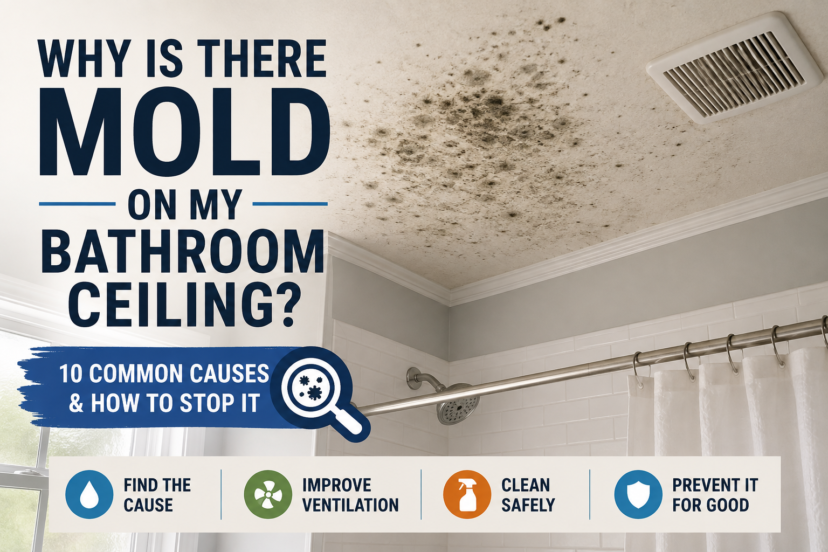
If you’ve looked up while showering and noticed black, gray, green, or brown spots spreading across the ceiling, you’re probably wondering: Why is there mold on my bathroom ceiling? In most homes, the answer comes down to one thing—too much moisture staying in the room for too long.
Bathrooms naturally produce large amounts of warm, humid air. Without enough ventilation, that moisture can collect on cooler ceiling surfaces and create the damp conditions mold needs to grow. But poor ventilation isn’t the only possibility. Plumbing leaks, roof leaks, inadequate insulation, peeling paint, and even everyday shower habits can contribute.
The good news is that small areas of bathroom ceiling mold are often manageable once you identify and correct the moisture source. Simply cleaning the visible spots, however, may not solve the underlying problem.
Here’s how to figure out what’s happening and keep your bathroom ceiling cleaner and drier.
⚡ Quick Answer: Why Is There Mold On My Bathroom Ceiling?
Mold on a bathroom ceiling is usually caused by excess humidity and condensation, often because the exhaust fan isn’t removing enough moist air during and after showers. Mold may also develop because of poor airflow, cold ceiling surfaces, plumbing leaks, or water entering from the roof or attic. The best long-term solution is to identify the moisture source, correct it, safely clean the affected area, and improve bathroom ventilation.
Key Takeaways
Most likely cause: High bathroom humidity and condensation caused by showers combined with inadequate ventilation.
Usually serious? Small surface patches are often manageable, but widespread or recurring mold can indicate an unresolved moisture, ventilation, or water-leak problem.
First thing to check: Run the bathroom exhaust fan and confirm that it is actually pulling air and venting outdoors.
Best solution: If you’re wondering why is there mold on my bathroom ceiling?, start by controlling moisture, improving ventilation, repairing any leaks, and safely cleaning the affected surface.
🔍 Why This Happens
Mold needs moisture, a suitable temperature, and an organic food source to grow. A bathroom can easily provide all three.
A hot shower releases a surprising amount of water vapor into the air. As that warm, humid air rises, it reaches the ceiling. If the ceiling surface is cooler than the air, some of the moisture can condense into tiny water droplets.
Occasional condensation usually isn’t a major concern. The problem begins when the ceiling remains damp repeatedly or for extended periods.
Paint, dust, drywall paper, and other materials can provide enough organic material for mold growth. Once spores find a consistently damp location, visible spots may begin developing.
How To Identify The Problem
Bathroom ceiling mold commonly appears as:
- Small black or dark-gray dots
- Greenish or brown patches
- Speckled areas above the shower
- Discoloration in ceiling corners
- Mold around the exhaust fan
- Peeling, bubbling, or flaking paint
- Musty odors that remain after the bathroom dries
Pay attention to where the mold appears. Mold concentrated above the shower often points toward condensation, while a localized stain that remains wet even when nobody has showered may suggest a leak.
🏠 The 10 Most Common Causes Of Mold On A Bathroom Ceiling
1. Excess Humidity From Hot Showers
This is one of the most common causes.
Long, hot showers can rapidly increase bathroom humidity. The warm moisture rises and can settle on the ceiling, especially during colder weather when ceiling surfaces may be cooler.
If mirrors, walls, and ceilings remain wet long after showering, moisture isn’t leaving the room quickly enough.
2. An Undersized Or Weak Exhaust Fan
Not every bathroom fan moves enough air for the room it serves.
A fan may be too small, old, dirty, or simply ineffective. Dust buildup on the grille and fan components can also reduce airflow.
If steam fills the room despite the fan running, ventilation performance deserves a closer look.
3. Not Running The Fan Long Enough
Turning the exhaust fan off immediately after leaving the shower can allow substantial moisture to remain behind.
Running the fan during bathing and for roughly 20–30 minutes afterward can help remove lingering humidity. How long is actually needed depends on the bathroom, fan performance, climate, and shower habits.
A humidity-sensing fan or timer switch can make this easier.
4. The Bathroom Fan Isn’t Venting Outdoors
An exhaust fan should move humid bathroom air outside—not simply relocate it somewhere else inside the house.
If the duct terminates in an attic or another enclosed space, moisture can accumulate where you don’t want it and potentially contribute to mold, wood deterioration, or insulation problems.
If you aren’t sure where your fan vents, this is worth checking.
5. Poor Airflow Inside The Bathroom
Even a working fan can struggle when replacement air can’t easily enter the room.
A very tight bathroom door with little clearance underneath can restrict airflow. Closed windows and limited air movement can make the problem worse.
You may notice that the room feels damp or stuffy long after a shower.
6. Cold Ceiling Surfaces And Poor Insulation
Condensation forms more easily on cold surfaces.
If the bathroom is underneath an attic with missing, compressed, or poorly installed insulation, parts of the ceiling may become unusually cold during winter. Warm bathroom air hitting those areas can produce repeated condensation.
Mold that consistently develops along exterior edges or particular ceiling sections may be a clue.
7. A Plumbing Leak Above The Ceiling
Not all bathroom ceiling moisture comes from showers.
If another bathroom, water pipe, or plumbing fixture is located above the affected area, a slow leak could be wetting the ceiling from behind.
Warning signs include yellow or brown stains, soft drywall, bubbling paint, sagging areas, or a patch that stays damp regardless of shower use.
8. A Roof Leak
For bathrooms located directly below the roof or attic, water intrusion from above should also be considered.
Damaged flashing, roofing materials, vents, or other roof penetrations can allow rainwater into the ceiling assembly.
If the ceiling stain gets worse after heavy rain rather than after showers, investigate the roof or attic.
9. Peeling Or Damaged Bathroom Paint
Bathroom ceilings benefit from paint that can withstand frequent humidity and cleaning.
When paint begins cracking or peeling, moisture may reach the underlying surface more easily. Older coatings may also be more difficult to keep clean.
Repainting can help—but only after the moisture problem and any existing mold have been addressed.
10. Mold Was Cleaned Without Fixing The Moisture Source
One of the biggest mistakes homeowners make is treating mold as purely a cleaning problem.
You can remove visible mold, repaint the ceiling, and make the bathroom look new. But if humidity, condensation, or a leak continues, the spots may return.
Recurring bathroom mold is often a sign that the cause, rather than just the visible growth, still needs attention.
🧪 How To Confirm The Cause
Start with simple observations before assuming there’s a major hidden problem.
After your next shower, check how long the mirror, walls, and ceiling remain wet. If condensation lingers for a long time, ventilation is likely contributing.
You can also inspect the exhaust grille for dust buildup and verify that the fan produces noticeable airflow. If accessible and safe to inspect, confirm that its duct carries air outdoors.
Next, consider the pattern of the moisture. Mold concentrated above the shower and in ceiling corners generally supports a condensation explanation.
A single discolored or soft area may deserve more investigation for leakage.
A basic humidity meter can also be useful. Bathrooms naturally experience temporary humidity spikes, but the goal is for moisture levels to fall again reasonably quickly after showering.
🛠️ How To Fix Mold On A Bathroom Ceiling
The correct fix depends on the cause.
For a small area of surface mold on a sound, painted ceiling, cleaning may be appropriate. Wear gloves and eye protection, ventilate the area, and follow the directions for a cleaning product intended for the affected surface. Never mix cleaning chemicals.
Avoid simply painting over visible mold.
After cleaning, allow the ceiling to dry completely. If the existing paint is damaged, appropriate preparation followed by a moisture-resistant bathroom paint can make the surface easier to maintain.
More importantly, correct the moisture source.
That may involve:
- Cleaning or upgrading the exhaust fan
- Repairing or replacing damaged ductwork
- Venting the fan properly outdoors
- Running ventilation longer after showers
- Improving insulation above the ceiling
- Repairing plumbing or roof leaks
- Improving general bathroom airflow
- Shortening extremely long, hot showers
If mold returns quickly after cleaning, treat that as evidence that the moisture problem hasn’t been fully corrected.
👷 When To Call A Professional
Small surface spots don’t automatically require professional remediation, but some situations deserve expert evaluation.
Consider calling a qualified professional if the affected area is extensive, mold repeatedly returns despite better ventilation, drywall feels soft or damaged, there is a persistent musty odor without an obvious source, or you suspect mold may be growing inside the ceiling cavity.
The U.S. Environmental Protection Agency commonly uses about 10 square feet as a general dividing point in its consumer guidance: smaller areas can often be handled by homeowners, while larger contamination may warrant professional guidance.
You should also call the appropriate contractor if the underlying issue involves plumbing, roofing, electrical equipment, extensive water damage, or ventilation ductwork you’re not comfortable inspecting.
Fixing the water source is essential. Mold remediation without moisture control is unlikely to provide a lasting solution.
🛡️ How To Prevent Bathroom Ceiling Mold
Prevention is mostly about helping the bathroom dry quickly after every use.
Run the exhaust fan whenever you’re showering or bathing and leave it operating afterward until excess humidity has cleared. Keep the grille clean so dust doesn’t restrict airflow.
Other helpful habits include leaving the bathroom door open after showering when appropriate, wiping excessive condensation from wet surfaces, fixing dripping plumbing promptly, and periodically inspecting ceiling paint for peeling or bubbling.
If your bathroom regularly remains humid despite these habits, consider whether the exhaust fan is appropriately sized and correctly installed.
Insulation matters too. In colder climates, adequate insulation above a bathroom ceiling can reduce cold surfaces where condensation tends to develop.
The goal isn’t to eliminate every moment of humidity. Bathrooms are going to get humid. The goal is to remove that moisture before surfaces remain damp long enough to support mold growth.
❓ Frequently Asked Questions
Is Black Mold On A Bathroom Ceiling Dangerous?
Color alone cannot tell you the species or health significance of mold. Different molds can appear black or dark. Regardless of color, visible mold indicates unwanted moisture and should be addressed rather than ignored.
Can I Just Paint Over Bathroom Ceiling Mold?
No. Painting directly over mold doesn’t correct the moisture problem and may only hide the growth temporarily. Clean or remove affected material as appropriate, allow the area to dry, correct the moisture source, and then repaint if needed.
Why Does Bathroom Ceiling Mold Keep Coming Back?
Recurring mold usually means moisture is still accumulating. Common reasons include insufficient exhaust ventilation, long hot showers, a dirty fan, poor insulation, or an undetected leak.
Why Is Mold Growing Above My Shower?
The area above a shower receives some of the highest concentrations of warm, humid air in the bathroom. If moisture condenses on the ceiling and doesn’t dry quickly, mold can develop there first.
Will Opening A Window Prevent Bathroom Mold?
A window may help under the right outdoor conditions, but it isn’t always a dependable substitute for properly designed mechanical ventilation. Outdoor humidity, weather, and airflow all affect how well an open window works.
Should I Replace Drywall With Mold On It?
Not necessarily. A small amount of surface growth on sound painted drywall may sometimes be cleaned. Drywall that has become saturated, soft, deteriorated, or significantly contaminated may need replacement after the moisture source is corrected.
How Do I Know If Bathroom Mold Is From A Leak Or Condensation?
Look at when and where the moisture appears. Widespread spots above the shower or around cold ceiling areas often suggest condensation. Localized staining, sagging, bubbling paint, or moisture appearing independently of shower use can point toward a plumbing or roof leak.
🔗 Related Home Problems
Bathroom ceiling mold often appears alongside other moisture and ventilation issues around the home. If you’re troubleshooting the bigger picture, you may also want to investigate:
- Why your house feels humid even with the AC running
- Why your bathroom stays damp for hours
- Why your windows have condensation inside
- Why your house smells musty
- Why paint is peeling from the ceiling
- Why your home feels stuffy
- Why your exhaust fan isn’t removing moisture
- Why is my attic humid?
Solving these related problems often comes down to the same fundamentals: controlling moisture, improving ventilation, stopping leaks, and helping wet surfaces dry faster.
🏡 Conclusion: Why Is There Mold On My Bathroom Ceiling
If you’re asking why there is mold on your bathroom ceiling, start with the most common explanation: moisture from showers isn’t leaving the room quickly enough.
Check the exhaust fan, watch how long condensation remains after bathing, and look for signs that could indicate a plumbing or roof leak. Cleaning visible mold can improve the ceiling’s appearance, but lasting results come from controlling the moisture that allowed it to grow.
A bathroom doesn’t need to stay perfectly dry every minute of the day. It simply needs to dry efficiently after normal use.
Fix that part of the equation, and you’ll have a much better chance of keeping the mold from coming back.
Disclaimer: This article provides general home-maintenance information and is not a substitute for an on-site assessment by a qualified mold-remediation, HVAC, plumbing, roofing, or building professional. If mold is extensive, water damage is significant, or you have concerns about health effects or hidden contamination, seek appropriate professional advice.