
Why Is My AC Blowing Warm Air? 10 Common Causes And Easy Fixes
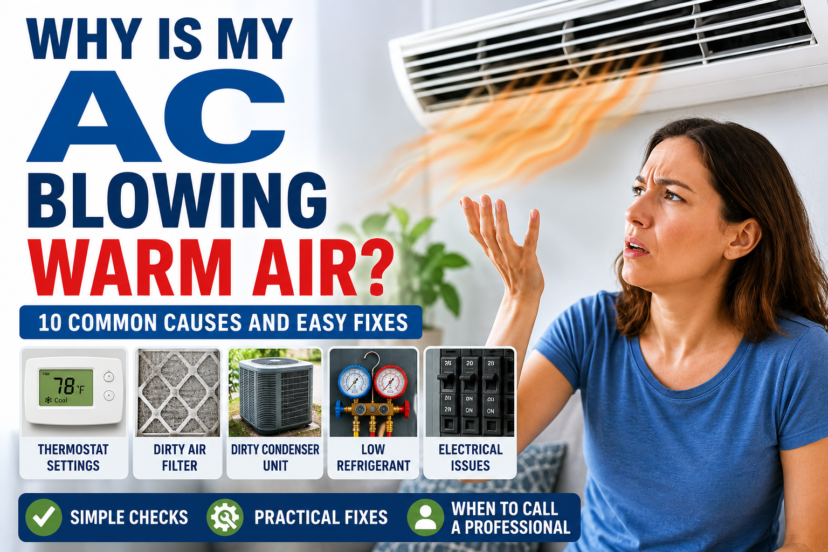
If you’re asking, why is my AC blowing warm air, you’re certainly not alone. Few household problems are more frustrating than turning on your air conditioner during a hot summer day only to feel warm air coming from the vents. Fortunately, this doesn’t always mean your air conditioner is broken or needs to be replaced. In many cases, the problem is caused by something simple, such as a dirty air filter, incorrect thermostat settings, or a tripped circuit breaker. However, warm air can also indicate more serious issues like a refrigerant leak, frozen evaporator coil, or failing compressor.
Understanding what causes an air conditioner to blow warm air can help you troubleshoot the issue safely, restore your home’s comfort faster, and potentially avoid expensive repairs. This guide walks through the most common causes, how to identify each one, practical fixes, and when it’s time to call a licensed HVAC technician.
❄️ Quick Answer: Why Is My AC Blowing Warm Air?
If you’re wondering, Why is my AC blowing warm air, the most common causes include an incorrect thermostat setting, a dirty air filter, a frozen evaporator coil, low refrigerant, a clogged outdoor condenser, electrical problems, or a failing compressor. Start by checking your thermostat, replacing the air filter, and inspecting the outdoor unit. If the problem continues, professional diagnosis is recommended.
Key Takeaways
Most likely cause: A dirty air filter, thermostat setting, or blocked outdoor condenser.
Usually serious? Not always. Many causes are easy to fix, but refrigerant leaks and compressor failures require professional repair.
First thing to check: Verify the thermostat is set to Cool, lower the temperature setting, inspect the air filter, and make sure the outdoor condenser is running.
Best solution: If you’re asking Why is my AC blowing warm air? begin with simple maintenance checks before calling an HVAC technician for refrigerant, electrical, or compressor problems.
🧊 Why This Happens: How To Identify The Problem
An air conditioner works by removing heat from inside your home and releasing it outdoors. When any part of this cooling cycle is interrupted, the system may continue circulating air without properly cooling it.
The first step is determining whether:
- The indoor blower is running
- The outdoor condenser is operating
- Airflow is weak or strong
- Ice is present on refrigerant lines
- The thermostat is functioning correctly
These observations can quickly narrow down the possible causes.
🏠 Most Common Causes Of An AC Blowing Warm Air
1. Incorrect Thermostat Settings
It sounds simple, but thermostat settings are one of the most common causes.
Someone may have accidentally switched the system to:
- Heat
- Fan Only
- Auto with an incorrect temperature setting
How To Confirm The Cause
- Verify the thermostat is set to Cool.
- Lower the temperature at least 3–5°F below the current room temperature.
- Replace thermostat batteries if needed.
2. Dirty Air Filter
A clogged filter restricts airflow across the evaporator coil.
Eventually, the coil can become too cold and freeze, preventing proper cooling.
Signs include:
- Weak airflow
- Higher energy bills
- Ice on refrigerant lines
How To Confirm The Cause
- Remove the filter.
- Hold it toward a light.
- If little light passes through, replace it.
3. Dirty Outdoor Condenser Unit
The outdoor condenser releases heat collected from inside your home.
If it’s covered with:
- Leaves
- Dirt
- Grass clippings
- Cottonwood fluff
the system cannot release heat efficiently.
How To Confirm The Cause
- Inspect outdoor fins.
- Remove visible debris.
- Ensure at least 2 feet of clearance around the unit.
4. Low Refrigerant
Refrigerant absorbs heat from inside your home.
Low refrigerant usually indicates a leak rather than normal consumption.
Common symptoms include:
- Warm air
- Ice buildup
- Hissing sounds
- Longer cooling cycles
How To Confirm The Cause
- Ice forms on copper refrigerant lines.
- AC runs continuously.
- Cooling performance steadily declines.
Only licensed technicians should handle refrigerant repairs.
5. Frozen Evaporator Coil
Restricted airflow or low refrigerant can cause the evaporator coil to freeze.
When frozen, little or no cooling occurs.
How To Confirm The Cause
- Ice on indoor refrigerant lines.
- Weak airflow.
- Water around indoor unit after thawing.
Turn off cooling and allow the coil to thaw before restarting.
6. Electrical Problems
Electrical failures may prevent the outdoor condenser from operating while the indoor blower continues circulating air.
Possible causes include:
- Blown fuse
- Bad capacitor
- Tripped breaker
- Loose wiring
- Failed contactor
How To Confirm The Cause
- Indoor fan runs.
- Outdoor unit remains silent.
- Breaker repeatedly trips.
7. Clogged Condensate Drain
Many modern systems shut down the compressor if the condensate drain becomes blocked to prevent water damage.
The blower may continue operating while cooling stops.
How To Confirm The Cause
- Standing water near indoor unit.
- Full drain pan.
- Safety switch activated.
8. Leaking Or Damaged Air Ducts
If cool air escapes into the attic, crawl space, or walls, less cooled air reaches your living space.
How To Confirm The Cause
- Certain rooms remain warm.
- Dust around duct joints.
- Higher utility bills.
- Whistling noises inside walls.
9. Compressor Problems
The compressor is the heart of the air conditioning system.
If it fails, refrigerant cannot circulate properly.
Symptoms include:
- Outdoor fan runs
- Little or no cooling
- Loud buzzing
- Frequent breaker trips
How To Confirm The Cause
- Outdoor fan spins.
- Compressor remains silent or hums loudly.
- HVAC technician testing required.
10. Aging HVAC System
Most central air conditioners last approximately:
- 12–20 years
Older systems gradually lose efficiency and become more prone to failures.
How To Confirm The Cause
- Frequent repairs.
- Rising utility bills.
- Uneven cooling.
- Unit over 15 years old.
🔍 How To Confirm The Cause
Before scheduling service, perform these basic checks:
- Verify thermostat settings.
- Replace the air filter.
- Check that both indoor and outdoor units are running.
- Inspect the outdoor condenser for debris.
- Look for ice on refrigerant lines.
- Check your electrical panel for tripped breakers.
- Listen for unusual noises.
These simple inspections often identify easy-to-fix problems.
🛠️ How To Fix An AC Blowing Warm Air
The correct repair depends on the underlying cause.
Possible solutions include:
- Replace dirty air filters.
- Clean the outdoor condenser.
- Reset a tripped breaker.
- Clear vegetation around the condenser.
- Allow frozen coils to thaw.
- Clean the condensate drain line.
- Repair leaking ductwork.
- Recharge refrigerant after fixing leaks.
- Replace faulty capacitors or contactors.
- Repair or replace a failed compressor.
Avoid attempting electrical or refrigerant repairs yourself.
👨🔧 When To Call A Professional
Contact a licensed HVAC technician if you notice:
- Refrigerant leaks
- Ice repeatedly forming
- Burning smells
- Electrical issues
- Compressor problems
- AC blowing warm air after replacing the filter
- Water leaking from the indoor unit
- Repeated breaker trips
- System over 15 years old with declining performance
Prompt repairs can prevent more expensive damage.
✅ How To Prevent Warm Air Problems
Routine maintenance greatly reduces unexpected breakdowns.
Helpful habits include:
- Replace filters every 1–3 months.
- Schedule annual HVAC maintenance.
- Keep the outdoor condenser clean.
- Trim plants around the unit.
- Inspect ductwork periodically.
- Clean condensate drains yearly.
- Check thermostat batteries annually.
- Address small issues before they worsen.
Preventive care improves efficiency, lowers energy costs, and extends the lifespan of your system.
❓ Frequently Asked Questions
Why is my AC blowing warm air but the fan works?
This often indicates the indoor blower is operating while the outdoor condenser, compressor, or refrigerant system has a problem.
Can a dirty filter cause warm air?
Yes. Restricted airflow can freeze the evaporator coil and reduce cooling performance.
Should I turn my AC off if it’s blowing warm air?
Yes. Continuing to run the system may worsen problems, especially if ice has formed or refrigerant is low.
Why is my outside AC unit running but the house isn’t cooling?
Possible causes include dirty coils, refrigerant leaks, compressor issues, or airflow restrictions.
Can low refrigerant fix itself?
No. Refrigerant doesn’t get used up under normal operation. Low refrigerant almost always means there’s a leak.
How much does it cost to repair an AC blowing warm air?
Costs vary widely depending on the issue. Simple maintenance may cost little, while compressor or refrigerant repairs can be significantly more expensive.
How often should my AC be serviced?
Most HVAC professionals recommend professional maintenance once each year before the cooling season begins.
🏠 Related Home Problems
If you’re experiencing warm air from your AC, you may also find these articles helpful:
- Why Does My Air Conditioner Smell?
- Why Is My House So Hot?
- Why Does My House Feel Stuffy?
- How To Improve Indoor Air Quality
- Why Is My House So Humid?
- Why Is One Room Hotter Than The Others?
- Why Is My HVAC Running Constantly?
💡 Final Thoughts On Why Is My AC Blowing Warm Air
When your air conditioner starts blowing warm air, don’t panic. Many common causes—such as a dirty filter, incorrect thermostat settings, or a blocked condenser—are simple to identify and fix. Performing a few basic checks can often restore cooling without the need for expensive repairs.
However, if the problem involves refrigerant, electrical components, compressor failure, or recurring ice buildup, it’s best to contact a qualified HVAC technician. Regular maintenance, timely filter changes, and annual inspections remain the best ways to keep your air conditioner running efficiently and your home comfortable throughout the hottest months of the year.
Disclaimer: This article is intended for informational and educational purposes only. It should not replace professional HVAC diagnosis or repair. If you suspect an electrical fault, refrigerant leak, burning odor, or other potentially hazardous condition, turn off your air conditioning system and contact a licensed HVAC professional immediately.



Comments are closed.