Indoor Humidity Levels: What’s Ideal For Comfort And Your Home?
Understanding indoor humidity levels is one of the easiest ways to make your home more comfortable while protecting it from moisture-related problems. Whether your house feels sticky during summer or dry and uncomfortable during winter, the amount of moisture in the air plays a major role in how your home feels and performs.
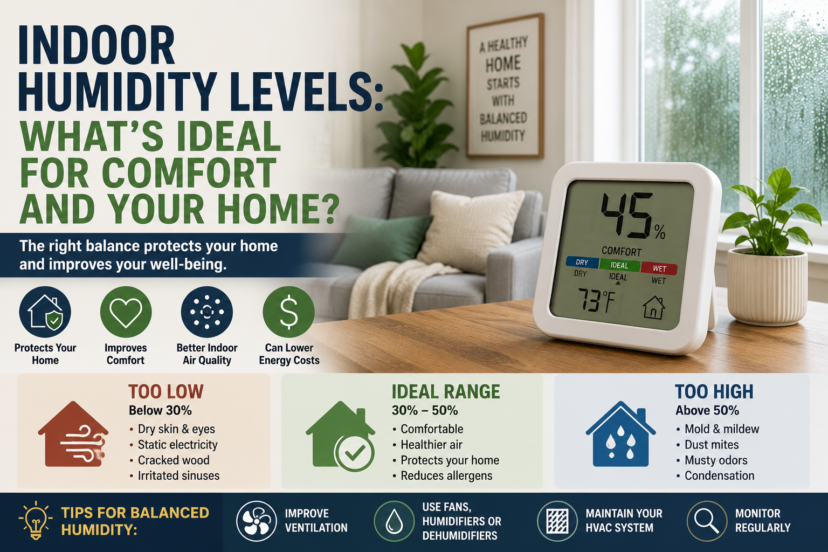
Humidity that’s too high can encourage mold growth, dust mites, condensation, and musty odors. On the other hand, air that’s too dry may cause dry skin, irritated sinuses, static electricity, and even damage to hardwood floors and furniture.
Fortunately, maintaining the right indoor humidity isn’t difficult once you know what to look for. In this guide, you’ll learn the ideal indoor humidity range, why humidity changes throughout the year, how to recognize problems, and practical ways to keep your home’s air balanced and comfortable.
🔎 Quick Answer: Indoor Humidity Levels
For most homes, the ideal indoor humidity levels are between 30% and 50% relative humidity (RH). This range provides the best balance between comfort, indoor air quality, and protecting your home from moisture damage. During colder winter months, slightly lower humidity may help reduce window condensation, while summer humidity should generally stay below 50%.
Key Takeaways
Ideal humidity: 30%–50% relative humidity (RH)
Usually serious? Not if corrected promptly. Long-term high or low humidity can damage your home and reduce comfort.
First thing to check: Measure indoor humidity using a digital hygrometer.
Best solution: Control moisture with proper ventilation, HVAC maintenance, humidifiers, or dehumidifiers as needed.
🌡️ Why Indoor Humidity Levels Matter
Humidity refers to the amount of water vapor in the air. Relative humidity (RH) measures how much moisture the air contains compared to the maximum amount it can hold at a given temperature.
When humidity becomes unbalanced, your home may experience comfort issues as well as moisture-related damage.
Signs of high humidity include:
- Sticky or clammy air
- Condensation on windows
- Musty odors
- Mold or mildew growth
- Damp basements
- Peeling paint
Signs of low humidity include:
- Dry skin
- Dry eyes
- Frequent static electricity
- Cracked wood furniture
- Shrinking hardwood floors
- Dry nasal passages
Keeping humidity within the recommended range helps improve comfort while protecting your home and furnishings.
🔍 The 10 Most Common Factors That Affect Indoor Humidity Levels
1. Outdoor Weather
Outdoor conditions have the biggest influence on indoor humidity.
Hot, humid summer air often raises indoor humidity, while cold winter air typically becomes very dry after being heated indoors.
2. Poor Home Ventilation
Without adequate ventilation, moisture becomes trapped inside.
Common moisture sources include:
- Showering
- Cooking
- Laundry
- Breathing
- Houseplants
Bathroom and kitchen exhaust fans help remove excess humidity before it accumulates.
3. Air Conditioning Performance
Air conditioners don’t just cool your home—they also remove moisture.
If your AC isn’t operating properly or is oversized, it may not remove enough humidity.
Signs include:
- Sticky indoor air
- Condensation
- Musty smells
4. Heating Systems
Heating cold outdoor air during winter lowers indoor relative humidity.
Many homeowners notice:
- Dry skin
- Nose irritation
- Static electricity
This is one reason humidifiers are commonly used during the heating season.
5. Plumbing Leaks
Hidden leaks continuously introduce moisture into the home.
Check for:
- Water stains
- Damp cabinets
- Wet drywall
- Soft flooring
Even small leaks can significantly increase indoor humidity over time.
6. Crawl Space Or Basement Moisture
Moisture entering through foundations or crawl spaces often affects the entire home.
Common causes include:
- Poor drainage
- Groundwater
- Missing vapor barriers
- Foundation cracks
7. Roof Leaks
Water entering through the roof raises humidity while damaging insulation and wood framing.
Roof leaks should always be repaired promptly.
8. Everyday Household Activities
Normal daily activities generate surprising amounts of moisture.
Examples include:
- Boiling water
- Running showers
- Washing dishes
- Drying clothes indoors
Without ventilation, humidity rises quickly.
9. Humidifiers Or Dehumidifiers
These appliances directly affect indoor humidity.
Improper settings can make indoor air either too humid or too dry.
Always monitor humidity instead of guessing.
10. Home Insulation And Air Sealing
Well-insulated homes maintain more stable humidity levels.
However, homes that are extremely airtight may require additional ventilation to remove excess moisture.
✅ How To Confirm Your Indoor Humidity Levels
The easiest way to measure humidity is with a digital hygrometer.
These inexpensive devices display:
- Relative humidity
- Indoor temperature
- Humidity trends
Take readings in several locations:
- Living room
- Bedroom
- Basement
- Upstairs
- Near exterior walls
If one area differs significantly from the rest of the house, localized moisture problems may exist.
Watch for these humidity ranges:
- Below 30%: Air is generally too dry.
- 30%–50%: Ideal for most homes.
- Above 50%: Monitor closely.
- Above 60%: Moisture problems become more likely.
🛠️ How To Maintain Ideal Indoor Humidity Levels
Maintaining balanced humidity is usually straightforward.
Improve Ventilation
Use:
- Bathroom exhaust fans
- Kitchen range hoods
- Whole-house ventilation systems
- Open windows when weather allows
Good airflow removes excess moisture.
Use A Dehumidifier
If humidity regularly exceeds 50%, a dehumidifier can help.
Basements and crawl spaces often benefit the most.
Use A Humidifier During Winter
If humidity falls below 30%, adding moisture can improve comfort.
Choose a properly sized humidifier and clean it regularly to prevent microbial growth.
Repair Water Leaks
Promptly repair:
- Plumbing leaks
- Roof leaks
- Window leaks
- Foundation leaks
Eliminating unwanted moisture prevents larger problems later.
Maintain Your HVAC System
Schedule annual maintenance.
Replace air filters regularly and ensure the air conditioner removes humidity efficiently during summer.
Improve Drainage Around The Home
Proper grading and gutter maintenance reduce foundation moisture.
Keep gutters clean and direct downspouts away from the house.
👷 When To Call A Professional
Consider professional help if:
- Indoor humidity remains above 60%.
- Mold repeatedly returns.
- Condensation forms regularly on windows.
- Musty odors persist.
- Water damage appears.
- Your HVAC system struggles to control humidity.
- You suspect hidden plumbing or roof leaks.
A qualified HVAC technician, home inspector, or moisture specialist can identify hidden problems and recommend permanent solutions.
🛡️ How To Prevent Indoor Humidity Problems
Routine maintenance helps keep humidity under control.
Helpful habits include:
- Monitor humidity with a hygrometer.
- Keep indoor humidity between 30% and 50%.
- Run exhaust fans during showers and cooking.
- Repair leaks immediately.
- Replace HVAC filters regularly.
- Maintain gutters and downspouts.
- Vent clothes dryers outdoors.
- Inspect basements and crawl spaces for moisture.
- Schedule annual HVAC inspections.
These simple habits can prevent many common humidity-related issues.
❓ Frequently Asked Questions
What are the ideal indoor humidity levels?
For most homes, the ideal range is 30% to 50% relative humidity, providing the best balance between comfort and moisture control.
Is 60% indoor humidity too high?
It can be. Humidity above 60% increases the likelihood of mold, mildew, dust mites, and condensation problems.
Can humidity damage my house?
Yes. Excess humidity may damage drywall, insulation, wood framing, flooring, paint, and furniture over time.
Why is my house so dry in winter?
Cold outdoor air contains very little moisture. After being heated indoors, its relative humidity drops significantly, making the air feel dry.
How often should I check indoor humidity?
Checking once or twice each week during seasonal weather changes is usually sufficient. Monitoring becomes especially useful during extremely hot, humid summers and cold winters.
🏠 Related Home Problems
If you’re monitoring indoor humidity levels, you may also find these guides helpful:
- Why is my house so humid?
- Why does my house feel stuffy?
- Why does my house smell like mildew?
- Why is my attic humid?
- Why is my crawl space wet?
- Condensation on windows: What causes it?
- Why does my house smell musty?
- Why is my basement damp?
🎯 Final Thoughts
Maintaining proper indoor humidity levels is one of the simplest ways to improve comfort, protect your home, and reduce moisture-related problems. While every home experiences seasonal changes, aiming for 30% to 50% relative humidity provides the best balance for most climates and living conditions.
By monitoring humidity regularly, improving ventilation, repairing leaks promptly, and maintaining your HVAC system, you can enjoy healthier indoor air while preventing mold, condensation, and unnecessary damage to your home.
Disclaimer: This article is intended for informational purposes only and should not replace professional advice. If your home has persistent humidity problems, visible mold, recurring water damage, or suspected hidden leaks, consult a qualified HVAC technician, home inspector, or moisture remediation professional.