Why Does My Basement Feel Cold? 10 Common Causes And How To Make It Warmer
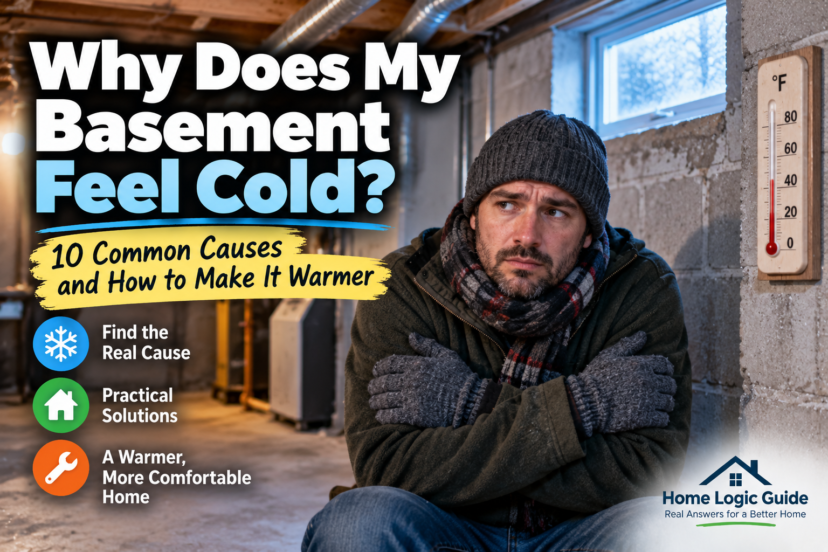
A basement can feel surprisingly chilly even when the rest of your house is comfortable. If you’ve found yourself asking, “Why does my basement feel cold?”, you’re dealing with a very common home comfort problem. Because basements sit partly or completely below ground, they’re surrounded by soil that typically stays much cooler than indoor living temperatures. Concrete floors and foundation walls can also absorb heat from the room, making the space feel colder than the thermostat suggests.
Some basement coolness is completely normal. However, poor insulation, air leaks, unsealed rim joists, HVAC problems, or excess moisture can make the temperature difference much worse.
Before turning up the heat or adding portable heaters, it’s worth finding the actual source of the problem. A few targeted improvements can often make a basement significantly more comfortable while also improving your home’s overall energy efficiency.
⚡ Quick Answer: Why Does My Basement Feel Cold?
If you’re wondering why does my basement feel cold, the most common explanation is heat loss through uninsulated concrete foundation walls and floors combined with naturally cooler ground temperatures. Air leaks around rim joists, windows, doors, and utility penetrations can make the problem worse. Start by checking for drafts, inadequate insulation, moisture, and poor HVAC airflow before simply adding more heat.
Key Takeaways
Most likely cause: Heat is being lost through cold foundation walls and floors, especially in an unfinished or poorly insulated basement.
Usually serious? No. A cool basement is common, but severe drafts, moisture, mold-like growth, or unusually low temperatures deserve further investigation.
First thing to check: Look for missing foundation insulation and drafts around rim joists, windows, doors, and utility penetrations.
Best solution: If you’re asking why does my basement feel cold, improving insulation and air sealing while addressing any moisture problems is often more effective than simply adding another heater.
🔍 Why Your Basement Feels Cold And How To Identify The Problem
Basements behave differently from above-ground rooms.
The walls and floor are surrounded by soil rather than outdoor air. While being underground can moderate extreme temperature swings, the surrounding ground is often considerably cooler than the temperature you want inside your home.
Concrete makes the sensation more noticeable. A bare concrete floor can feel extremely cold underfoot because it readily draws heat from your body.
Start by looking at the entire space rather than relying only on the thermostat.
Common warning signs include:
- Cold floors
- Chilly foundation walls
- Drafts near the ceiling
- Cold basement windows
- Rooms that remain uncomfortable with the heat running
- Weak airflow from HVAC registers
- Musty odors
- Condensation on pipes or windows
- Damp foundation surfaces
- Large temperature differences between the basement and first floor
These clues can help separate normal basement coolness from an insulation, moisture, or HVAC problem.
🏠 10 Most Common Causes Of A Cold Basement
1. Uninsulated Foundation Walls
Bare concrete or masonry foundation walls are a major source of basement heat loss.
Concrete provides structural strength, but by itself it isn’t an especially effective thermal barrier. When warm basement air meets a cold foundation assembly, heat moves toward the colder material.
If you have an unfinished basement with exposed concrete walls, inadequate foundation insulation is one of the first things to investigate.
2. The Concrete Floor Is Cold
Basement slabs sit directly above or close to the ground.
Older homes may have little or no insulation beneath the slab. Consequently, the floor can remain cool for much of the year.
Even when the air temperature is reasonable, a cold floor can make the entire basement feel uncomfortable.
Area rugs may improve comfort underfoot, but properly insulating a basement floor during a major renovation can provide a more comprehensive solution.
3. Air Is Leaking Through The Rim Joists
The rim or band joist area is located around the perimeter where the foundation meets the wood-framed portion of the house.
This area frequently contains penetrations for wiring, plumbing, vents, and other utilities.
Gaps can allow cold outdoor air into the basement, especially on windy winter days.
If you feel drafts near the top of your basement walls, inspect the rim joist area carefully.
4. Basement Windows Are Drafty
Older basement windows can be significant sources of air leakage.
Single-pane glass, deteriorated seals, gaps around the frames, and poorly fitting windows can all contribute to a cold basement.
Move your hand around the perimeter of each window on a cold or windy day. A noticeable stream of cold air suggests an air-sealing problem.
Don’t forget window wells. Damaged windows or poorly maintained exterior drainage can create moisture problems in addition to drafts.
5. An Exterior Basement Door Is Leaking Air
Walkout basements often have exterior doors.
Worn weatherstripping, poorly adjusted doors, gaps around thresholds, or unsealed frames can allow outdoor air to enter.
Look for visible daylight around the door edges and check whether the weatherstripping makes consistent contact when the door closes.
Replacing inexpensive seals can sometimes make a surprisingly noticeable difference.
6. Your HVAC System Isn’t Heating The Basement Properly
A basement may have heating registers but still receive insufficient conditioned air.
Possible causes include closed dampers, blocked registers, duct problems, poor system balancing, or a heating system that wasn’t designed with a finished basement in mind.
Don’t automatically close basement registers because the space isn’t used frequently. Changing airflow can affect HVAC performance.
If the basement has consistently poor airflow, an HVAC professional can evaluate the system and determine whether adjustments are appropriate.
7. Leaky Ductwork Is Reducing Heat Delivery
Ducts running through a basement may have loose connections or leaks.
If conditioned air escapes before reaching the intended rooms, the basement and other areas of the house may become harder to heat evenly.
Look for visibly disconnected duct sections or damaged components, but remember that many duct leaks aren’t easy to detect visually.
Professional duct testing can identify leakage more accurately.
8. Moisture Is Making The Basement Feel Colder
Temperature isn’t the only factor affecting comfort.
Damp basements often feel colder and less comfortable than dry spaces. Moisture can enter through foundation cracks, poor exterior drainage, plumbing leaks, humid outdoor air, or water vapor movement through building materials.
Look for:
- Musty odors
- Damp walls
- Water stains
- Condensation
- Peeling paint
- Efflorescence on masonry
- Mold-like growth
Fix moisture problems before covering foundation walls or undertaking major insulation work.
9. The Basement Ceiling Is Insulated
This may sound helpful, but the answer depends on how you use the basement.
If the basement is intentionally outside the conditioned portion of the home, insulation between the basement and first floor can help separate the spaces.
However, if you’re trying to use the basement as comfortable living space, insulating only the basement ceiling doesn’t address heat loss through foundation walls and other exterior boundaries.
The correct insulation strategy depends on where your home’s thermal and air boundaries are intended to be.
10. The Basement Was Finished Without A Complete Comfort Plan
A finished basement can look like any other room while performing very differently.
Adding drywall, carpet, and furniture doesn’t automatically solve cold foundation walls, air leakage, moisture, or inadequate HVAC distribution.
This is why some remodeled basements remain uncomfortable despite appearing fully finished.
A good basement renovation considers moisture management, insulation, air sealing, heating and cooling, flooring, and ventilation as interconnected systems.
🌡️ How To Confirm The Cause
Start with a simple walkthrough on a cold day.
Feel around windows, exterior doors, rim joists, and obvious utility penetrations for drafts. An infrared thermometer can help identify unusually cold surfaces, although surface temperature readings need to be interpreted carefully.
Look at exposed foundation walls. If they’re bare concrete or masonry, determine whether the basement has insulation elsewhere in the wall assembly.
Inspect HVAC registers and compare their airflow with registers upstairs.
Then check for moisture. Look closely around foundation walls, floors, pipes, windows, and corners.
A professional energy assessment can provide more detailed information. Tools such as thermal imaging and blower-door testing can help locate air leaks and insulation weaknesses that aren’t obvious during a basic inspection.
🔧 How To Fix A Basement That Feels Cold
The best approach is usually to reduce heat loss before adding more heating capacity.
Air Seal Drafty Areas
Seal appropriate gaps around windows, doors, rim joists, and utility penetrations.
Use materials suitable for the specific location. Penetrations involving combustion equipment, chimneys, flues, or other heat-producing components may require special fire-resistant materials and clearances.
Improve Foundation Insulation
Properly insulating basement walls can make a major difference in comfort.
The best method depends on your climate, foundation construction, moisture conditions, and whether the basement is finished.
Basement insulation needs to be designed with moisture management in mind. Simply putting insulation against a damp wall can create hidden problems.
Address Cold Floors
For finished spaces, appropriate flooring assemblies can make a basement feel much more comfortable.
Depending on the project, options may include a properly designed insulated subfloor and finished flooring.
For a simpler comfort improvement, area rugs can reduce the unpleasant sensation of walking directly on cold surfaces, although they don’t solve underlying heat loss.
Improve HVAC Distribution
Make sure registers aren’t blocked by furniture or storage.
If airflow remains poor, have the HVAC system evaluated before adding random vents or supplemental heating equipment.
A professional can determine whether duct modifications, balancing, zoning, or another heating solution makes sense.
Control Basement Moisture
Repair plumbing leaks promptly and address exterior drainage problems.
Gutters and downspouts should direct roof runoff appropriately away from the foundation according to the site’s drainage design.
In humid conditions, a properly sized dehumidifier may help manage indoor humidity, but it won’t fix active water intrusion.
👷 When To Call A Professional
Consider professional help if you notice:
- Persistent water intrusion
- Large or changing foundation cracks
- Mold-like growth
- Strong musty odors
- Recurring condensation
- Very poor HVAC airflow
- Major duct leakage
- Extremely cold finished rooms
- Frozen or vulnerable plumbing
- Signs of structural movement
For major basement insulation projects, it’s often worth having the moisture conditions and existing wall assembly evaluated before construction begins.
A basement contractor, insulation professional, HVAC technician, energy auditor, or foundation specialist may be appropriate depending on the problem.
🛡️ How To Prevent A Basement From Feeling Cold
Inspect windows and exterior doors periodically and replace worn weatherstripping when necessary.
Keep an eye on rim joists and utility penetrations, particularly after plumbing, electrical, cable, or HVAC work.
Maintain gutters and exterior drainage so water isn’t unnecessarily concentrated around the foundation.
Monitor basement humidity and investigate unexplained increases.
If you’re planning a basement remodel, address insulation, moisture, air sealing, and HVAC requirements before installing finished walls and flooring.
Solving these hidden issues during construction is usually much easier than opening completed walls later.
❓ Frequently Asked Questions
1. Is It Normal For A Basement To Feel Colder Than Upstairs?
Yes. Basements are surrounded by cooler soil and often contain large areas of concrete or masonry. They may also receive less heating than above-ground rooms. A modest temperature difference isn’t unusual.
2. Why Does My Basement Feel Cold Even When The Thermostat Says It’s Warm?
Cold walls and floors can make you feel chilly even when the air temperature seems acceptable. Drafts and uneven temperatures can also affect perceived comfort.
3. Will Insulating My Basement Make It Warmer?
Proper insulation can reduce heat transfer through foundation walls and improve comfort. However, the insulation system should be appropriate for basement moisture conditions and local climate.
4. Why Is My Finished Basement Still Cold?
A finished basement may still have inadequate foundation insulation, hidden air leaks, cold floors, or poor HVAC distribution. Decorative finishes alone don’t guarantee good thermal performance.
5. Should I Insulate My Basement Ceiling Or Walls?
It depends on whether the basement is intended to be inside or outside the home’s conditioned envelope. For conditioned living spaces, foundation-wall insulation is often an important part of the overall strategy. Local codes and building conditions should guide the final design.
6. Can Basement Moisture Make The Room Feel Colder?
Yes. Damp conditions can make a basement feel uncomfortable and may indicate a larger moisture-management issue. Address the source of moisture rather than relying only on additional heat.
7. Is It Safe To Use A Space Heater In A Cold Basement?
Portable heaters introduce fire and electrical risks if used incorrectly. Follow the manufacturer’s instructions, keep combustible materials away, plug heaters directly into an appropriate wall outlet when specified, and never use them as a substitute for correcting significant insulation or HVAC problems.
🔗 Related Home Problems
A cold basement can be connected to several other household comfort problems, including:
- Cold floors on the first story
- High winter heating bills
- Uneven temperatures throughout the house
- Basement condensation
- Musty basement odors
- Excessive indoor humidity
- HVAC systems running constantly
Finding the underlying cause may improve more than just the basement.
🏡 Final Thoughts On Why Does My Basement Feel Cold?
If you’re wondering “Why does my basement feel cold?”, start by remembering that some coolness is normal. Basements naturally interact with cooler ground temperatures, and concrete foundation walls and floors can make the space feel chilly.
But you don’t necessarily have to live with an uncomfortable basement.
Check the foundation insulation, rim joists, windows, exterior doors, HVAC airflow, and moisture conditions before deciding that you simply need more heat.
Air sealing and appropriate insulation can often make a substantial difference, particularly when combined with properly functioning HVAC distribution and good moisture management.
The goal isn’t just to make the basement warmer. It’s to create a basement that is dry, comfortable, energy-efficient, and suitable for how your household actually uses the space.
Disclaimer: This article provides general home improvement information and is not a substitute for an on-site professional evaluation. Foundation, insulation, moisture, HVAC, electrical, and structural conditions vary between homes. Consult qualified professionals for significant water intrusion, mold, foundation movement, HVAC problems, electrical concerns, or other safety issues.