Why Does My Furnace Keep Running? 10 Common Causes And How To Fix It
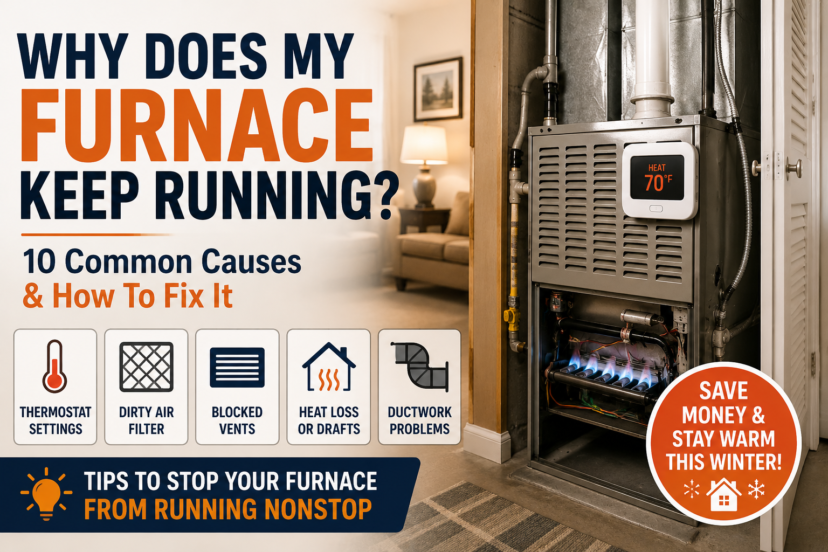
Your furnace keeps running because a setting, sensor, or mechanical part isn’t telling the system your home has reached its target temperature. When winter temperatures drop, your furnace naturally works harder to keep your home comfortable. But if it seems like the system never shuts off, you may start wondering, “Why does my furnace keep running?” A furnace that operates continuously can be caused by something as simple as an incorrect thermostat setting or a dirty air filter, but it can also indicate heat loss, airflow problems, equipment issues, or a furnace that’s struggling to keep up with your home’s heating needs.
Occasionally, long heating cycles are normal, particularly during extremely cold weather. The important question is whether your home is actually reaching the temperature you’ve selected on the thermostat.
Before calling for repairs, there are several safe checks homeowners can make themselves. Below, we’ll explain why furnaces run continuously, how to identify the likely cause, which problems you may be able to correct easily, and when professional HVAC diagnosis makes sense.
🔍 Why This Happens – How To Identify The Problem
A furnace doesn’t necessarily have a problem simply because it runs for a long time.
The length of a normal heating cycle depends on outdoor temperature, insulation, furnace capacity, thermostat settings, home construction, and heat loss.
During particularly cold weather, a properly functioning furnace may run for long periods because your home is losing heat almost as quickly as the system can replace it.
The first thing to determine is what is actually running.
Stand near a supply vent and check the thermostat. Is warm air continuously coming from the vent, or is the blower circulating room-temperature air even after the heating cycle has stopped?
Next, compare the thermostat’s current temperature with its set temperature.
For example, if your thermostat is set to 70°F and your house stays around 65°F while the furnace runs continuously, the system isn’t keeping up.
If the house reaches 70°F but air continues blowing from the vents, the problem may instead involve the fan setting or blower controls.
These clues can quickly narrow down the possibilities.
🏠 10 Most Common Causes Of A Furnace That Keeps Running
1. The Thermostat Fan Is Set To ON
This is one of the easiest causes to overlook.
Most thermostats have two common fan settings: ON and AUTO.
When set to AUTO, the blower normally operates as needed during heating cycles. When set to ON, the fan may continue circulating air even after the burners have stopped heating.
This can make it seem as though your furnace is running continuously when only the blower is operating.
✅ How To Confirm The Cause
Check your thermostat’s fan setting.
If it says ON, change it to AUTO and observe the system through several heating cycles. If the blower begins shutting off between cycles, you’ve probably solved the mystery.
2. Your Air Filter Is Dirty
Your furnace needs adequate airflow to operate efficiently.
As dust and debris accumulate in the filter, airflow becomes restricted. The furnace may have to operate longer to move enough heated air through the home.
Severe airflow restriction can also contribute to overheating and safety shutdowns.
✅ How To Confirm The Cause
Inspect the HVAC filter according to your system manufacturer’s instructions.
If it’s visibly dirty, replace it with the correct size and an appropriate filter for your system.
Don’t automatically install the most restrictive filter available. Your HVAC equipment needs adequate airflow.
3. The Thermostat Is Set Too High
Sometimes the furnace isn’t malfunctioning—it’s simply trying to reach an unrealistic indoor temperature.
The greater the difference between outdoor and indoor temperatures, the more heat your home loses.
Setting the thermostat unusually high during extremely cold weather can cause the furnace to run for very long periods.
✅ How To Confirm The Cause
Lower the thermostat by a few degrees and monitor the furnace.
If it begins cycling normally once the indoor temperature stabilizes, your previous thermostat setting may have been demanding more heat than the system could reasonably provide under current conditions.
4. Supply Or Return Vents Are Blocked
Your furnace relies on a continuous circulation loop.
It pulls indoor air through return vents, heats it, and distributes it through supply vents.
Furniture, rugs, curtains, boxes, or other objects blocking these vents can reduce airflow and interfere with heating performance.
Closing too many supply registers can also create airflow problems rather than improving efficiency.
✅ How To Confirm The Cause
Walk through your home and inspect both supply and return registers.
Make sure they’re open, clean, and unobstructed.
5. Your Home Is Losing Too Much Heat
Sometimes the furnace isn’t the main problem—the house is.
Heat can escape through:
- Drafty windows
- Exterior doors
- Attic penetrations
- Poorly insulated attics
- Uninsulated walls
- Crawl spaces
- Fireplace dampers
- Other air leaks
If heat escapes faster than expected, your furnace must run longer to replace it.
✅ How To Confirm The Cause
Look for noticeable drafts around windows and doors and compare room temperatures throughout the house.
A professional home energy assessment can provide a more comprehensive evaluation of insulation and air leakage.
6. Your Ductwork Is Leaking
A furnace can produce plenty of heat but still struggle if that heated air doesn’t reach the rooms.
Leaks in ducts running through attics, crawl spaces, basements, or garages can allow conditioned air to escape before reaching your living space.
Damaged or disconnected ducts can make the problem considerably worse.
✅ How To Confirm The Cause
Compare airflow and temperatures at supply vents around the house.
Weak airflow in particular areas may indicate a duct issue. Accessible ducts can sometimes be visually inspected, but hidden leakage may require professional testing.
7. It’s Extremely Cold Outside
Long furnace cycles can be normal during unusually cold weather.
Heating systems are designed for specific climate and load conditions. As outdoor temperatures approach the conditions used for the home’s heating design, the furnace may operate for much longer periods.
That doesn’t automatically mean something is broken.
✅ How To Confirm The Cause
Compare furnace behavior with outdoor conditions.
If it runs almost continuously only during the coldest days but maintains a comfortable indoor temperature, the system may simply be responding to high heating demand.
If it cannot maintain the thermostat setting, further investigation is worthwhile.
8. The Thermostat Isn’t Reading The Temperature Correctly
Your thermostat tells the furnace when to start and stop.
If its temperature reading is inaccurate, poorly located, or affected by another problem, the furnace may run longer than necessary.
A thermostat located near a cold draft, exterior door, or unusually cool wall may also sense conditions that don’t represent the rest of the house.
✅ How To Confirm The Cause
Place a reliable thermometer near the thermostat and allow it time to stabilize.
Compare the readings. A substantial, persistent difference may indicate that the thermostat or its location deserves attention.
9. The Furnace Is Too Small For The Home
Furnace sizing matters.
An undersized furnace may operate almost continuously because it can’t produce enough heat to offset the home’s heat loss during cold weather.
This problem sometimes appears after:
- Home additions
- Garage conversions
- Finished basements
- Major layout changes
- Changes to the HVAC system
However, don’t assume furnace size based solely on square footage. Proper sizing requires a heating-load calculation that considers insulation, windows, climate, air leakage, orientation, and other factors.
✅ How To Confirm The Cause
If the furnace has always struggled during cold weather despite being maintained properly, ask an HVAC professional about performing a heating-load calculation.
10. The Furnace Has A Mechanical Or Control Problem
If you’ve ruled out basic airflow and thermostat issues, the furnace itself may need attention.
Possible problems can involve:
- Blower controls
- Limit switches
- Thermostat wiring
- Gas burner operation
- Flame sensing
- Control boards
- Blower motors
- Other electrical or mechanical components
These problems require proper testing rather than guessing which component needs replacement.
✅ How To Confirm The Cause
Watch for additional symptoms such as unusual noises, inconsistent heating, fault codes, repeated cycling, burning odors, or difficulty reaching the thermostat setting.
At this point, professional diagnosis is usually the safest approach.
🛠️ How To Fix A Furnace That Keeps Running
Start with the easiest and safest possibilities.
First, check the thermostat. Make sure the system is set to HEAT, and the fan is set to AUTO rather than ON.
Next, inspect your furnace filter and replace it if necessary.
Walk through the house and make sure supply and return vents aren’t covered by furniture, rugs, curtains, or stored belongings.
Then look at the thermostat temperature.
If you’ve set it unusually high, lower the setting slightly and see whether the furnace begins cycling normally after the home stabilizes.
You can also look for obvious air leaks around windows and exterior doors. Weatherstripping and appropriate air sealing can reduce unnecessary heat loss, although larger insulation problems may require professional evaluation.
If accessible ductwork is visibly disconnected or damaged, don’t assume tape alone is the correct repair. HVAC professionals can determine whether the ducts need proper sealing, insulation, repair, or redesign.
If none of these checks solve the problem, schedule an HVAC inspection.
👷 When To Call A Professional
A furnace that occasionally runs for a long time isn’t necessarily an emergency. However, professional diagnosis makes sense when:
- The furnace never reaches the thermostat setting
- The system runs continuously in moderate weather
- Airflow remains weak after replacing the filter
- The furnace repeatedly starts and stops
- You hear unusual banging, grinding, or electrical noises
- The system displays recurring fault codes
- Your heating bills suddenly increase
- You suspect duct leakage
- The blower won’t shut off with the thermostat set correctly
- The furnace is producing unusual odors
If you smell gas or a carbon monoxide alarm activates, don’t attempt routine troubleshooting. Leave the home and follow instructions from local emergency services and your gas utility from a safe location.
Never bypass furnace safety controls to force the equipment to continue operating.
🛡️ How To Prevent Your Furnace From Running Constantly
Good furnace performance begins with regular maintenance and good household airflow.
Inspect your HVAC filter regularly and replace or clean it according to the equipment and filter manufacturer’s recommendations.
Keep supply registers and return grilles unobstructed. Avoid closing numerous vents in an attempt to save energy, because doing so can interfere with system airflow.
Address obvious drafts around windows and exterior doors. If your attic insulation is inadequate or uneven, improving insulation and air sealing may reduce heating demand significantly.
Professional preventive maintenance can also help identify developing problems before they become breakdowns.
Finally, pay attention to how your furnace normally operates. Knowing its usual sounds, cycle lengths, and airflow makes unusual behavior much easier to recognize.
❓ Frequently Asked Questions
Why Does My Furnace Keep Running Without Shutting Off?
First, check whether the thermostat fan is set to ON. If the furnace is actively heating continuously, possible causes include a dirty filter, extreme outdoor temperatures, heat loss, duct leakage, thermostat problems, undersized equipment, or a malfunction.
Is It Normal For A Furnace To Run Constantly In Winter?
It can be normal for a furnace to run for extended periods during extremely cold weather, especially when temperatures approach the home’s heating design conditions. It should still generally be capable of maintaining a reasonable thermostat setting.
Can A Dirty Filter Make My Furnace Run Continuously?
Yes. A clogged filter restricts airflow and may reduce the system’s ability to distribute heat efficiently. Severe restriction can also contribute to furnace overheating.
Why Does My Furnace Keep Running But The House Is Cold?
The furnace may not be producing enough heat, or heated air may not be reaching the rooms effectively. Dirty filters, blocked vents, duct leaks, excessive heat loss, equipment problems, and sizing issues are possible causes.
Why Does My Furnace Fan Keep Running After The Heat Turns Off?
Check whether the thermostat fan is set to ON. The blower may also run briefly after the burners shut off to move remaining heat through the system. If it never stops despite an AUTO setting, the controls may need professional inspection.
Will Turning The Thermostat Higher Heat My House Faster?
Usually not. A conventional furnace generally heats at its normal output regardless of how high you raise the thermostat. A much higher setting typically makes the furnace run longer rather than heating the home faster.
Can Poor Insulation Cause A Furnace To Run All The Time?
Yes. Poor insulation and air leakage allow heat to escape more quickly, increasing how long the furnace needs to operate. Improving the building envelope can reduce heating demand and improve comfort.
🏡 Final Thoughts On Why Does My Furnace Keep Running?
If you’re wondering, “Why does my furnace keep running?”, begin with the simplest explanations before assuming the system needs an expensive repair.
Check the thermostat fan setting, inspect the HVAC filter, make sure your vents aren’t blocked, and consider whether unusually cold weather is increasing your home’s heating demand.
Then look at the bigger picture.
A furnace may run continuously because the equipment isn’t working correctly, but it may also be trying to compensate for leaking ducts, poor insulation, drafts, or excessive heat loss.
The most important clue is whether your home reaches and maintains the thermostat setting.
If it doesn’t—or the furnace behaves abnormally even during mild weather—professional diagnosis can identify the underlying problem and help you avoid unnecessary repairs or energy waste.
Disclaimer: This article provides general home improvement information and is not a substitute for professional HVAC, electrical, gas, or safety advice. Heating systems and installation conditions vary. Do not bypass safety controls or attempt repairs involving gas lines, combustion equipment, or hazardous electrical components unless appropriately qualified. If you smell gas or suspect carbon monoxide, leave the property and follow local emergency and utility guidance from a safe location.
🔗 Related Home Problems
A constantly running furnace may occur alongside other household comfort problems, including:
- HVAC blowing cold air when heat is on
- Weak airflow from vents
- One room colder than the rest of the house
- Upstairs and downstairs temperature differences
- HVAC system repeatedly turning on and off
- One room colder than the rest of the house
When several of these symptoms happen together, it’s worth looking beyond the furnace itself. Airflow, ductwork, insulation, air leakage, and thermostat location can all affect heating performance.