
Why Is One Room Hotter Than The Rest? 11 Common Causes And Easy Fixes
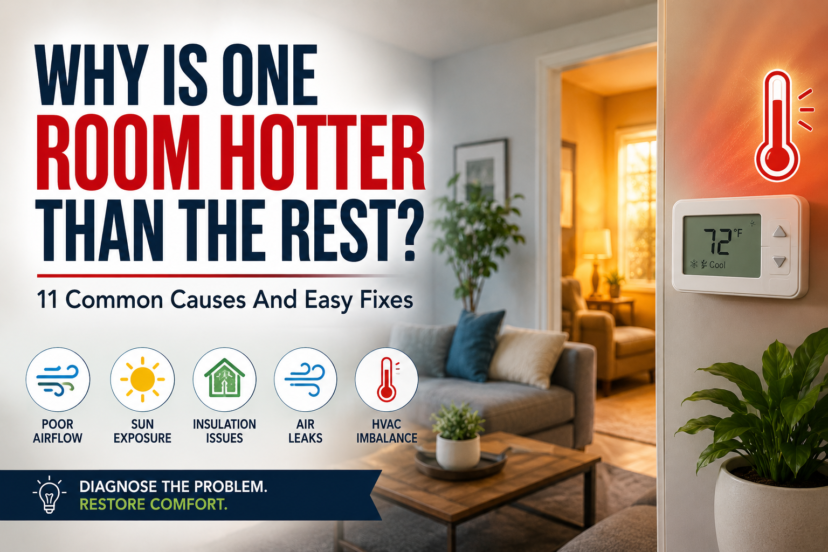
If you’ve been wondering, why is one room hotter than the rest, you’re dealing with one of the most common comfort problems homeowners face. Whether it’s an upstairs bedroom that’s always warm, a home office that heats up every afternoon, or a bonus room that’s uncomfortable year-round, uneven temperatures can make your home less enjoyable and increase your energy bills. Fortunately, the problem is rarely caused by a single issue. Poor airflow, inadequate insulation, sun exposure, HVAC imbalances, or air leaks are often responsible.
The good news is that most hot-room problems can be improved without replacing your entire heating and cooling system. By identifying the underlying cause, you can make targeted improvements that increase comfort, reduce HVAC strain, and improve your home’s overall energy efficiency. This guide explains the most common reasons one room becomes hotter than the others, how to diagnose the issue, and the best ways to fix and prevent it.
⭐ Quick Answer: Why Is One Room Hotter Than The Rest
If you’re asking why is one room hotter than the rest, the most common causes include poor airflow, blocked or leaking air ducts, insufficient insulation, excessive sunlight, air leaks, closed vents, or an HVAC system that’s improperly balanced. In many cases, improving airflow, sealing leaks, adding insulation, or adjusting the HVAC system can significantly reduce temperature differences.
Key Takeaways
Most likely cause: Poor airflow, inadequate insulation, or excessive solar heat gain is making one room warmer than the rest of the home.
Usually serious? No. Most uneven room temperatures are caused by airflow or insulation issues rather than major HVAC failures.
First thing to check: Inspect the supply vent, verify it’s fully open, check for blocked airflow, and compare insulation and sun exposure with other rooms.
Best solution: If you’re asking why is one room hotter than the rest, improving airflow, sealing air leaks, increasing insulation, and balancing the HVAC system usually provide the best long-term results.
🌡️ Why This Happens – How To Identify The Problem
Your HVAC system is designed to distribute conditioned air evenly throughout your home. When one room consistently stays hotter, it usually means that room is either:
- Receiving less cooled air than other rooms.
- Gaining more heat than the HVAC system can remove.
Start by observing when the room becomes warm.
Ask yourself:
- Is it only hot during the afternoon?
- Is it upstairs?
- Does the room receive direct sunlight?
- Is airflow from the supply vent weaker?
- Does closing the door make it even hotter?
The answers often point toward the underlying cause.
🔍 The 11 Most Common Causes
1. Poor Airflow From The Supply Vent
One of the most common reasons a room stays warmer is reduced airflow from the HVAC supply register.
Possible causes include:
- Dirty ducts
- Closed dampers
- Kinked flexible ducts
- Poor HVAC balancing
How To Confirm
Compare airflow from this vent to vents in cooler rooms.
2. Blocked Air Vents
Furniture, rugs, curtains, or other objects can partially block airflow.
Even minor restrictions reduce cooling efficiency.
How To Confirm
Inspect every supply and return vent for obstructions.
3. Too Much Direct Sunlight
South- and west-facing rooms often receive intense afternoon sunlight.
Large windows allow solar heat to warm walls, floors, and furniture.
How To Confirm
The room becomes hottest during sunny afternoons.
4. Poor Insulation
Insufficient attic or wall insulation allows outdoor heat to enter more easily.
Upper-floor rooms are especially vulnerable.
How To Confirm
The room stays hot even after sunset or during cloudy weather.
5. Air Leaks Around Windows And Doors
Warm outdoor air entering through gaps forces the HVAC system to work harder.
Small leaks can noticeably affect one room.
How To Confirm
Feel for drafts around:
- Windows
- Doors
- Electrical outlets
- Baseboards
6. Leaky Air Ducts
Conditioned air escaping into attics, crawl spaces, or walls never reaches the room.
Older duct systems commonly develop leaks.
How To Confirm
The affected room receives noticeably weaker airflow than nearby rooms.
7. Closed Or Undersized Return Air Vent
Return vents pull warm air back to the HVAC system.
Without adequate return airflow, conditioned air cannot circulate efficiently.
How To Confirm
The room becomes significantly warmer when the door is closed.
8. Electronics Generating Heat
Computers, gaming systems, televisions, and office equipment produce considerable heat.
This is especially noticeable in small rooms.
How To Confirm
The room becomes hotter when electronic devices operate for extended periods.
9. HVAC System Needs Balancing
Not every room requires identical airflow.
Improper balancing causes some rooms to receive too much conditioned air while others receive too little.
How To Confirm
Multiple rooms have different temperatures despite identical thermostat settings.
10. Attic Heat Transfer
Second-floor rooms located beneath poorly insulated attics often absorb radiant heat throughout the day.
How To Confirm
Ceilings feel noticeably warm to the touch during summer.
11. HVAC System Is Too Small
An undersized HVAC system struggles to cool the home evenly, especially rooms farthest from the air handler.
How To Confirm
The problem affects multiple rooms during extremely hot weather.
✅ How To Confirm The Cause
Perform a simple room-by-room inspection.
Check:
- Airflow strength
- Vent positions
- Window orientation
- Insulation levels
- Door gaps
- Return vents
- Indoor temperature at different times of day
An inexpensive infrared thermometer can help identify unusually warm ceilings, walls, or windows.
🔧 How To Fix It
Many uneven room temperatures can be corrected with straightforward improvements.
Improve Airflow
Make sure:
- Supply vents are fully open.
- Return vents are unobstructed.
- Furniture isn’t blocking airflow.
Replace Dirty HVAC Filters
Dirty filters reduce airflow throughout the entire HVAC system.
Replace filters every one to three months.
Seal Air Leaks
Use:
- Caulk around windows
- Weatherstripping around doors
- Foam sealant around utility penetrations
Reducing air leaks improves comfort and lowers energy costs.
Add Insulation
Increasing attic insulation often produces dramatic improvements in upstairs rooms.
Wall insulation may also help in older homes.
Install Window Coverings
Heat-reducing options include:
- Cellular shades
- Blackout curtains
- Solar window film
- Exterior awnings
Blocking sunlight significantly lowers room temperatures.
Balance The HVAC System
An HVAC technician can adjust dampers to direct more conditioned air toward warmer rooms.
This is often one of the most effective long-term solutions.
Consider Ceiling Fans
Ceiling fans don’t lower air temperature, but they improve comfort by increasing air movement.
Remember to set the fan to rotate counterclockwise during summer.
👷 When To Call A Professional
Contact an HVAC professional if:
- Airflow remains weak after replacing the filter.
- One room is consistently 5–10°F warmer than others.
- Duct leaks are suspected.
- The HVAC system never reaches the thermostat setting.
- Refrigerant problems are suspected.
- HVAC balancing is required.
- The system is aging or undersized.
Professional airflow testing can accurately diagnose hidden duct or equipment problems.
🛡️ How To Prevent It
Prevent future hot-room problems by:
- Replacing HVAC filters regularly.
- Keeping vents fully open.
- Scheduling annual HVAC maintenance.
- Sealing windows and doors.
- Adding attic insulation when needed.
- Using blinds during peak sunlight hours.
- Keeping return vents unobstructed.
- Cleaning supply registers periodically.
Routine maintenance keeps conditioned air flowing efficiently throughout the home.
❓ Frequently Asked Questions
Why is my upstairs bedroom always hotter?
Heat naturally rises, and upstairs rooms often receive additional heat from the attic and roof. Poor insulation and limited airflow make the problem worse.
Can closing vents in other rooms cool one hot room?
Usually not. Closing vents can disrupt HVAC airflow and reduce system efficiency. Balancing the system properly is a better solution.
Will a ceiling fan make the room cooler?
A ceiling fan won’t reduce the actual air temperature, but it improves air circulation and helps people feel cooler.
Can poor insulation make only one room hot?
Yes. A room with inadequate insulation or significant sun exposure can become much warmer than neighboring rooms.
Is it normal for one room to be slightly warmer?
A difference of 1–3°F is fairly common in many homes. Larger temperature differences usually indicate an airflow or insulation problem.
🏡 Related Home Problems
If one room is hotter than the rest, you may also find these topics helpful:
- Why is my house hotter upstairs?
- Why is one room colder than the others?
- Why is my HVAC running constantly?
- Why does my house feel stuffy?
- How to improve indoor air quality
- Why is my house humid?
- Why are my windows sweating?
- Why does my HVAC smell musty?
These issues are often connected through airflow, insulation, humidity, and HVAC performance.
🎯 Conclusion: Why Is One Room Hotter Than The Rest
A room that’s consistently warmer than the rest of your home can be frustrating, but it’s usually a solvable problem. In most cases, poor airflow, inadequate insulation, air leaks, or excessive sun exposure are to blame rather than a major HVAC failure. By taking a systematic approach—checking vents, improving insulation, sealing drafts, and maintaining your HVAC system—you can enjoy more even temperatures, greater comfort, and improved energy efficiency throughout your home.
Disclaimer
This article is intended for informational and educational purposes only and should not replace professional HVAC or home energy advice. If you suspect ductwork problems, refrigerant leaks, insulation deficiencies, or HVAC equipment failure, consult a qualified HVAC technician or home energy professional for a complete inspection and appropriate recommendations.



Comments are closed.