
Why Is My House Hotter Upstairs? Why It Happens And What To Do
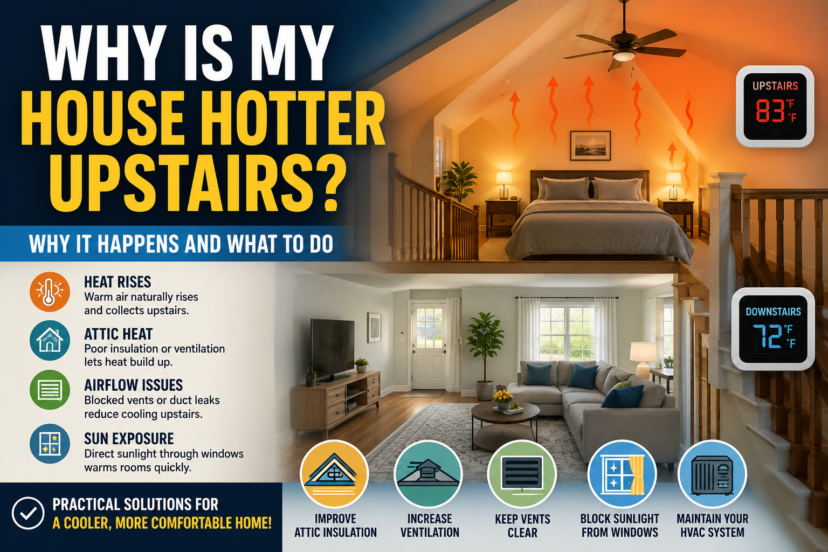
If you’ve been asking why is my house hotter upstairs, you’re dealing with one of the most common comfort problems homeowners face, especially during the summer. You may notice that the downstairs feels perfectly comfortable while the bedrooms upstairs become warm, stuffy, and difficult to cool—even with the air conditioner running.
In most cases, a hotter upstairs is caused by a combination of natural heat movement, attic heat, poor insulation, restricted airflow, or an HVAC system that’s struggling to cool every level evenly. Fortunately, many of these issues can be improved with simple maintenance or targeted upgrades.
This guide explains why your upstairs gets hotter than the rest of the house, how to identify the underlying cause, and the most effective ways to improve airflow, reduce heat buildup, and make every room more comfortable.
🔎 Quick Answer: Why Is My House Hotter Upstairs?
An upstairs is usually hotter because warm air naturally rises, while heat from the roof and attic transfers into the upper floor. Poor attic insulation, inadequate ventilation, weak HVAC airflow, blocked vents, or air leaks can make the temperature difference even worse. Improving insulation, increasing airflow, and balancing your HVAC system are often the best solutions.
Key Takeaways
Most likely cause: Heat rising combined with attic heat and insufficient cooling airflow.
Usually serious? No. Most temperature differences can be improved with better insulation, ventilation, and HVAC adjustments.
First thing to check: Make sure all upstairs vents are fully open and producing strong airflow.
Best solution: Improve attic insulation, increase attic ventilation, seal air leaks, and balance the HVAC system.
🌡️ Why This Happens: How To Identify The Problem
Heat naturally moves upward, which is why upper floors often become warmer than lower levels. During sunny weather, your roof absorbs a tremendous amount of solar heat. Without adequate attic insulation and ventilation, much of that heat transfers into the ceilings of your upstairs rooms.
At the same time, your cooling system may struggle to deliver enough conditioned air to the second floor, especially if airflow is restricted or the system isn’t properly balanced.
Common signs include:
- Upstairs bedrooms remain hot.
- The downstairs feels comfortable.
- Airflow from upstairs vents seems weak.
- The attic feels extremely hot.
- The AC runs for long periods.
- Cooling costs increase during summer.
- Certain upstairs rooms are much hotter than others.
If several of these signs sound familiar, your home likely has an airflow, insulation, or attic heat problem.
🔍 The 10 Most Common Causes Of A Hotter Upstairs
1. Heat Naturally Rises
The most basic reason is simple physics.
Warm air rises through your home, collecting on upper floors where it becomes trapped if ventilation or cooling isn’t sufficient.
While this is normal, the temperature difference should not be extreme.
2. Poor Attic Insulation
The attic can reach well over 120°F (49°C) during summer.
Without enough insulation, this heat transfers directly through the ceiling into upstairs rooms.
Signs include:
- Warm ceilings
- Bedrooms heating up quickly during the day
- High cooling bills
Adding attic insulation is often one of the most effective upgrades.
3. Inadequate Attic Ventilation
Attic ventilation removes accumulated heat before it transfers into your living space.
Common ventilation problems include:
- Blocked soffit vents
- Missing ridge vents
- Poor roof ventilation
- Limited airflow through the attic
Proper ventilation helps reduce attic temperatures significantly.
4. Weak HVAC Airflow Upstairs
Your cooling system must deliver enough conditioned air to every room.
Weak airflow upstairs may result from:
- Dirty air filters
- Blower problems
- Long duct runs
- Improper balancing
If airflow feels weak, your AC cannot effectively cool the upper floor.
5. Leaking Or Poorly Insulated Ductwork
Many second-floor ducts run through hot attics.
If cooled air leaks into the attic before reaching your rooms, cooling performance drops considerably.
Look for:
- Weak airflow
- High utility bills
- Hot attic surrounding ducts
6. Closed Or Blocked Air Vents
Supply vents blocked by furniture, rugs, or curtains reduce airflow.
Walk through every upstairs room and ensure all vents are fully open and unobstructed.
7. Air Leaks Around Windows And Doors
Hot outdoor air entering through small gaps makes upstairs rooms even warmer.
Inspect for:
- Cracked caulking
- Worn weatherstripping
- Drafts
- Poor window seals
South- and west-facing windows are especially vulnerable.
8. Large Unshaded Windows
Direct sunlight entering upstairs rooms creates significant heat gain.
Without window coverings, solar heat can quickly raise indoor temperatures.
Consider:
- Blackout curtains
- Cellular shades
- Reflective window film
- Exterior awnings
9. Dirty HVAC Filter
A clogged air filter reduces airflow throughout the home.
The upstairs often experiences the biggest drop in cooling performance because it is typically farthest from the air handler.
Replace filters every 1–3 months.
10. Improper HVAC System Size Or Design
Sometimes the cooling system itself isn’t designed for the home’s layout.
Possible issues include:
- Undersized air conditioner
- Poor duct design
- Incorrect zoning
- Improper thermostat location
An HVAC professional can evaluate whether the system is properly sized.
✅ How To Confirm The Cause
Before making upgrades, inspect your home carefully.
Check:
- Is airflow strong from upstairs vents?
- Is the HVAC filter dirty?
- Does the attic feel extremely hot?
- Are windows allowing direct afternoon sunlight?
- Are attic vents blocked?
- Are some upstairs rooms much hotter than others?
You can also use an infrared thermometer to compare ceiling temperatures or inspect attic insulation for gaps or compressed areas.
If the problem remains unclear, a home energy audit can identify hidden air leaks, insulation deficiencies, and ductwork problems.
🛠️ How To Fix A Hotter Upstairs
Most homeowners can improve upstairs comfort with one or more of these solutions.
Improve Attic Insulation
Adding insulation helps block heat transfer from the attic into upstairs ceilings.
This often provides the biggest long-term improvement.
Increase Attic Ventilation
Ensure soffit and ridge vents are clear and functioning properly.
Additional roof vents or attic fans may help in some homes.
Replace Dirty HVAC Filters
A clean filter restores airflow and allows your HVAC system to cool more efficiently.
Balance The HVAC System
Adjust dampers or registers so more cooled air reaches upstairs rooms.
Avoid completely closing downstairs vents, as this may reduce system efficiency.
Seal Air Leaks
Use caulk or weatherstripping around:
- Windows
- Doors
- Attic access panels
- Plumbing penetrations
- Electrical openings
Reducing unwanted heat infiltration improves cooling performance.
Shade Sunny Windows
Reduce solar heat by installing:
- Blackout curtains
- Insulated shades
- Reflective window film
- Exterior shading
These simple upgrades can noticeably reduce afternoon temperatures.
Repair Leaking Ductwork
Seal disconnected or leaking ducts using approved HVAC materials or have damaged sections professionally repaired.
Upgrade Your Thermostat
Smart thermostats with remote sensors can monitor upstairs temperatures and provide more balanced cooling.
👷 When To Call A Professional
Professional help is recommended if:
- Upstairs remains much hotter after basic maintenance.
- Airflow is consistently weak.
- Ductwork appears damaged.
- Attic insulation is insufficient.
- Energy bills continue rising.
- The AC runs almost constantly.
- Some rooms never cool properly.
An HVAC contractor or home energy specialist can perform airflow testing, duct inspections, and insulation evaluations.
🛡️ How To Prevent Upstairs Heat Problems
Regular maintenance helps prevent uneven cooling.
Helpful habits include:
- Replace HVAC filters regularly.
- Keep all vents open and clean.
- Inspect attic insulation every few years.
- Maintain attic ventilation.
- Seal new air leaks promptly.
- Schedule annual HVAC maintenance.
- Close blinds during peak afternoon sun.
- Trim trees that shade the roof only if appropriate for your property.
- Monitor cooling performance before summer begins.
These steps can help maintain more consistent temperatures throughout your home.
❓ Frequently Asked Questions
Is it normal for upstairs to be hotter than downstairs?
Yes. A small temperature difference is common because warm air rises. However, if the upstairs is significantly hotter, poor insulation, attic heat, or HVAC airflow problems are usually involved.
Can attic insulation make upstairs cooler?
Yes. Proper attic insulation reduces heat transfer through the ceiling and is one of the most effective ways to improve upstairs comfort.
Will closing downstairs vents cool upstairs?
Partially adjusting airflow may help, but completely closing several vents is generally not recommended because it can reduce HVAC efficiency and strain the system.
Does attic ventilation really help?
Yes. Good attic ventilation removes excess heat before it builds up, reducing the amount of heat transferred into upstairs rooms.
Should I install a second thermostat?
In many two-story homes, zoning systems or smart thermostats with remote sensors can significantly improve temperature balance between floors.
🏠 Related Home Problems
If your upstairs is too hot, you may also find these guides helpful:
- Why does my house feel stuffy?
- Why is my house so hot?
- Why is my house colder upstairs?
- Why is one room hotter than the others?
- Why is my bedroom hotter than the rest of the house?
- Why is my attic humid?
- How to improve indoor air quality?
- Condensation on windows: What causes it?
📌 Final Thoughts On Why Is My House Hotter Upstairs
If you’re wondering why is my house hotter upstairs, the cause is usually a combination of rising heat, attic heat gain, inadequate insulation, restricted airflow, and HVAC imbalances.
The good news is that most homeowners can significantly improve comfort by increasing attic insulation, improving ventilation, sealing air leaks, maintaining the HVAC system, and balancing airflow between floors. Taking these steps not only makes your upstairs more comfortable but can also improve energy efficiency and reduce cooling costs.
Disclaimer: This article is intended for general informational purposes only and should not replace professional advice. If your home has persistent cooling problems, significant ductwork issues, or inadequate insulation, consult a qualified HVAC technician or home energy professional.



Comments are closed.