
Why Is My House Colder Upstairs? Causes And Solutions
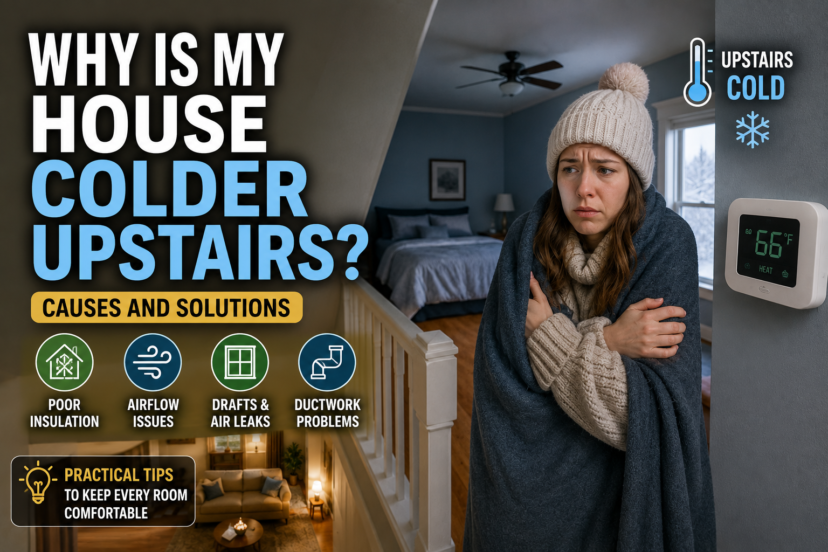
If you’ve been asking why is my house colder upstairs, you’re not alone. While many homes struggle with hot upper floors during summer, it’s also common for upstairs rooms to feel noticeably colder than the rest of the house during winter. Walking upstairs only to find bedrooms that never seem to warm up can be frustrating and uncomfortable.
A cold upstairs is usually caused by uneven airflow, poor insulation, heat loss through the roof, blocked vents, or problems with your HVAC system. Fortunately, most of these issues can be identified with a careful inspection and corrected without major renovations.
In this guide, you’ll learn why your upstairs feels colder than the main floor, the most common causes, how to identify the problem, and practical solutions that can help improve comfort while reducing heating costs.
🔎 Quick Answer: Why Is My House Colder Upstairs?
An upstairs that feels colder than the rest of the house is usually caused by poor airflow, inadequate attic insulation, blocked or leaking HVAC ducts, air leaks around windows or doors, or an improperly balanced heating system. Improving insulation, sealing drafts, and increasing warm airflow typically solve the problem.
Key Takeaways
Most likely cause: Insufficient warm airflow combined with heat loss through the attic.
Usually serious? No. Most cases can be corrected with better insulation, airflow balancing, or HVAC maintenance.
First thing to check: Make sure the upstairs supply vents are fully open and producing strong warm airflow.
Best solution: Improve attic insulation, seal air leaks, balance the HVAC system, and repair any duct leaks.
❄️ Why This Happens: How To Identify The Problem
Warm air naturally rises, which is why upstairs rooms often become warmer during summer. However, during winter, several factors can reverse this effect.
If the attic is poorly insulated or cold outdoor air enters through leaks around windows, doors, or the roof, upstairs rooms can lose heat faster than your heating system can replace it.
Common signs include:
- Bedrooms that stay colder than downstairs
- Weak airflow from upstairs vents
- Cold ceilings or exterior walls
- Drafts near windows
- Higher heating bills
- Uneven temperatures between rooms
- Furnace running frequently
If several of these symptoms occur together, poor insulation or airflow is often responsible.
🔍 The 10 Most Common Causes Of A Colder Upstairs
1. Poor Attic Insulation
One of the most common reasons an upstairs stays cold is inadequate attic insulation.
Heat naturally moves toward colder areas. If the attic lacks sufficient insulation, valuable heat escapes through the ceiling.
Warning signs include:
- Cold ceilings
- Ice dams in winter
- High heating bills
- Cold bedrooms beneath the attic
Adding insulation often provides one of the biggest improvements.
2. Air Leaks Around Windows And Doors
Small gaps around windows and exterior doors allow cold outdoor air inside.
Even tiny drafts can noticeably reduce comfort upstairs.
Inspect for:
- Cracked caulking
- Worn weatherstripping
- Drafts around window frames
- Gaps beneath doors
3. Poor HVAC Airflow
Your heating system must deliver enough warm air upstairs.
If airflow is weak, upper rooms never reach the thermostat setting.
Possible causes include:
- Dirty air filter
- Closed vents
- Blower problems
- Duct restrictions
4. Leaking Or Disconnected Ductwork
Many upstairs ducts run through unconditioned attics.
If warm air leaks from damaged ducts before reaching the room, heating performance drops significantly.
Signs include:
- Weak airflow
- Cold attic near ducts
- Higher heating costs
5. Closed Or Blocked Supply Vents
Furniture, rugs, curtains, or accidentally closed registers may restrict airflow.
Check every upstairs vent to ensure it is fully open and unobstructed.
6. Poor HVAC System Balancing
Some HVAC systems simply send too much warm air downstairs while limiting airflow upstairs.
Balancing dampers or adjusting registers can often improve temperature distribution.
7. Dirty HVAC Filter
A clogged air filter reduces airflow throughout the house.
The upstairs is often affected first because it is farther from the furnace or air handler.
Replace filters every one to three months according to the manufacturer’s recommendations.
8. Heat Loss Through Exterior Walls
Poorly insulated walls lose heat rapidly during cold weather.
This is particularly common in older homes.
Cold wall surfaces make rooms feel much colder, even if the air temperature appears normal.
9. Oversized Or Undersized Heating System
A heating system that isn’t properly sized for the home may struggle to maintain even temperatures.
An HVAC contractor can determine whether your equipment matches your home’s heating needs.
10. Thermostat Location
If the thermostat is located downstairs, it may reach the desired temperature before upstairs rooms are fully heated.
This causes the furnace to shut off too soon.
Smart thermostats or remote sensors can improve temperature control.
✅ How To Confirm The Cause
Before making repairs, perform a simple inspection.
Check:
- Is warm air coming from every upstairs vent?
- Is the HVAC filter dirty?
- Are windows or doors drafty?
- Does the attic have adequate insulation?
- Do some rooms stay colder than others?
- Are duct connections visible and intact?
You can also use an infrared thermometer to compare wall, ceiling, and floor temperatures.
If you suspect duct leakage or insulation problems, a professional home energy audit can quickly identify hidden heat loss.
🛠️ How To Fix A Colder Upstairs
The right solution depends on the underlying cause.
Improve Attic Insulation
Adding insulation is one of the most effective ways to reduce heat loss.
Proper attic insulation helps keep warm air inside during winter while improving energy efficiency year-round.
Seal Air Leaks
Seal gaps around:
- Windows
- Doors
- Plumbing penetrations
- Electrical outlets
- Attic access panels
Weatherstripping and caulk are inexpensive solutions that often provide immediate improvements.
Replace The HVAC Filter
Install a clean filter to restore proper airflow.
Always use a filter recommended for your HVAC system.
Balance The HVAC System
Adjust dampers or partially close downstairs registers to encourage more warm air upstairs.
Avoid completely closing vents, as this can reduce system efficiency.
Repair Leaking Ductwork
Seal damaged ducts with approved duct sealant or foil HVAC tape.
If ducts are badly damaged or disconnected, professional repairs are recommended.
Keep Supply Vents Open
Move furniture, curtains, or rugs away from vents to maximize airflow.
Upgrade Your Thermostat
A smart thermostat with multiple temperature sensors can help maintain more even temperatures throughout the home.
👷 When To Call A Professional
Some problems require expert diagnosis.
Contact a qualified HVAC contractor or insulation specialist if:
- Upstairs remains cold after replacing filters.
- Airflow is extremely weak.
- Ductwork appears damaged.
- Insulation is missing or compressed.
- Heating bills continue increasing.
- Furnace cycles constantly.
- Large drafts remain after sealing windows and doors.
Professional testing can locate hidden duct leaks, insulation deficiencies, or equipment problems.
🛡️ How To Prevent Upstairs From Becoming Cold
Routine maintenance can prevent future comfort problems.
Helpful habits include:
- Replace HVAC filters regularly.
- Keep vents clean and open.
- Inspect attic insulation every few years.
- Seal new air leaks promptly.
- Schedule annual heating system maintenance.
- Keep attic access doors properly insulated.
- Check weatherstripping before winter.
- Monitor energy bills for unexpected increases.
These simple steps help maintain more consistent temperatures throughout your home.
❓ Frequently Asked Questions
Why is my upstairs colder even though heat rises?
While warm air naturally rises, upstairs rooms can lose heat rapidly through the attic, roof, windows, and poorly insulated walls. If heat escapes faster than your heating system replaces it, the upstairs may feel colder.
Can poor attic insulation make upstairs rooms cold?
Yes. Inadequate attic insulation allows heat to escape through the ceiling, making upstairs rooms significantly colder during winter.
Should I close downstairs vents to warm upstairs?
Partially adjusting downstairs vents may improve airflow upstairs, but completely closing multiple vents is generally not recommended because it can reduce HVAC efficiency and strain the system.
Can dirty air filters cause uneven heating?
Yes. Dirty filters restrict airflow, often reducing the amount of warm air reaching upstairs rooms.
Is a cold upstairs a sign of HVAC problems?
Sometimes. Weak airflow, damaged ducts, blower issues, or an improperly balanced system can all contribute to uneven heating.
🏠 Related Home Problems
If your upstairs feels colder than the rest of the house, you may also find these guides helpful:
- Why is one room colder than the others?
- Why is my attic humid?
- Why does my house feel stuffy?
- Why is my bedroom cold even with the heat on?
- Why is my house so humid?
- Why is my attic so cold?
- Why are my heating vents blowing weak air?
- Condensation on windows: What causes it?
📌 Final Thoughts On Why Is My House Colder Upstairs?
If you’ve been wondering why is my house colder upstairs, the problem is usually related to heat loss, poor insulation, restricted airflow, or an HVAC system that isn’t distributing warm air evenly.
The good news is that many solutions are simple and affordable. Replacing HVAC filters, opening vents, sealing drafts, improving attic insulation, and repairing duct leaks can dramatically improve comfort while reducing heating costs.
Regular maintenance and seasonal inspections will help keep every floor of your home warm, comfortable, and energy-efficient throughout the winter.
Disclaimer: This article is intended for informational purposes only and should not replace professional advice. If your heating system isn’t working properly, or you suspect major insulation, ductwork, or structural issues, consult a qualified HVAC technician or home energy professional.


Comments are closed.