Why Is My Home So Dry During Winter? 10 Common Causes And Easy Ways To Fix It
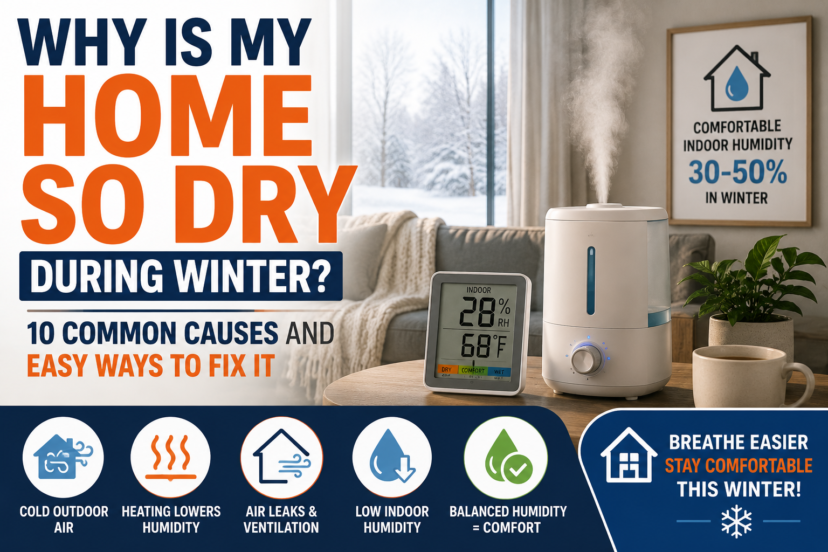
Your home gets dry in winter because cold outdoor air contains very little natural moisture, and heating that air indoors drops its relative humidity significantly. If your skin feels tight, your throat feels scratchy, or you seem to get a tiny static shock every time you touch a doorknob, you may be wondering, “Why is my home so dry during winter?” Dry indoor air is extremely common during colder months, particularly in homes where the heating system runs frequently.
The main reason is surprisingly simple: cold outdoor air contains less moisture than warm summer air. When that cold air enters your house and is heated, its relative humidity drops significantly. Air leaks, frequent ventilation, fireplaces, and certain heating conditions can make the problem even more noticeable.
Fortunately, a dry house doesn’t necessarily mean something is wrong with your HVAC system. In many cases, a few practical changes can make your home feel more comfortable.
Below, we’ll explain why winter air becomes so dry, how to measure your home’s humidity, the most common causes, and what you can do to improve it without creating excess moisture problems.
🔍 Why This Happens – How To Identify The Problem
Understanding winter humidity starts with the difference between absolute moisture and relative humidity.
Cold air generally holds less water vapor than warm air. Imagine outdoor air entering your house on a freezing winter day. Your furnace warms that air, but heating it doesn’t automatically add moisture.
As the temperature rises, its relative humidity drops.
This is why a house can feel extremely dry even though your furnace isn’t technically “removing” moisture from the air.
The easiest way to confirm the problem is with a digital hygrometer, a small device that measures relative humidity.
Many households find roughly 30% to 50% relative humidity comfortable, but the appropriate winter level depends on outdoor temperature, building construction, window performance, and whether condensation develops.
During very cold weather, some homes may need to stay toward the lower end of that range to prevent moisture from condensing on windows and other cold surfaces.
Don’t assume more humidity is always better. Excess indoor moisture can encourage condensation and potentially contribute to mold or building damage.
🏠 10 Most Common Causes Of A Dry Home During Winter
1. Cold Outdoor Air Has Less Moisture
This is the fundamental reason most homes become dry during winter.
Cold outdoor air contains relatively little moisture compared with warm summer air. Every time outdoor air enters your house and gets heated, its relative humidity falls.
The colder it gets outside, the more noticeable this effect can become.
✅ How To Confirm The Cause
Watch your indoor hygrometer as outdoor temperatures change.
If indoor humidity tends to fall during colder weather and recover when conditions become milder, normal winter air conditions are probably the main contributor.
2. Your Heating System Runs Frequently
Homeowners often blame their furnace for “drying out” the house.
In most cases, a standard furnace doesn’t directly remove moisture the way an air conditioner can during summer. Instead, winter heating raises the temperature of already-dry incoming air, which lowers its relative humidity.
Long heating periods can therefore make dry conditions feel more noticeable.
✅ How To Confirm The Cause
Compare your humidity readings during mild and extremely cold periods.
If humidity drops as heating demand increases, winter weather and increased outdoor-air infiltration are likely playing major roles.
3. Your Home Has Too Many Air Leaks
Small gaps throughout a house allow cold, dry outdoor air to enter while heated indoor air escapes.
Common leakage areas include:
- Window frames
- Exterior doors
- Attic penetrations
- Plumbing penetrations
- Recessed fixtures
- Fireplace areas
- Basement rim joists
- Poorly sealed access panels
A particularly leaky house may constantly replace indoor air with dry outdoor air.
✅ How To Confirm The Cause
On a cold or windy day, check for noticeable drafts around windows and exterior doors.
A professional home energy assessment, including appropriate air-leakage testing, can provide a more complete picture.
4. Your Home Is Over-Ventilated
Ventilation is important for maintaining indoor air quality, but excessive ventilation during winter can lower humidity.
Bathroom fans, kitchen exhaust fans, whole-house ventilation systems, and other exhaust equipment remove indoor air. Replacement air must then enter the house from outdoors.
Because winter outdoor air is typically dry once heated, frequent ventilation can reduce indoor relative humidity.
✅ How To Confirm The Cause
Notice whether humidity falls when exhaust fans or ventilation equipment operate for extended periods.
Don’t simply shut down required ventilation systems. Proper ventilation protects indoor air quality and helps control pollutants and excess moisture.
5. Your Fireplace Is Pulling Air From The House
A traditional wood-burning fireplace can move substantial amounts of indoor air up the chimney.
As that warm indoor air leaves, outdoor air enters elsewhere to replace it.
During winter, that replacement air can be extremely dry after it’s heated.
Even an unused fireplace may contribute to drafts if the damper or surrounding components don’t seal effectively.
✅ How To Confirm The Cause
Monitor humidity before, during, and after using the fireplace.
If you also notice drafts around the fireplace when it isn’t being used, have the chimney and damper evaluated if appropriate.
6. Your Thermostat Is Set Very High
The warmer you keep your home, the lower relative humidity can become if the actual amount of moisture in the air stays the same.
For example, the same quantity of water vapor results in a lower relative humidity when air temperature rises.
This doesn’t mean you should keep your house uncomfortably cold. However, unusually high thermostat settings may contribute to that dry-air feeling.
✅ How To Confirm The Cause
Lower the thermostat slightly to a comfortable temperature and monitor your hygrometer.
You may notice a modest improvement in relative humidity.
7. Your Whole-House Humidifier Isn’t Working
Some forced-air HVAC systems include a whole-house humidifier designed to add moisture during heating season.
If that equipment isn’t functioning properly, your home may suddenly feel much drier than it did in previous winters.
Possible problems include a closed water supply, clogged water panel, incorrect humidistat setting, drainage issues, or other equipment faults.
✅ How To Confirm The Cause
Check the humidifier’s controls and follow the manufacturer’s maintenance instructions.
If you’re unsure whether water and electrical components are operating correctly, have an HVAC professional inspect the unit.
8. Your House Has A Lot Of Natural Ventilation
Older homes often have more uncontrolled airflow through gaps and penetrations in the building envelope.
Newer homes can also experience significant air exchange if windows are frequently opened, doors are used often, or mechanical ventilation runs aggressively.
Every air exchange introduces more winter outdoor air.
✅ How To Confirm The Cause
Consider whether your home feels drafty or whether humidity changes rapidly on windy days.
That pattern can indicate significant outdoor-air infiltration.
9. Your Indoor Moisture Production Is Low
Everyday activities add moisture to indoor air.
Cooking, showering, cleaning, and even normal occupancy release some water vapor. A home with fewer occupants or less moisture-producing activity may naturally have lower indoor humidity.
Large homes with only one or two occupants can sometimes feel particularly dry for this reason.
✅ How To Confirm The Cause
Monitor humidity during normal household activities.
If humidity rises temporarily after cooking or showering but quickly falls again, low moisture production combined with air exchange may be contributing.
10. Your Home Is Very Airy Or Has High Ceilings
Large open-plan houses and rooms with high ceilings contain a greater volume of air.
This doesn’t directly cause low humidity, but it can make small portable humidifiers less effective because they’re attempting to humidify a much larger volume.
Open staircases can also allow air to move freely between floors, making room-by-room humidity control more difficult.
✅ How To Confirm The Cause
Compare humidity in smaller closed rooms with large open living spaces.
If a portable humidifier works well in a bedroom but barely changes the reading in an open-plan area, its capacity may simply be too small for the space.
🛠️ How To Fix A Home That’s Too Dry During Winter
Start by measuring humidity rather than guessing.
Place one or more digital hygrometers in commonly occupied rooms and observe the readings over several days.
If humidity is consistently low, look for obvious air leaks around exterior doors and windows. Replace damaged weatherstripping and address appropriate air-sealing opportunities.
Be careful not to eliminate necessary mechanical ventilation.
For individual bedrooms or living spaces, a properly sized portable humidifier can help. Follow the manufacturer’s cleaning instructions carefully because humidifiers can develop mineral deposits or microbial growth when poorly maintained.
For larger homes, a whole-house humidifier may offer more consistent control. These systems should be correctly sized, installed, maintained, and adjusted according to outdoor conditions.
You can also make use of normal household moisture. For example, allowing bathroom humidity to disperse briefly after a shower may help in some homes—but bathrooms still need adequate ventilation to prevent persistent condensation and mold.
The goal is balanced humidity, not maximum humidity.
👷 When To Call A Professional
Dry indoor air doesn’t always require professional help, but there are situations where expert evaluation makes sense.
Consider contacting an HVAC or building-performance professional if:
- Indoor humidity remains extremely low despite appropriate humidification
- Your whole-house humidifier isn’t operating
- Your home has severe drafts
- Humidity varies dramatically between rooms
- You suspect significant air leakage
- Your heating system has airflow or comfort problems
- You want a whole-house humidifier installed
- You’re unsure how to balance humidity with winter condensation
A home energy professional can also identify building-envelope problems that an HVAC inspection alone may not reveal.
If you’re experiencing significant window condensation after increasing humidity, reduce the humidity setting and investigate the cause rather than continuing to add moisture.
🛡️ How To Prevent Your Home From Getting Too Dry
Winter humidity management works best when you address both moisture and air leakage.
Before heating season, inspect exterior-door weatherstripping and look for obvious drafts around windows and other penetrations.
If you have a whole-house humidifier, perform the manufacturer’s recommended maintenance before winter and verify that its controls are working.
Keep a hygrometer somewhere easy to see. Monitoring humidity makes it easier to respond as outdoor temperatures change.
If you use portable humidifiers, clean them frequently according to manufacturer instructions and avoid allowing water to sit stagnant for extended periods.
Most importantly, don’t try to maintain the same humidity level regardless of outdoor temperature.
During extremely cold weather, lowering indoor humidity may be necessary to prevent condensation on windows and other cold building surfaces.
❓ Frequently Asked Questions
Why Does My House Feel Dry Even At 40% Humidity?
Comfort varies from person to person. Air temperature, airflow, dust, and other environmental factors can also influence how dry a room feels. Verify humidity with a reliable hygrometer before adding more moisture.
Does A Furnace Make The Air Dry?
A standard furnace generally doesn’t directly remove significant moisture. Instead, cold outdoor air enters the home and becomes lower in relative humidity when heated, making indoor conditions feel dry.
Will A Humidifier Help A Dry House?
Yes, when properly sized and maintained. Portable humidifiers can help individual rooms, while whole-house systems may provide broader humidity control.
Can My House Be Too Dry In Winter?
Yes. Very low humidity can increase static electricity and may contribute to dry-feeling skin, eyes, nose, and throat. It can also affect some wood materials and furnishings.
Can I Put Too Much Humidity Into My House?
Absolutely. Excess humidity can cause condensation on windows and cold surfaces and may contribute to mold or moisture damage. More humidity isn’t always better.
Why Is My House Drier This Winter Than Last Winter?
Outdoor temperatures, wind, heating demand, air leakage, household occupancy, ventilation patterns, and humidifier performance can all change from one winter to another. If the difference is dramatic, check whether a whole-house humidifier or ventilation system is operating differently.
🏡 Final Thoughts On Why Is My Home So Dry During Winter?
If you’ve been asking, “Why is my home so dry during winter?”, the answer usually isn’t that your furnace is somehow sucking all the moisture from your house.
The main issue is the combination of cold outdoor air, indoor heating, and air exchange.
Start with a hygrometer so you know whether your home is genuinely too dry and how severe the problem is. Then check for drafts, review your ventilation habits, and make sure any existing humidification equipment is functioning correctly.
If additional moisture is needed, use a properly sized and maintained humidifier while monitoring indoor humidity.
Remember that the goal isn’t to make your house as humid as possible. It’s to maintain a comfortable balance without creating condensation or moisture problems.
By controlling unnecessary air leakage and adjusting humidity as winter conditions change, you can make your home feel noticeably more comfortable throughout the heating season.
Disclaimer: This article provides general home improvement information and isn’t a substitute for professional HVAC, building-performance, mold, or indoor-air-quality advice. Appropriate indoor humidity varies with climate, outdoor temperature, building construction, and occupant needs. Excess humidity can contribute to condensation and moisture damage. Consult a qualified professional if you’re experiencing persistent moisture, HVAC, ventilation, or indoor air quality problems.
🔗 Related Home Problems
Dry winter air can occur alongside several other common home-comfort issues, including:
- HVAC blowing cold air
- One room colder than the rest of the house
- Condensation forming on windows
- Uneven temperatures between floors
- Weak airflow from HVAC vents
If you’re experiencing several of these problems together, it may be worth looking at your home as a complete system. Heating, ventilation, insulation, air leakage, and humidity all interact.